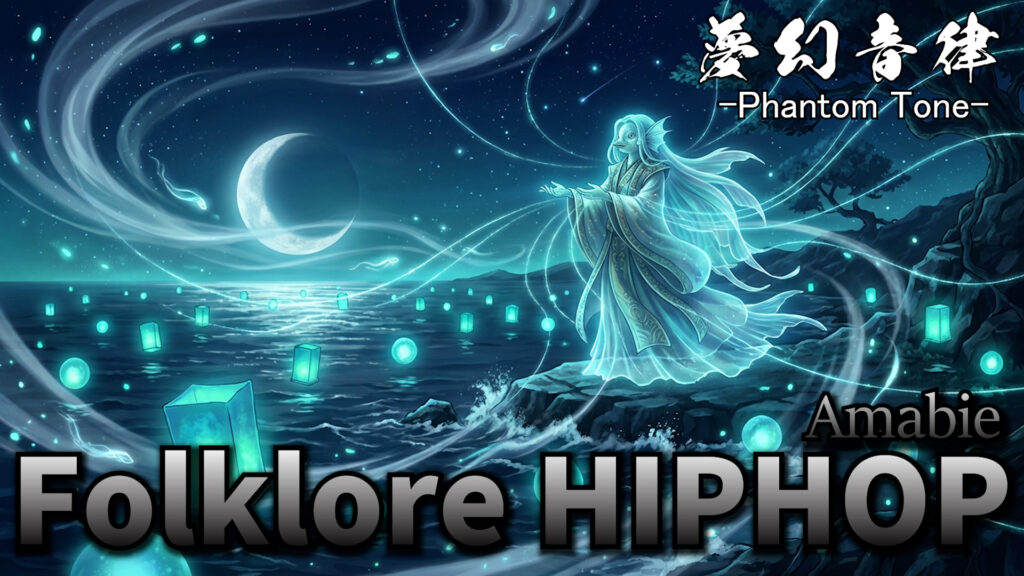
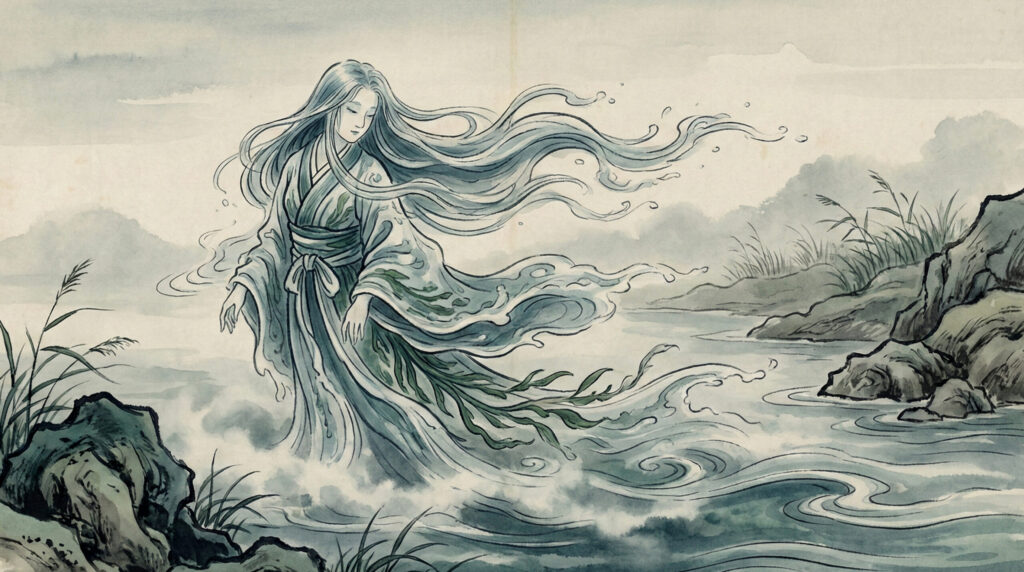
A gentle water spirit associated with springs and clear rivers.
It represents purification, liminality, and aquatic blessing.
Primary Sources
Classical & Mythological Records
Heian–Edo period water-spirit and spring-deity lore
Sacred spring, well, and river nymph traditions
水精・水霊・泉女神に関する中世説話資料
Modern Folklore References
Yanagita Kunio — water spirits and spring deities
Komatsu Kazuhiko — yōkai of water purity and liminal springs
Suisei – The Essence That Dwells Within Water in Japanese Folklore
Suisei is not a monster that lurks beneath the surface, nor a god that rules the sea. It is the living essence of water itself—present wherever water gathers, flows, or stagnates.
It does not chase.
It does not judge.
It reacts by nature.
Suisei embodies water as awareness.
Origins in Water Animism and Natural Reverence
In Japanese animistic belief, water was never inert. Rivers, springs, wells, and rain were treated as living forces, capable of blessing or harm depending on human conduct.
Suisei arises from this worldview as the pre-personified consciousness of water—before it becomes a river god, a dragon, or a named yōkai.
Water existed first.
Meaning followed later.
Neither Kami Nor Yōkai
Suisei occupies a liminal position:
- Not a kami with shrine or ritual
- Not a yōkai driven by intent or emotion
- Not a ghost bound to memory
It is bound to flow and condition, not location alone. Wherever water moves or rests, Suisei may be present.
If the water changes, Suisei changes.
Appearance as Sensation Rather Than Form
Suisei rarely appears visually. When sensed, it manifests through perception:
A sudden chill in water
Unnatural stillness of a surface
A feeling of depth beyond sight
Reflections that feel observant
Often, there is no shape at all—only the sense that the water is aware.
Water feels heavier when Suisei is near.
Behavior Through Natural Response
Suisei does not act with intention. Its influence is environmental:
Clear water nurtures
Stagnant water weakens
Overflow destroys
Depth overwhelms
These effects are not punishment or mercy. They are expression.
Suisei does not decide.
Water does.
Relationship with Humans
Humans historically interacted with Suisei through care and restraint:
Keeping water sources clean
Offering thanks before drawing water
Avoiding waste and contamination
Respecting dangerous currents
Disrespect does not provoke anger—it invites consequence.
Water responds honestly.
Suisei as the Root of Water Beings
Suisei can be understood as the origin layer beneath water deities and yōkai:
- Before Watatsumi governs the sea
- Before Kappa enforces rules
- Before Suijin receives worship
Suisei is water before narrative.
It is what remains when names are removed.
Symbolism and Themes
Awareness Without Morality
Nature responds, not judges.
Fluid Identity
Form follows condition.
Depth Beyond Visibility
What matters lies beneath.
Balance Through Flow
Stagnation breeds harm.
Related Concepts
Kawahime (河姫)
River maiden spirits.
→ Kawahime
Mizu no Kami (水の神)
Water deities.
Marebito (稀人)
Otherworldly visitors.
→ Marebito
Chinkon (鎮魂)
Ritual pacification.
Suisei in Folklore Memory
Suisei appears less as a named figure and more as intuition—why certain waters feel safe and others dangerous.
Its presence is inferred after events: sickness, floods, clarity, or survival.
Water remembers interaction.
Modern Cultural Interpretations

This blade symbolizes purification and spring-bound liminality.
It visualizes sacred water condensed into weapon form.
Modern interpretations often view Suisei as a metaphor for ecological balance — water systems that sustain or destroy depending on human treatment.
Psychologically, Suisei represents subconscious depth: calm on the surface, immense beneath.
In some modern visual reinterpretations, Suisei manifests as a yōtō — a blade with layered, translucent bands like deep currents. The sword embodies depth rather than speed.
Suisei persists because water still governs life.
Modern Reinterpretation – Suisei as Water Before Meaning
Suisei does not threaten. Suisei does not protect. Suisei does not choose.
The “beautiful girl” form does not explain currents, ecology, or depth. She does not regulate. She does not intervene.
Her translucent, layered presence represents water as depth — existence that sustains and destroys without intention.
She does not judge. She does not respond. She simply continues.
In this visual form, Suisei becomes a contemporary yokai of elemental flow — a spirit that exists as the condition that water still governs life.
Musical Correspondence
The accompanying track translates depth into sound. Slow rippling textures, transparent harmonic layers, and cyclical motion evoke tides and unseen currents.
Silence acts not as pause, but as depth — framing sound as space rather than statement.
Together, image and sound form a unified reinterpretation layer — a modern folklore artifact of water as presence that shapes fate simply by continuing.
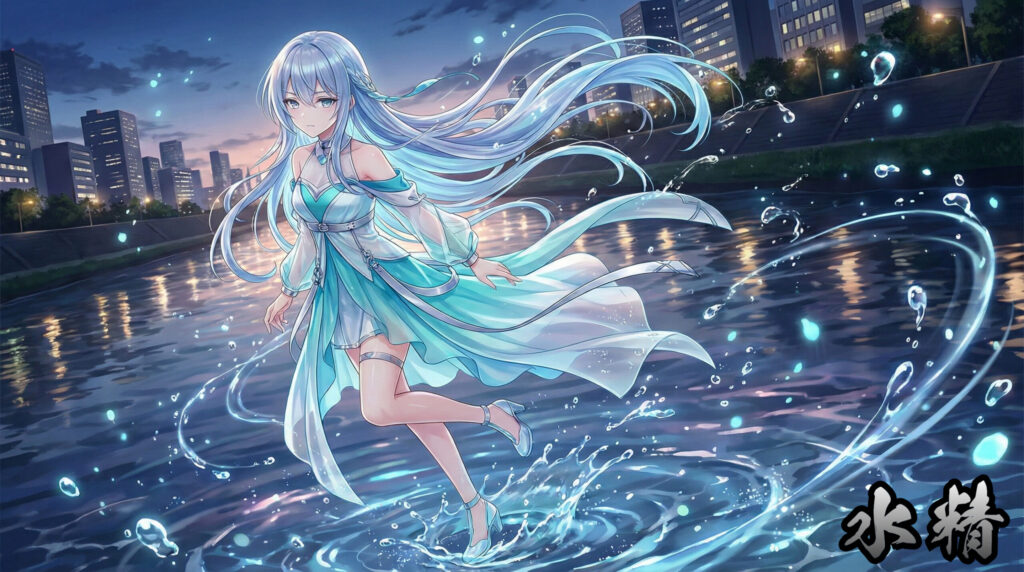
She embodies purification and spring-bound grace.
Her presence reflects sacred water made visible.
Drowncall
Genre: Japanese Folklore Hip-Hop, Ritual Lo-Fi Poetry Produced by: Phantom Tone | Suno AI | Kotetsu Co., Ltd. Tags: #AIgeneratedMusic #JapaneseHipHop #Folklore…
Amabie
Genre: Japanese Folklore Hip-Hop, Ritual Lo-Fi Poetry Produced by: Phantom Tone | Suno AI | Kotetsu Co., Ltd. Tags: #AIgeneratedMusic #JapaneseHipHop #Folklore…