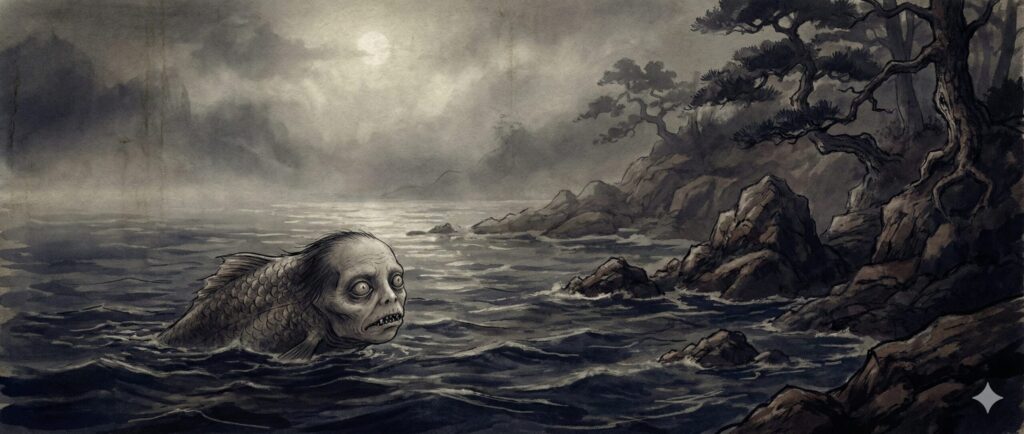
A prophetic fish-human being associated with longevity and calamity omens.
It represents immortality lore, sea-bound prophecy, and forbidden capture.
Primary Sources
Classical & Mythological Records
Edo–Meiji period ningyo omen and coastal longevity lore
Sailor legends describing prophetic fish-human beings
人魚・海異人魚・長寿予兆に関する沿岸説話資料
Modern Folklore References
Yanagita Kunio — ningyo and longevity omen beliefs
Komatsu Kazuhiko — yōkai of prophetic sea beings
Ningyo – Omen-Bearing Beings of Japanese Folklore
Ningyo, the mermaids of Japanese folklore, differ profoundly from the romanticized mermaids of Western tradition. Rather than symbols of beauty or seduction, ningyo are unsettling, liminal beings associated with omens, calamity, and the fragile boundary between life and death.
Descriptions of ningyo often emphasize their strangeness: humanoid forms combined with fish-like bodies, sharp teeth, glowing scales, or inhuman cries. To encounter a ningyo is rarely a blessing. Instead, such meetings herald disaster, plague, war, or unnatural longevity.
Ningyo embody the fear of forbidden knowledge — the cost of touching what should remain unseen.
Origins and Early Records
References to ningyo appear in ancient chronicles and medieval records, including early encyclopedic works and temple documents. Unlike later fictional embellishments, these accounts treat ningyo as rare but real phenomena.
Fishermen were said to occasionally capture ningyo in their nets, describing them as neither fully human nor fully fish. Their flesh was believed to possess supernatural properties, while their cries were considered deeply ominous.
These early records frame ningyo not as fantasy creatures, but as disruptions of the natural order.
From Sea Anomaly to Supernatural Omen
Over time, ningyo legends developed into cautionary narratives. Catching or harming a ningyo often brought misfortune, while releasing one could avert disaster.
The most famous ningyo-related legend involves the consumption of ningyo flesh, granting immortality. This tale culminates in the story of Yao Bikuni, the Eight-Hundred-Year Nun, whose eternal life becomes a burden rather than a gift.
Through such stories, ningyo became symbols of longevity divorced from joy — life extended beyond its natural meaning.
Appearance and Ambiguity
Ningyo appearances vary widely across regions, but common traits include:
Human-like faces with uncanny features
Fish bodies covered in shimmering or dull scales
Sharp teeth or inhuman mouths
Eyes that appear intelligent yet alien
Unlike Western mermaids, ningyo are rarely depicted as alluring. Their forms provoke unease rather than desire, reinforcing their role as warnings rather than temptations.
Ningyo and the Sea
Ningyo are deeply tied to the sea, but not to its bounty. Their presence signals imbalance rather than abundance.
In folklore, the sea yields fish to sustain life — but the ningyo represents something that should not be taken. To pull a ningyo from the water is to disturb a boundary meant to remain intact.
This framing positions ningyo as guardians of a threshold rather than inhabitants of a realm.
Symbolism and Themes
Immortality as Curse
Ningyo legends frequently portray eternal life as isolating and sorrowful rather than triumphant.
Violation of Natural Order
Encountering or consuming a ningyo disrupts balance, inviting disaster or prolonged suffering.
The Sea as Keeper of Secrets
Ningyo embody truths hidden beneath the surface, revealed only at great cost.
Liminal Humanity
Neither fully human nor fully animal, ningyo challenge definitions of life and identity.
Related Concepts
Watatsumi (海神)
Sea deities.
→ Watatsumi
Umibōzu (海坊主)
Colossal sea spirits.
→ Umibōzu
Funayūrei (船幽霊)
Ghosts of drowned sailors.
→ Funayūrei
Marebito (稀人)
Otherworldly visitors.
→ Marebito
Ningyo in Literature and Art
Ningyo appear in classical texts, temple records, and later yokai encyclopedias. They are often described briefly, emphasizing rarity and consequence rather than narrative detail.
In art, ningyo are depicted:
As grotesque or uncanny hybrids
Caught in nets or displayed as warnings
Surrounded by symbolic elements of disaster
Rendered without romantic embellishment
These images reinforce their role as portents rather than characters.
Regional Variations and Local Beliefs
Different regions of Japan recorded unique ningyo encounters. Some villages preserved supposed ningyo remains in temples, treating them as sacred relics or protective talismans.
Common beliefs include:
Ningyo sightings preceding epidemics or famine
Rituals to appease the sea after capture
Strict taboos against eating ningyo flesh
Prayers for release rather than possession
These practices highlight fear tempered by reverence.
Modern Cultural Interpretations

This blade symbolizes prophetic longevity and forbidden harvest.
It visualizes sea-bound fate condensed into weapon form.
In modern culture, ningyo are sometimes reimagined through Western mermaid imagery, but many contemporary works return to their original ominous roots.
Anime, literature, and music often depict ningyo as tragic beings — symbols of cursed longevity, lost humanity, or the price of forbidden survival.
In some modern visual reinterpretations, ningyo manifest as a yōtō — a blade that glimmers like scales beneath water. The sword reflects melancholy rather than menace, embodying survival that comes at a cost.
Modern interpretations emphasize melancholy over terror, but preserve the sense of unease.
Modern Reinterpretation – Ningyo as the Life That Should Have Ended
Ningyo does not bless. It does not grant. It does not reward.
It extends.
The “beautiful girl” form does not represent the sea. She does not symbolize beauty. She does not promise eternity.
Her silent presence represents survival that crossed its own boundary — life that continued after meaning was supposed to close.
She does not lure. She does not chase. She does not curse.
In this visual form, Ningyo becomes a contemporary yokai of unnatural continuation — a spirit that exists only while something that should have ended is still moving.
Musical Correspondence
The accompanying track transforms prolonged existence into sound. Slow suspended harmonies, distant melodic echoes, and minor drifting motifs evoke time that continues without renewal.
Silence acts not as rest, but as delay — framing sound as life that refuses to conclude.
Together, image and sound form a unified reinterpretation layer — a modern folklore artifact of life that should have ended, but did not.
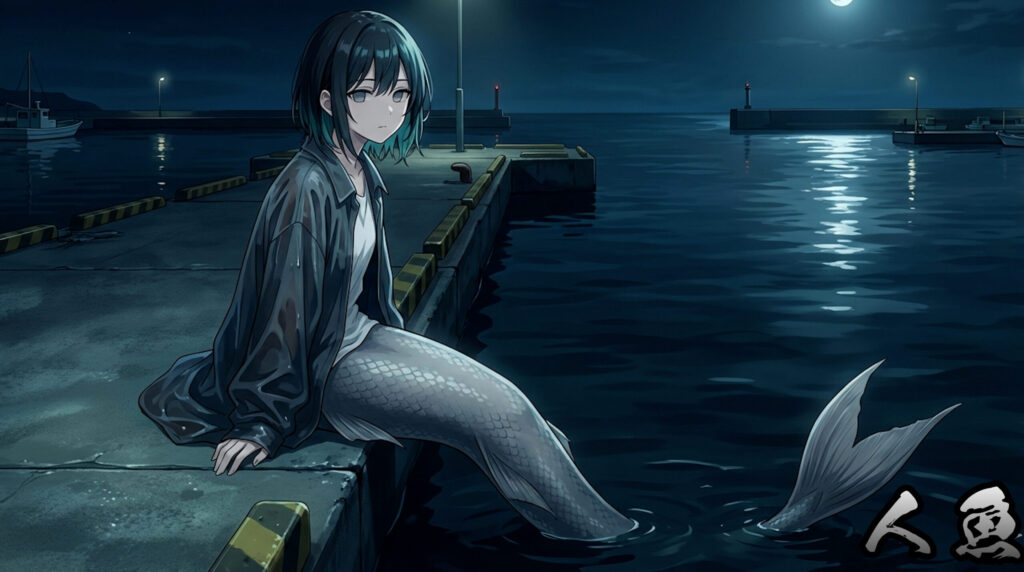
She embodies prophetic fate and forbidden longevity.
Her presence reflects sea-bound prophecy made visible.
Drowncall
Genre: Japanese Folklore Hip-Hop, Ritual Lo-Fi Poetry Produced by: Phantom Tone | Suno AI | Kotetsu Co., Ltd. Tags: #AIgeneratedMusic #JapaneseHipHop #Folklore…