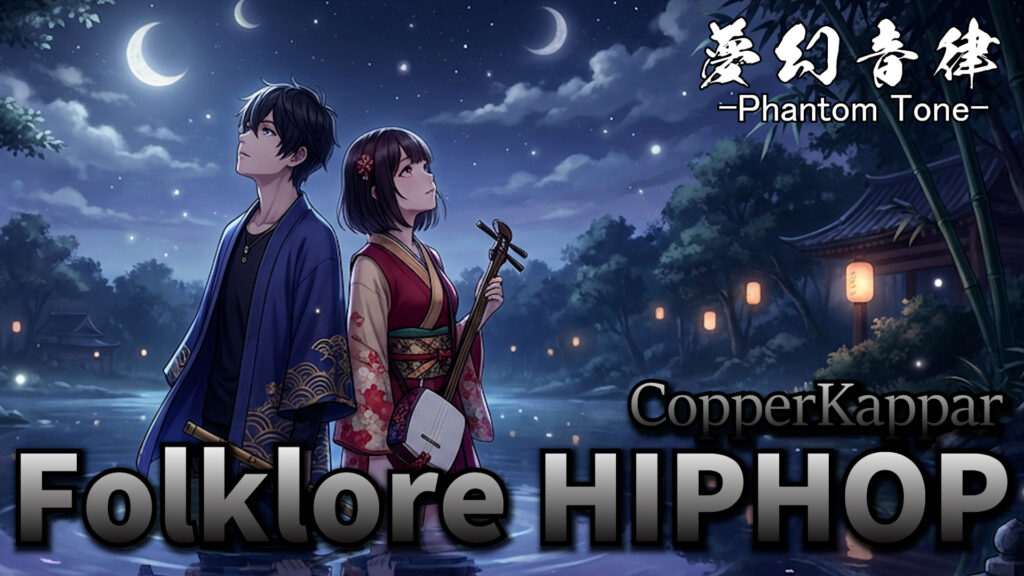

A being descended from kappa lineage bound to river territories.
It represents inherited water power, liminal bloodlines, and boundary guardianship.
Primary Sources
Classical & Mythological Records
Late medieval–Edo period kappa lineage and hereditary river-spirit lore
Local genealogical folktales describing descendants of water beings
河童の末裔・水霊血統に関する地方説話資料
Modern Folklore References
Yanagita Kunio — hereditary yōkai and river lineage beliefs
Komatsu Kazuhiko — bloodline-based yōkai and liminal inheritance
Kappa no Matsuei – The Descendants Who Inherited Water and Memory in Japanese Folklore
Kappa no Matsuei, “the Descendants of the Kappa,” are figures that exist between folklore and humanity: beings born after generations of coexistence, dilution, and adaptation. Unlike pure kappa—fully aquatic yōkai bound to rivers and ponds—their descendants walk closer to the human world, carrying traces of water spirits within human form.
They are not monsters hiding in rivers. They are inheritors—of traits, habits, and memory. Their existence suggests that yōkai do not always vanish; sometimes, they continue quietly through lineage.
Kappa no Matsuei embody folklore that learned to survive by becoming less visible.
Origins in Intermarriage and Coexistence
Stories of kappa descendants emerge from regional legends where kappa interact repeatedly with human communities. In some tales, kappa marry humans; in others, they exchange knowledge, form pacts, or spare villages in return for offerings.
Over time, such repeated contact produces descendants—children who are mostly human, yet marked by subtle differences. These stories reflect a worldview in which boundaries between species and worlds are porous, especially near water.
Rather than conquest or disappearance, coexistence produces inheritance.
Appearance and Subtle Traits
Kappa no Matsuei rarely appear overtly monstrous. Their traits are understated:
Unusual affinity with water
Skin that feels cold or damp
Exceptional swimming ability
A faint indentation or sensitivity at the crown of the head
Eyes reflecting light like water surfaces
These features are often explained away as quirks. Only those who know old stories recognize the signs.
The monster survives by passing as human.
Relationship with Water
Water remains central. Descendants are drawn to rivers, canals, and rain. Many legends describe them feeling restless when far from flowing water, or energized during storms.
Unlike kappa, they do not drown humans or demand cucumbers. Their relationship with water is instinctive rather than predatory.
Water is inheritance, not territory.
Memory Without Instruction
One of the most unsettling aspects of kappa descendants is knowledge without learning. They may:
Understand river currents intuitively
Know forgotten water paths
Sense floods before they arrive
Avoid drowning without conscious effort
These abilities are not taught. They surface naturally, suggesting that folklore itself can be inherited biologically.
The past moves through blood.
Symbolism and Themes
Dilution Without Erasure
Power fades, but does not vanish.
Adaptation as Survival
Folklore evolves to persist.
Coexistence Over Conflict
Humans and yōkai share lineage.
The Hidden Other
Difference concealed within normality.
Related Concepts
Kappa (河童)
River-dwelling yokai.
→ Kappa
Ikiryō (生霊)
Living spirit projections.
→ Ikiryō
Marebito (稀人)
Otherworldly visitors.
→ Marebito
Mizu no Kami (水の神)
Water deities.
Kappa no Matsuei in Folklore and Imagination
While less common than tales of pure kappa, descendant stories appear in regional oral traditions, especially near long-settled waterways. They are often framed not as horror, but as explanation—why certain families are tied to rivers, or why someone survived the water when they should not have.
The tone is ambiguous: part warning, part quiet acceptance.
Modern Cultural Interpretations
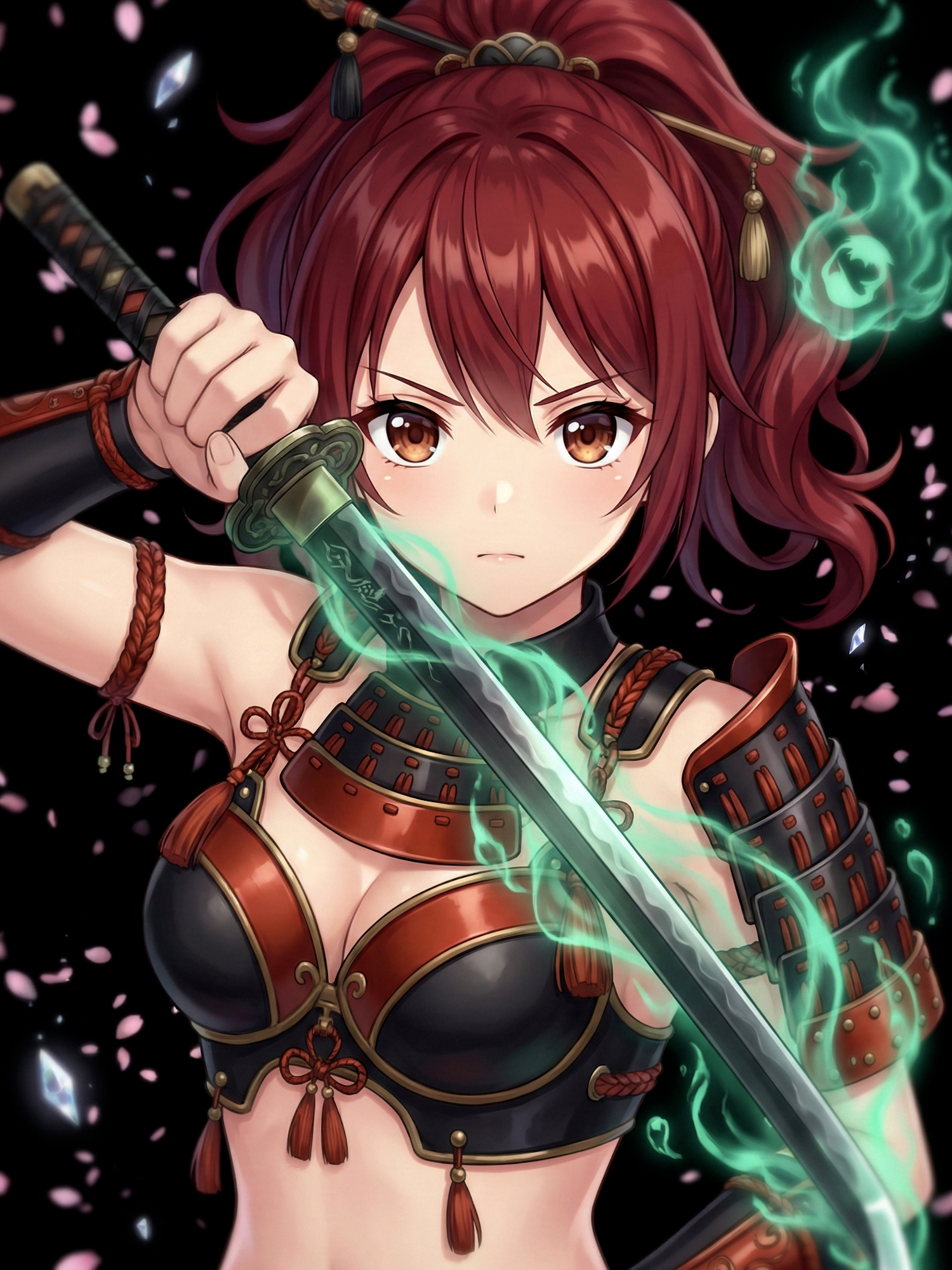
This blade symbolizes inherited river authority and bloodline guardianship.
It visualizes aquatic lineage condensed into weapon form.
In modern contexts, kappa descendants are often reimagined as urban legends or hybrid beings navigating contemporary society. They may symbolize mixed identity, inherited trauma, or the persistence of tradition within modern life.
Contemporary fiction sometimes frames them as protectors of waterways, carrying ancestral responsibility in a world that no longer believes.
In some modern visual reinterpretations, kappa descendants manifest as a yōtō — a blade etched with flowing river-glyphs. The sword appears to remember currents, embodying lineage rather than lineage’s burden.
They remain relevant because inheritance still shapes identity.
Modern Reinterpretation – Kappa no Matsuei as the Condition That Water Continues
Kappa no Matsuei are not descendants. They are not heirs. They are not folkloric bloodlines.
They are continuity.
The “beautiful girl” form does not inherit. She does not protect. She does not explain.
Her silent presence represents water that continues without ownership — flow that persists even after belief and ritual have thinned.
She does not warn. She does not teach. She does not remember for anyone.
In this visual form, Kappa no Matsuei becomes a contemporary yokai of flowing continuity — a spirit that exists only as long as water still continues.
Musical Correspondence
The accompanying track transforms continuity into sound. Slow repeating figures, drifting low pulses, and gently evolving harmonies evoke motion without destination.
Silence acts not as pause, but as distance — framing sound as flow rather than statement.
Together, image and sound form a unified reinterpretation layer — a modern folklore artifact of presence that remains only because something is still flowing.

She embodies inherited water authority and liminal lineage.
Her presence reflects aquatic bloodline made visible.
CopperKappar
Genre: Japanese Folklore Hip-Hop, Ritual Lo-Fi Poetry, Wafū Duet Produced by: Phantom Tone | Suno AI | Kotetsu Co., Ltd. Tags: #AIgeneratedMusic #JapaneseHipHo…