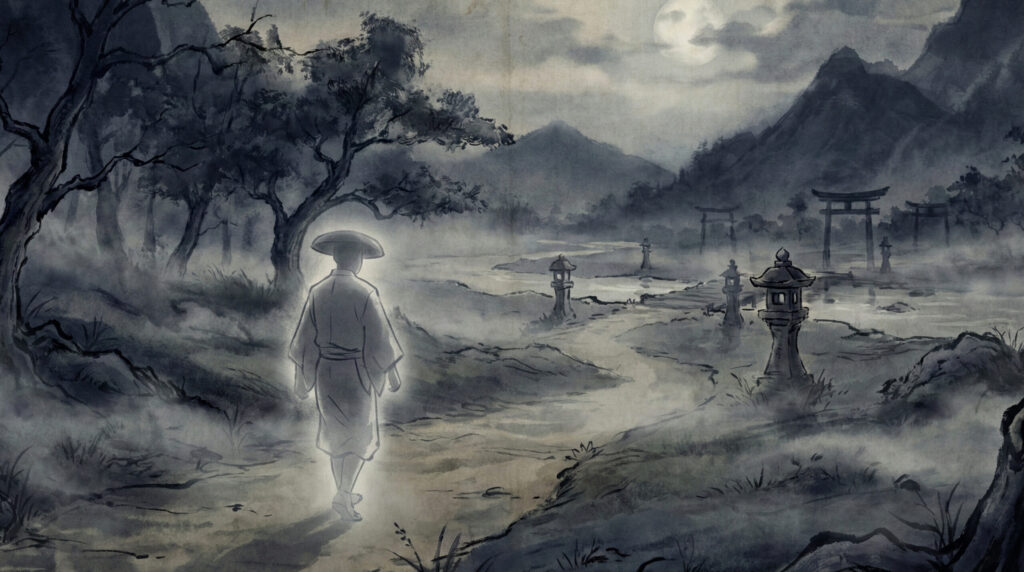
A symbolic journey undertaken by the dead through the afterlife realm.
It represents passage, judgment, and spiritual separation.
Primary Sources
Classical & Mythological Records
Buddhist afterlife journey texts and medieval death-road lore
Setsuwa collections describing shide-no-tabi imagery and spirit passage
葬送儀礼・冥途道・死出の旅に関する中世仏教説話資料
Modern Folklore References
Yanagita Kunio — beliefs about death journeys and spirit roads
Komatsu Kazuhiko — yōkai and concepts of afterlife passage
Shide no Tabi – The Postmortem Journey as a Folk Anomaly in Japanese Belief
Shide no Tabi(死出の旅) refers to the conceptual framework describing the journey undertaken after death in Japanese folk belief. Rather than a single yokai or spirit, it is an event-based anomaly(事象怪異)—a sequence of liminal states, paths, and trials through which the dead are believed to pass.
Shide no tabi is not concerned with destination alone. Its core lies in movement itself: the idea that death initiates a passage, governed by rules, boundaries, and dangers distinct from both life and the afterlife proper.
Death as Departure, Not End
In Japanese folk cosmology, death is rarely imagined as immediate arrival in another world. Instead, it is framed as departure. The dead must travel—sometimes slowly, sometimes with difficulty—before reaching a stable postmortem state.
This journey is neither purely spiritual nor purely symbolic. It is structured through:
- Paths and crossings
- Waiting periods and obstacles
- Encounters with boundaries rather than beings
Shide no tabi thus functions as a process, not a moment.
Origins in Funerary and Folk Practice
The concept of shide no tabi emerges from funerary customs and vernacular interpretations of Buddhist cosmology. Practices such as providing travel goods, sandals, or symbolic coins reflect the belief that the dead must move through space, not simply transform.
These customs encode practical anxieties:
- Will the dead find their way?
- Will they linger and return?
- What happens if the journey is interrupted?
Shide no tabi answers these questions by narrativizing death as a managed transition.
The Path as a Liminal Space
The “path” of shide no tabi is not fixed geographically, yet it is spatially imagined. It includes:
- Mountain passes
- Rivers and crossings
- Roads that resemble, but are not, those of the living
These spaces echo real-world boundaries—bridges, slopes, crossroads—reinforcing the idea that the dead move through familiar forms made unfamiliar.
The danger lies not in attack, but in misdirection or stagnation.
Shide no Tabi as an Anomaly
Shide no tabi becomes a site of anomaly when the journey fails.
Common concerns include:
- Spirits who cannot depart
- Souls who lose their way
- The dead who linger near the living world
These failures do not produce monsters immediately. Instead, they generate secondary anomalies: muen-botoke, yūrei, or restless presences. Shide no tabi is therefore a structural precursor to many other forms of supernatural disturbance.
Distinction from Afterlife Realms
Shide no tabi must be distinguished from the afterlife itself.
- The afterlife is a state
- Shide no tabi is a transition
This distinction is crucial. Folk belief places greater anxiety on the journey than on the destination, reflecting concern over uncertainty rather than judgment.
Symbolism and Cultural Meaning
Movement as Obligation
The dead are expected to move on. Failure to do so disrupts both worlds.
Care for the Departing
Funerary rites function as navigation aids, ensuring the journey proceeds correctly.
Death as Shared Responsibility
If the dead wander, the fault lies not only with them, but with the living who failed to prepare the path.
Related Concepts
Muen-botoke (無縁仏)
Unclaimed spirits.
→ Muen_botoke
Onryō (怨霊)
Vengeful spirits.
→ Onryō
Chinkon (鎮魂)
Ritual pacification.
Marebito (稀人)
Otherworldly visitors.
→ Marebito
Shide no Tabi in Narrative and Custom
References to shide no tabi appear less in dramatic storytelling and more in:
- Funeral speech
- Cautionary sayings
- Ritual gestures
This everyday embedding underscores its role as infrastructure of belief, supporting more visible supernatural figures without becoming one itself.
Modern Cultural Interpretations

This blade symbolizes the boundary passage and afterlife transition.
It visualizes the road of the dead condensed into weapon form.
In modern contexts, shide no tabi is often reinterpreted metaphorically as psychological processing of loss, the gradual separation of memory, and mourning as a journey rather than a single event.
These readings align closely with traditional logic, which treats death as extended and negotiated rather than instantaneous.
In some modern visual reinterpretations, shide no tabi manifests as a yōtō — a blade that lengthens like a road. The sword carries etched path-lines along its spine, embodying passage rather than destination.
Shide no tabi persists because mourning still unfolds over time.
Modern Reinterpretation – Shide no Tabi as the Road That Continues Beyond Death
Shide no Tabi is not a haunting. It is not a punishment. It is not an ending.
It is passage.
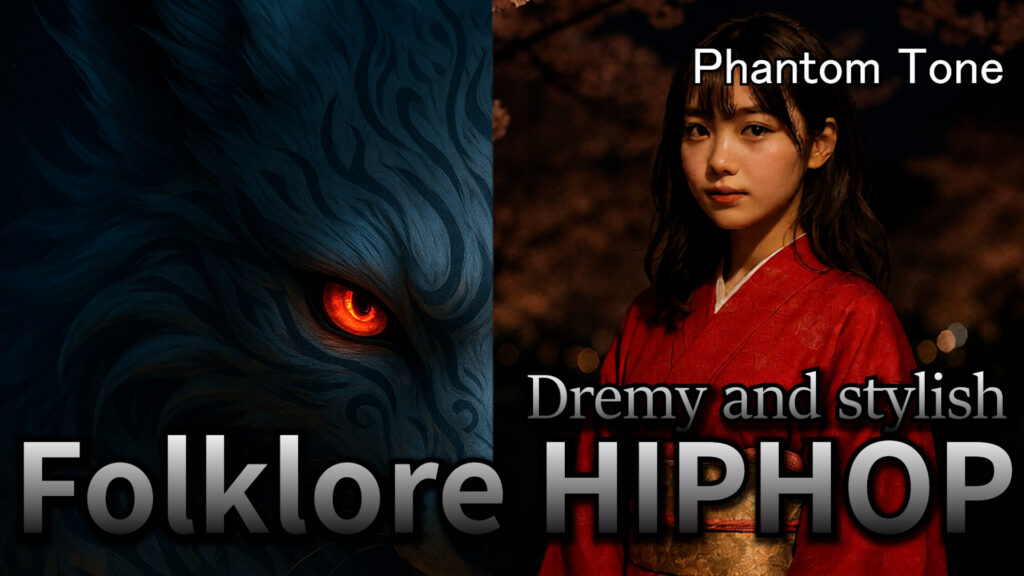
The “beautiful girl” form does not guide. She does not explain. She does not promise return.
Her distant, forward-facing presence represents death as movement — not disappearance, but transition still unfolding.
She does not stop. She does not look back. She only walks where the living can no longer follow.
In this visual form, Shide no Tabi becomes a contemporary yokai of ongoing departure — a spirit that exists only while the journey remains unfinished.
Musical Correspondence
The accompanying track transforms passage into sound. Slow processional motion, unresolved harmonies, and forward-drifting motifs evoke travel without arrival.
Silence acts not as rest, but as distance — framing sound as something that continues beyond hearing.
Together, image and sound form a unified reinterpretation layer — a modern folklore artifact of mourning as an unfinished journey.

She embodies passage and afterlife wandering.
Her presence reflects the road of death made visible.
Dreamy and stylish
Genre: Ritual Japanese HipHop / Darkwave Folklore Produced by: Phantom Tone | Suno AI | Kotetsu Co., Ltd. Tags: #JapaneseHipHop #AIgeneratedMusic #Yokai #Phant…