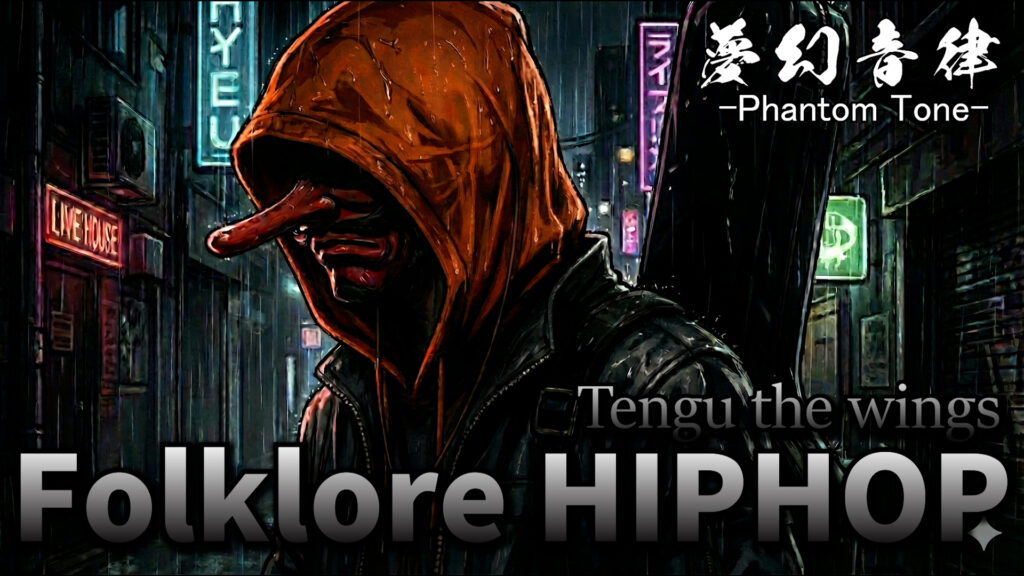

A hybrid being born from tengu and human lineage.
It represents liminality, inherited power, and mountain-bound otherness.
Primary Sources
Classical & Mythological Records
Heian–Muromachi period tengu chronicles and mountain-ascetic lore
Shugendō mountain spirit and yamabushi lineage traditions
Tengu–human hybrid offspring tales in medieval setsuwa collections
Modern Folklore References
Yanagita Kunio — mountain spirit lineage beliefs
Komatsu Kazuhiko — tengu genealogy and hybrid yōkai
Offspring of a Tengu – The Half-Born Heirs of the Mountain Wind in Japanese Folklore
The Offspring of a Tengu refers to beings born between worlds in Japanese folklore—children said to carry the blood, power, or spiritual residue of a tengu while remaining partly human. Neither fully yōkai nor fully mortal, they exist in a state of inherited liminality.
They are not created through curses or possession.
They are born.
Offspring of a tengu embody power passed down without consent.
Origins in Mountain Encounters and Secret Lineage
Tengu are mountain-dwelling beings associated with ascetic practice, martial discipline, and dangerous wisdom. Folklore records numerous encounters between tengu and humans—warriors trained in secret, monks led astray, villagers who vanished and returned changed.
From these encounters emerged whispered explanations for exceptional children: those with unnatural strength, sharp perception, or affinity for mountains and wind. Such children were said to be the offspring of tengu—born from unions, abductions, or spiritual crossings that defied ordinary lineage.
Bloodlines became explanations.
Appearance and Subtle Inheritance
Unlike tengu themselves, their offspring rarely appear overtly monstrous. Their traits are understated:
Unusual height or physical resilience
Eyes that seem too sharp or observant
Instinctive mastery of movement or combat
A natural comfort in high places or forests
An aloofness from ordinary social bonds
Horns or wings are rare, if present at all. The inheritance manifests internally, revealing itself through behavior rather than form.
The monster survives by blending in.
Abilities Without Training
A defining aspect of tengu offspring is ability without instruction. Legends describe them as:
Learning martial skills with unnatural speed
Sensing danger before it appears
Navigating mountains effortlessly
Enduring harsh conditions without fatigue
These traits often isolate them. What others must study, they simply know.
Inheritance replaces teaching.
Relationship with Tengu
Folklore is deliberately vague about whether tengu acknowledge their offspring. Some tales suggest distant guardianship—unseen protection or tests placed along mountain paths. Others imply abandonment, viewing the child as a consequence rather than a responsibility.
The offspring may feel drawn toward mountains without understanding why, as if called by something that never answers.
Lineage does not guarantee belonging.
Symbolism and Themes
Inherited Power Without Choice
Strength passed down involuntarily.
Liminal Identity
Neither human nor yōkai.
Isolation Through Difference
Ability creates distance.
The Mountain as Origin
Nature replaces family.
Related Concepts
Tengu (天狗)
Mountain spirit beings.
→ Tengu
Shugendō (修験道)
Mountain ascetic traditions.
Yamabushi (山伏)
Mountain ascetics.
Marebito (稀人)
Otherworldly visitors.
→ Marebito
Offspring of a Tengu in Folklore and Imagination
These figures appear less as named characters and more as explanatory myths—why a swordsman was unmatched, why a hermit survived impossible conditions, why a child vanished into the mountains and never returned.
They are not celebrated openly. Their existence unsettles social order by suggesting that power can arise outside human systems.
They are remembered quietly.
Modern Cultural Interpretations
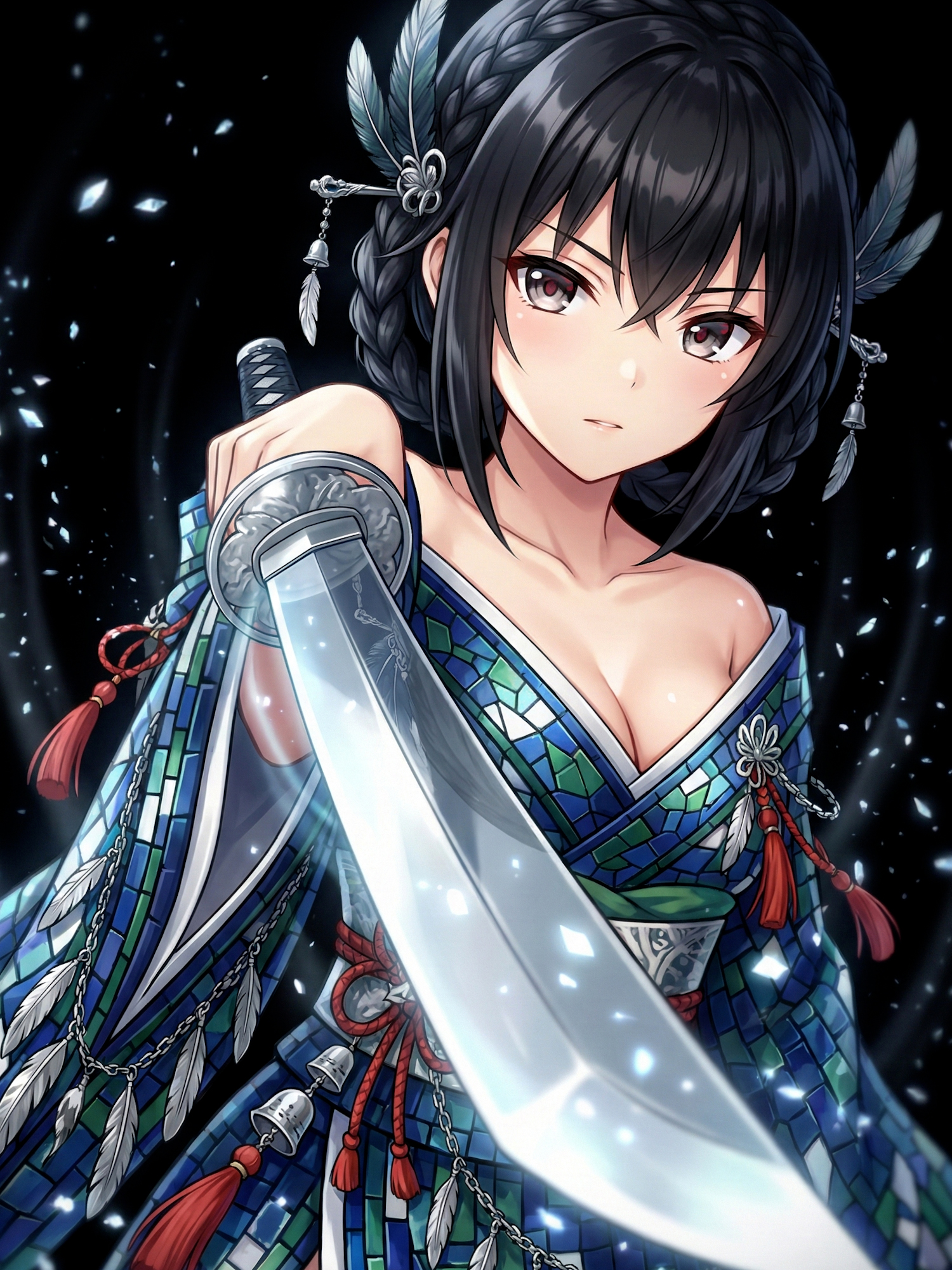
This blade symbolizes inherited mountain power and liminal lineage.
It visualizes hybrid bloodline condensed into weapon form.
Modern interpretations often frame tengu offspring as metaphors for inherited trauma, talent, or otherness — individuals marked by origins they did not choose.
In contemporary fiction, they may appear as wanderers, guardians, or reluctant inheritors of ancient roles. The question is no longer power, but responsibility.
In some modern visual reinterpretations, tengu offspring manifest as a yōtō — a blade that bears ancestral etchings along its spine. The sword carries lineage as weight, embodying inheritance rather than dominance.
Inheritance demands reckoning.
Modern Reinterpretation – Offspring of a Tengu as the Wind That Continues
In modern reinterpretation, Tengu Offspring are increasingly understood as figures of inheritance without consent—beings marked by origins they neither sought nor can escape. Their mythology, once bound to mountain ascetics and martial legends, now resonates through psychological, social, and artistic narratives as a study of legacy, difference, and reluctant continuity.
Contemporary storytellers often depict them as liminal wanderers—guardians who protect what they no longer believe in, or exiles who cannot return home. Where traditional tengu represented divine arrogance or spiritual rebellion, their descendants embody the aftermath of transcendence: the quiet burden of those who inherit extraordinary traits in ordinary worlds. Power is no longer the question—belonging is.
In visual reinterpretations, their essence is conveyed through the yōtō known as the “Heirloom Blade.” Along its spine run faint ancestral etchings—lines too old to decipher, yet too deep to erase. When drawn, the sword hums with wind rather than steel, suggesting that what it carries is not weaponry, but memory. The blade does not assert dominance; it remembers lineage.
This reimagining translates the ancient tension of tengu mythology into modern language: identity as an inheritance that both empowers and isolates. The offspring are neither fully divine nor human—they are continuations without closure, reminders that even in an age of progress, some legacies still breathe through us, shaping what we cannot refuse to be.
Musical Correspondence
Music inspired by the Offspring of a Tengu often moves between lightness and gravity—reflecting descent from mountain winds into human silence. Swift, percussive motifs echo aerial agility, while slow, resonant tones trace the melancholy of distance. The contrast between motion and stillness mirrors a life caught between worlds.
Instrumentation may blend traditional shakuhachi or fue with subtle electronic atmospheres, weaving past and present into a single sonic horizon. Melodic fragments appear like gusts—emerging, circling, and fading—without full resolution. Layered echoes and reverb evoke vast spaces where sound travels farther than belonging.
Through this interplay of elevation and solitude, compositions inspired by Tengu Offspring capture their essential paradox: heritage as wind—felt, carried, but never possessed. It is the music of legacy in motion, where inheritance itself becomes both anchor and flight.

She embodies liminal heritage and mountain-born power.
Her presence reflects inherited otherness made visible.
Tengu the Wings
Genre: Japanese Folklore Hip-Hop, Ritual Lo-Fi Poetry Produced by: Phantom Tone | Suno AI | Kotetsu Co., Ltd. Tags: #AIgeneratedMusic #JapaneseHipHop #Folklore…