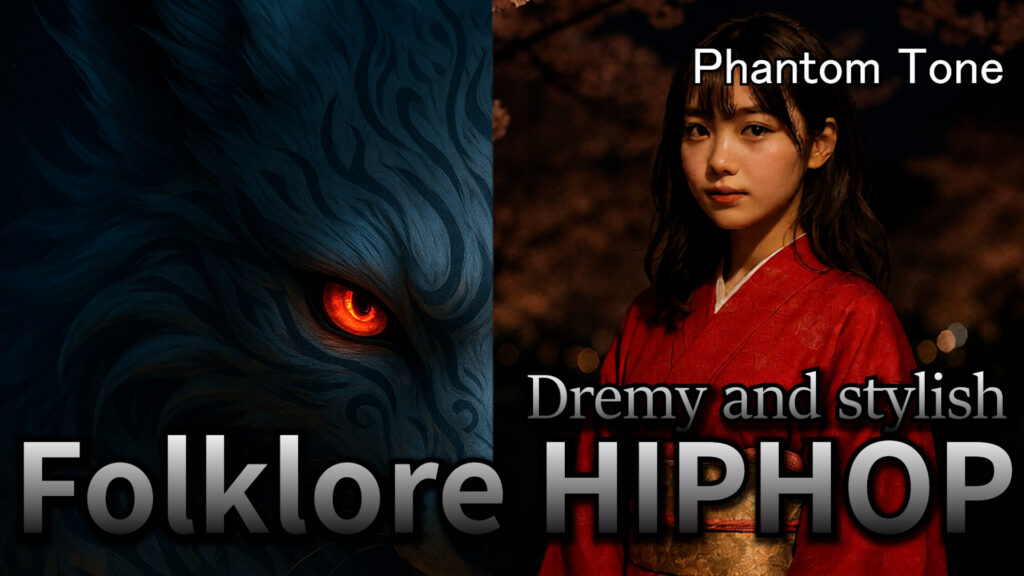

A living person’s spirit that leaves the body due to intense resentment.
It represents obsession, emotional overflow, and spiritual projection.
Primary Sources
Classical & Mythological Records
Nihon Shoki (日本書紀)
Bizen Fudoki (備前国風土記)
Kibi region mythological traditions
Modern Folklore References
Yanagita Kunio — Kibi demon folklore
Komatsu Kazuhiko — Yōkai Encyclopedia
Ikiryō – Living Spirits Born from Unreleased Emotion in Japanese Folklore
Ikiryō, or “living spirits,” are among the most psychologically unsettling phenomena in Japanese folklore: spirits that separate from a living person, driven by overwhelming emotion. Unlike ghosts formed after death, ikiryō emerge while the body still lives, acting independently yet bound to their origin.
They are not summoned intentionally, nor created through ritual. Ikiryō arise when emotion exceeds containment—when jealousy, grief, obsession, or despair can no longer remain internal.
Ikiryō embody emotion that escapes the self.
Origins in Courtly and Buddhist Thought
The concept of ikiryō appears prominently in classical literature and Heian-period belief, where emotional restraint was culturally valued and psychological suffering often expressed indirectly.
Buddhist thought framed intense attachment (shūchaku) as dangerous, capable of distorting the mind and spirit. Ikiryō gave narrative form to this danger: emotion so powerful that it detaches and acts.
Rather than condemning the person outright, folklore presents ikiryō as consequence rather than intent.
The Mechanism of Separation
Ikiryō are not deliberate projections. The living individual may be unaware of their spirit’s departure. Common conditions associated with ikiryō include:
Extreme jealousy or resentment
Unresolved love or betrayal
Prolonged grief or obsession
Emotional suppression without release
The spirit separates during sleep, illness, or emotional collapse, manifesting elsewhere while the body remains weakened or unaware.
The body survives. The emotion travels.
Appearance and Manifestation
Ikiryō often appear as distorted reflections of their origin:
A pale or shadowed double of the living person
A mist-like or semi-transparent figure
A presence felt before it is seen
A figure recognizable only to the victim
Unlike vengeful ghosts, ikiryō are unstable. Their form may flicker or dissolve, reflecting their incomplete separation from life.
They are alive, yet not whole.
Encounters and Harm
Ikiryō are most dangerous to specific targets—often the focus of the originating emotion. They may cause illness, nightmares, emotional disturbance, or gradual decline.
Importantly, ikiryō do not always intend harm. Damage occurs because the spirit carries raw emotion without restraint or context.
The living origin may suffer as well, growing weaker as the spirit persists.
Responsibility Without Awareness
A defining tragedy of ikiryō is unintentional harm. The person from whom the spirit originates may feel guilt, confusion, or exhaustion without knowing why.
This ambiguity complicates moral judgment. Ikiryō are neither crimes nor curses—they are symptoms.
Japanese folklore thus frames emotional repression as dangerous not only to oneself, but to others.
Symbolism and Themes
Emotion Beyond Containment
Feelings cannot always be suppressed safely.
Division of Self
Mind and body lose unity.
Unintended Harm
Suffering spreads without malice.
Visibility of the Invisible
Inner states gain external form.
Related Concepts
Onryō (怨霊)
Vengeful spirits.
→ Onryō
Aramitama (荒御魂)
Violent divine aspects.
→ Aramitama
Urami (恨み)
Lingering resentment.
Marebito (稀人)
Otherworldly visitors.
→ Marebito
Ikiryō in Literature and Cultural Memory
One of the most famous depictions of ikiryō appears in The Tale of Genji, where Lady Rokujō’s living spirit torments rivals born from jealousy and abandonment.
Such portrayals emphasize tragedy over villainy. The ikiryō is frightening, but the human origin is pitiable.
This duality anchors ikiryō firmly within psychological folklore rather than monster myth.
Modern Cultural Interpretations
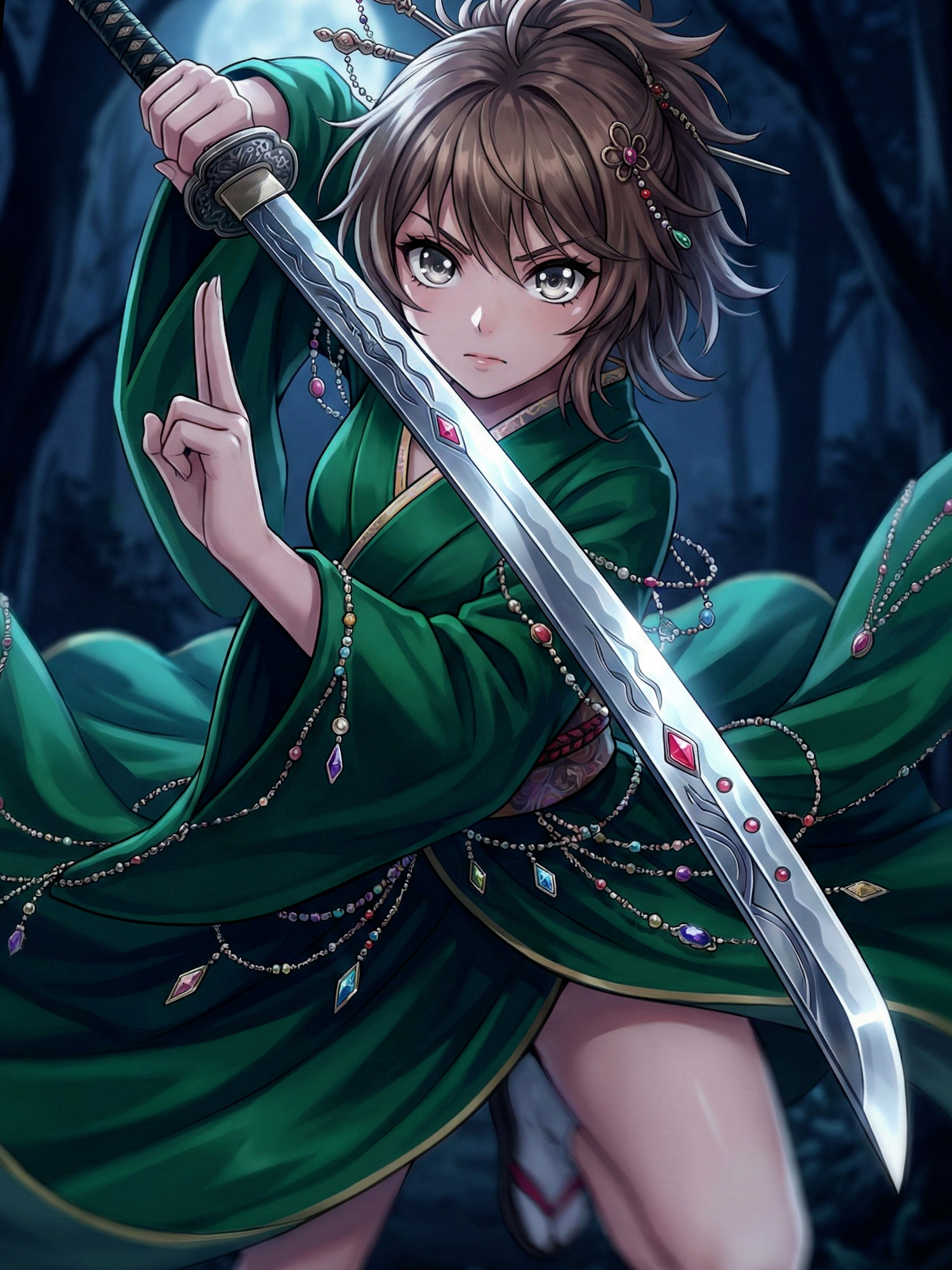
This blade symbolizes living resentment and emotional projection.
It visualizes unspoken obsession condensed into weapon form.
In modern readings, ikiryō are often interpreted through psychological frameworks such as dissociation, projection, emotional burnout, and trauma response.
Contemporary fiction may portray ikiryō as metaphors for toxic relationships, internalized anger, or identity fragmentation.
In some modern visual reinterpretations, ikiryō manifest as a yōtō — a blade that separates shadow from body. The sword embodies emotion that has left its origin, cutting distance rather than flesh.
Despite reinterpretation, the core idea remains unchanged: emotion denied expression seeks another path.
Modern Reinterpretation – Ikiryō as the Spirit That Escapes the Living
In modern interpretation, Ikiryō—the “living spirit”—is no longer viewed merely as supernatural vengeance, but as a psychological metaphor made visible. Within literature, film, and performance, it embodies emotion that refuses confinement: the silent accumulation of anger, grief, or longing that detaches from the self and acts in one’s stead. Modern readings align the Ikiryō with concepts of dissociation, projection, and psychic overflow—the sense that what we suppress will eventually find a body of its own.
Contemporary artists and writers often depict the Ikiryō as a spectral double—neither ghost nor hallucination, but something uncomfortably real. It is the embodiment of psychological residue: every word withheld, every feeling denied, taking shape as a mirror-self that moves autonomously. Whether interpreted as emotional burnout, identity fragmentation, or internalized resentment, the Ikiryō endures as a vivid metaphor for the human cost of silence.
In modern visual reinterpretations, the yōtō linked to the Ikiryō legend is called the “Blade of Parted Shadow.” When drawn, its surface reflects both the wielder and a faint, unaligned image—always slightly delayed, as if time itself has fractured. The sword is not forged to kill, but to divide: between body and will, form and emotion. To wield it is to recognize the distance between intention and feeling—the split that defines modern existence.
Through this lens, Ikiryō stands as one of Japanese folklore’s most psychologically prescient figures. It anticipates the language of trauma, emotional repression, and multiplicity centuries before such terms existed. Its warning is neither moral nor mystical—it is existential: what is not expressed will find another way to be seen.
Musical Correspondence
Music inspired by Ikiryō often explores division and reflection. Layered motifs drift slightly out of sync, creating the illusion of echoing selves. Pulses fade in and out of phase, evoking the instability between inner and outer worlds. Breathlike textures, faint reversals, and shifting stereo fields suggest emotion attempting to leave the body.
Instrumentation may include muted percussion, bowed strings, or distant vocals processed to sound disembodied. Harmonic tension rarely resolves; phrases loop just beyond completion, mirroring thought patterns that never find release. Silence becomes part of the rhythm, functioning as emotional absence made audible.
Through this fragmented architecture, music inspired by Ikiryō captures the essence of dislocated feeling—emotion that escapes control, presence without center. It is not a haunting from beyond death, but from within life itself.

She embodies lingering resentment and emotional overflow.
Her presence reflects unspoken attachment made visible.
Dreamy and stylish
Genre: Ritual Japanese HipHop / Darkwave Folklore Produced by: Phantom Tone | Suno AI | Kotetsu Co., Ltd. Tags: #JapaneseHipHop #AIgeneratedMusic #Yokai #Phant…