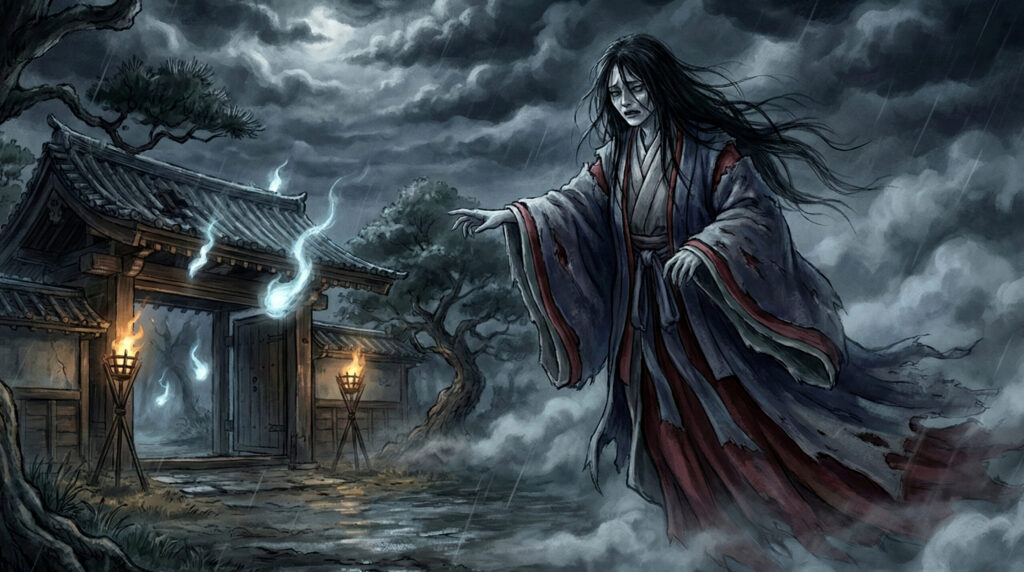
A pacified vengeful spirit enshrined to prevent calamity.
It represents appeasement, political fear, and ritual containment.
Primary Sources
Classical & Mythological Records
Nihon Shoki (日本書紀)
Bizen Fudoki (備前国風土記)
Kibi region mythological traditions
Modern Folklore References
Yanagita Kunio — Kibi demon folklore
Komatsu Kazuhiko — Yōkai Encyclopedia
Goryō – Pacified Spirits, Political Power, and Ritualized Fear in Japanese Tradition
Goryō(御霊) refers to a category of spirits that occupy a critical position between vengeful anomaly and sacred presence in Japanese history. Unlike onryō, which represent raw and unresolved resentment, goryō are spirits whose dangerous power has been recognized, ritually managed, and incorporated into social order.
The concept of goryō cannot be separated from politics, epidemic disease, and state-level ritual. Goryō belief emerges where supernatural fear, political legitimacy, and communal survival intersect.
From Onryō to Goryō – A Transformative Process
Goryō are not born as goryō. They are made.
The typical trajectory follows a recognizable pattern:
- A powerful individual suffers injustice, exile, or unnatural death
- Calamities—plague, famine, disaster, political collapse—follow
- These events are interpreted as spiritual retaliation
- Rituals of appeasement and elevation are performed
- The spirit is transformed from threat into protector
This process marks the transition from onryō (怨霊) to goryō (御霊).
Political Origins of Goryō Belief
Court Society and Supernatural Governance
Goryō belief developed most clearly within early and medieval court society, where political power and cosmic order were considered inseparable. When unexplained disasters struck, they were not viewed as random events but as signs of moral imbalance within governance.
Appeasing goryō thus served a dual purpose:
- Restoring spiritual balance
- Reinforcing political legitimacy
Ritual acknowledgment of injustice allowed the ruling class to symbolically correct past wrongs without overturning existing structures.
Goryō and Epidemic Disease
One of the most significant domains of goryō belief is epidemic disease. Plagues were frequently attributed to angry spirits whose resentment had spread into the environment itself.
Goryō rituals functioned as:
- Public explanations for mass suffering
- Communal acts of reassurance
- Attempts to contain fear through ceremony
By naming a cause—however supernatural—society regained a sense of agency.
Ritualization and Pacification
Unlike onryō, which demand acknowledgment, goryō demand formalization. Rituals associated with goryō include:
- State-sponsored ceremonies
- Construction of shrines
- Posthumous restoration of rank or honor
Once pacified, a goryō could become a protective force, guarding the community it once threatened. This transformation illustrates a core principle of Japanese folk-religious logic: power is not destroyed, only redirected.
Distinction Between Goryō and Kami
While goryō may eventually be enshrined, they are not identical to kami in origin.
- Kami are primordial or functional divinities
- Goryō are human-derived spirits elevated through fear and ritual
This distinction preserves the memory of injustice even after pacification. A goryō’s shrine is not only a place of worship, but a reminder of what happens when power is abused.
Symbolism and Cultural Meaning
Fear as Political Language
Goryō belief allowed fear to be expressed without rebellion. Supernatural attribution made dissent speakable.
Ritual as Conflict Resolution
Rather than confronting injustice directly, society transformed grievance into ceremony. This process stabilized order while acknowledging harm.
Memory Through Reverence
By venerating goryō, communities preserved historical trauma in ritualized form, ensuring it was neither forgotten nor allowed to destabilize the present.
Related Concepts
Onryō (怨霊)
Vengeful spirits.
→Onryō
Aramitama (荒御魂)
Violent divine aspects.
→Aramitama
Chinkon (鎮魂)
Ritual pacification of spirits.
Marebito (稀人)
Otherworldly visitors.
→Marebito
Later Developments and Legacy
Over time, the goryō framework influenced:
- Shrine cult formation
- Festival practices
- The merging of historical memory with religious identity
In later eras, the boundary between goryō and kami blurred further, but the underlying logic—appeasement through recognition—remained intact.
Modern Cultural Interpretations
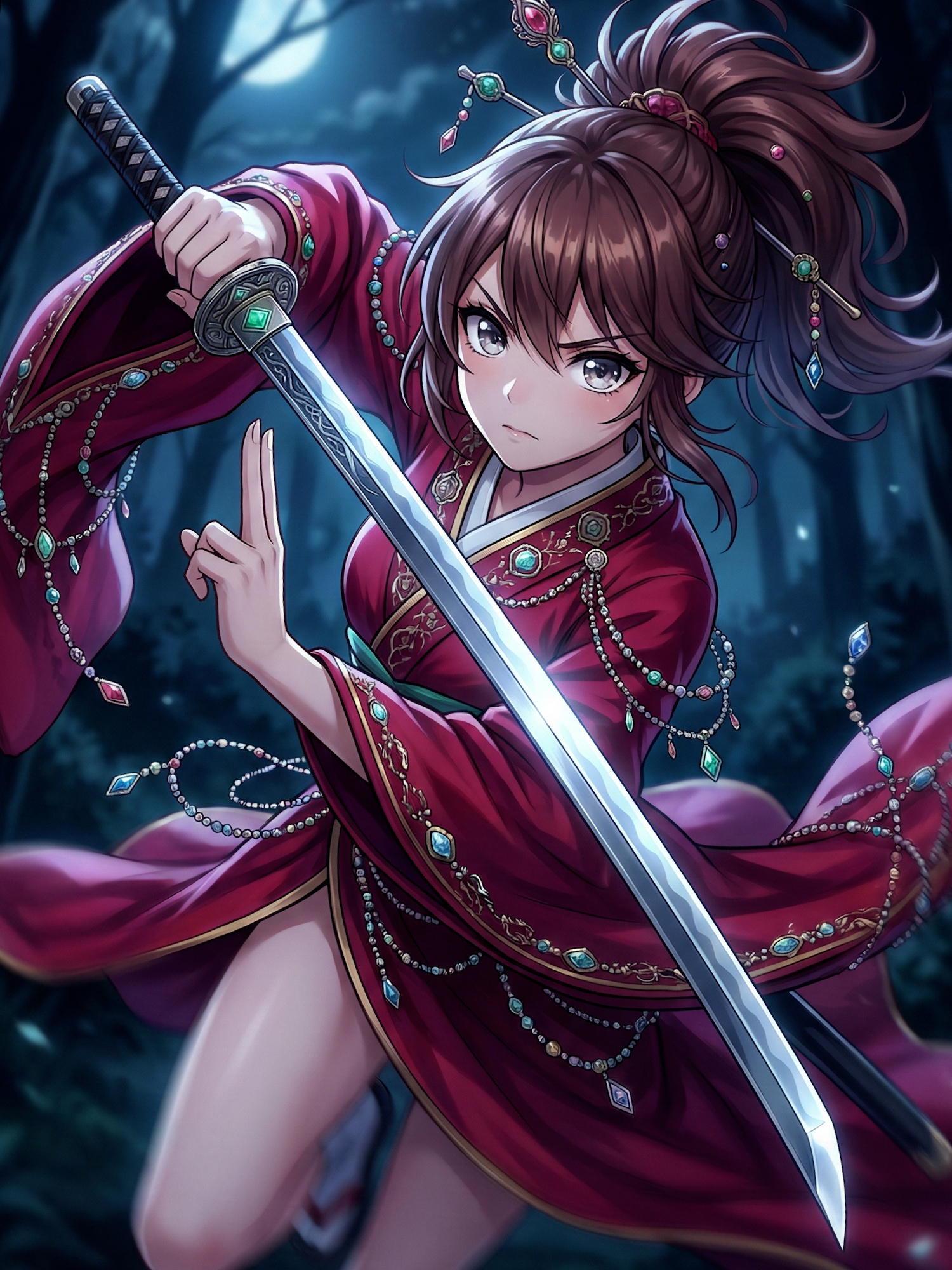
This blade symbolizes ritual appeasement and contained vengeance.
It visualizes pacified wrath condensed into weapon form.
In modern cultural interpretations, Goryō are often understood as embodiments of unresolved injustice — voices erased by power structures that return through social unrest, disaster narratives, or collective unease.
Psychologically, Goryō represent suppressed anger and historical guilt: emotions denied expression until they manifest indirectly, shaping atmosphere rather than action.
In some modern visual reinterpretations, Goryō manifest as a yōtō — a blade bound with ritual cords and inscribed with names never spoken aloud. The sword does not seek revenge; it forces remembrance, turning silence itself into pressure.
Goryō persist because injustice does not dissolve on its own.
Modern Reinterpretation – Goryō as Spirits That Govern Through Memory
In modern interpretation, Goryō—the vengeful spirits of the wronged dead—have evolved into symbols of institutional remembrance rather than individual revenge. Their stories no longer revolve solely around haunting or punishment, but around how societies metabolize guilt. When natural disasters, pandemics, or social upheavals strike Japan, the collective imagination often returns—consciously or not—to the logic of the Goryō: calamity as echo, consequence, or the return of what was suppressed.
In contemporary culture, the Goryō have thus become figures of memory turned moral architecture. Shrines dedicated to appeased spirits, festivals held for pacification, and even modern memorials can be seen as secular descendants of Goryō belief—public performances of apology and continuity. Whether the injustice concerns war, discrimination, or environmental catastrophe, the Goryō archetype lingers as the sense that the past is not gone, only stored.
Visually, they are often reimagined as ritual presences rather than spectral horrors. The yōtō that represents them, sometimes called the “Blade of Bound Names,” bears cords that restrain rather than adorn. Each cord signifies a life once silenced, its knot tightening with each generation’s failure to remember. The blade’s surface gleams with faint inscriptions—legible only when the light bends—reminding the living that acknowledgment itself is an act of exorcism. It is a weapon of conscience, not of conflict.
Through this lens, Goryō cease to be monsters and become mechanisms of ethical continuity. They do not destroy; they compel. They ensure that tragedy, once recognized, cannot be comfortably forgotten. Their enshrinement within temples and state ritual reflects a paradox: society preserves what it once feared, transforming vengeance into worship, violence into governance, and guilt into duty.
Musical Correspondence
Music inspired by Goryō moves with ceremonial gravity. Slow, pulse-like percussion mirrors the rhythm of ritual processions, while deep drones suggest the weight of collective acknowledgment. Harmonies evolve gradually, dissolving dissonance through layering rather than resolution—sound transforming into structure, as rage becomes reverence.
Choral textures may rise and fade like distant chants, invoking the presence of unseen witnesses. Bells, gongs, or taiko hits mark thresholds within the composition, signifying transitions between remembrance and release. The overall pacing is deliberate and immersive, allowing silence to act as a participant rather than a pause.
Through this sonic architecture, the composition embodies the essence of Goryō: power transmuted into presence, vengeance transformed into ritual, and fear into the act of remembrance itself. The result is not lamentation, but ceremony—a sound that honors what refuses to disappear.
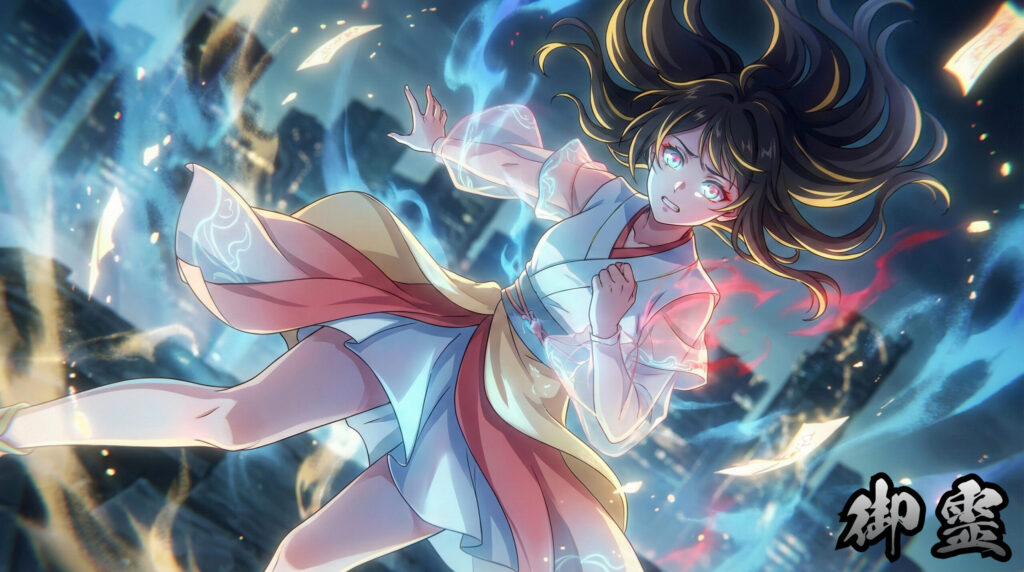
She embodies appeased wrath and ritual memory.
Her presence reflects contained vengeance made visible.
Dreamy and stylish
Genre: Ritual Japanese HipHop / Darkwave Folklore Produced by: Phantom Tone | Suno AI | Kotetsu Co., Ltd. Tags: #JapaneseHipHop #AIgeneratedMusic #Yokai #Phant…