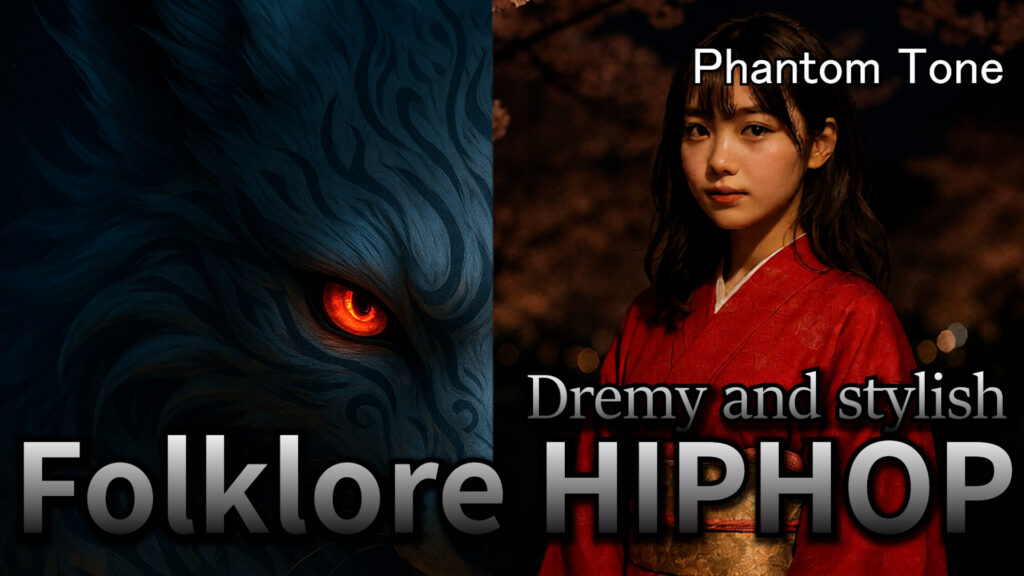

A lingering tree-bound spirit associated with ancient camellia trees.
It represents ancestral memory, lingering sorrow, and arboreal haunting.
Primary Sources
Classical & Mythological Records
Nihon Shoki (日本書紀)
Bizen Fudoki (備前国風土記)
Kibi region mythological traditions
Modern Folklore References
Yanagita Kunio — Kibi demon folklore
Komatsu Kazuhiko — Yōkai Encyclopedia
Furutsubaki no Rei – Spirits Lingering in Ancient Camellia Trees of Japanese Folklore
Furutsubaki no Rei refers to a spirit believed to dwell within an ancient camellia tree—especially one that has stood for generations near shrines, old estates, or abandoned paths. Unlike mobile yōkai that wander or hunt, this spirit is rooted, bound to place and time. Its presence is felt not through action, but through atmosphere.
Camellia trees hold a unique position in Japanese cultural symbolism. Their flowers fall whole, without scattering petals, evoking sudden death and quiet finality. When such a tree grows old, folklore imagines that memory accumulates within it, eventually giving rise to a spirit.
Furutsubaki no Rei embodies sorrow that has taken root.
Origins in Tree Worship and Ancestral Memory
Japanese folklore has long recognized trees as vessels of spirit. Sacred trees (shinboku) were believed to house kami, while old or unusual trees were treated with reverence or caution.
Camellias, associated with samurai death, illness, and impermanence, carried additional emotional weight. When an ancient camellia witnessed repeated human loss—deaths, farewells, abandonment—it was believed to absorb those traces.
Furutsubaki no Rei arises not from a single event, but from accumulation over time.
Appearance and Manifestation
Descriptions of the spirit are subtle and often indirect:
A woman seen beneath a camellia tree at dusk
A pale figure blending with falling blossoms
A presence felt rather than clearly seen
Petals appearing stained darker than normal
The spirit rarely reveals a clear form. Instead, it manifests through sensory shifts: silence thickening, air cooling, or the unnatural stillness of falling flowers.
The tree itself becomes the body.
The Falling Flower as Omen
Camellia blossoms fall intact, striking the ground with weight rather than drifting away. In folklore, this characteristic aligns them with abrupt endings—lives cut short, words left unsaid.
Furutsubaki no Rei is often encountered at the moment a flower falls. The sound, soft yet final, signals presence. To linger beneath the tree is to place oneself within the spirit’s memory.
The danger lies not in attack, but in emotional entanglement.
Human Encounters and Quiet Consequence
Encounters with Furutsubaki no Rei are not violent. Those who meet the spirit may experience:
Sudden melancholy or exhaustion
Vivid dreams of the past
A feeling of being watched without hostility
An urge to remain near the tree
Some tales warn that staying too long can cause one to lose the will to leave, gradually fading into memory like the spirit itself.
The tree does not trap bodies—it holds hearts.
Symbolism and Themes
Memory Anchored to Place
The past remains where it was lived.
Beauty and Finality
The camellia’s elegance mirrors quiet death.
Stillness Over Violence
Horror emerges through emotional weight.
Nature as Witness
Trees remember what humans forget.
Related Concepts
Kodama (木霊)
Tree spirits.
→Kodama
Onryō (怨霊)
Vengeful spirits.
→Onryō
Ancestral Spirits (祖霊)
Lineage-bound spiritual presences.
Marebito (稀人)
Otherworldly visitors.
→Marebito
Furutsubaki no Rei in Folklore and Art
Stories of spirits bound to old trees appear throughout regional folklore, but camellia spirits are treated with particular solemnity. Artists depict ancient camellias as heavy with blossoms, their shadows deep and unmoving.
The spirit is often suggested rather than shown—an empty space beneath the tree, a single fallen flower, a woman half-hidden by branches.
This restraint reinforces the spirit’s quiet authority.
Modern Cultural Interpretations
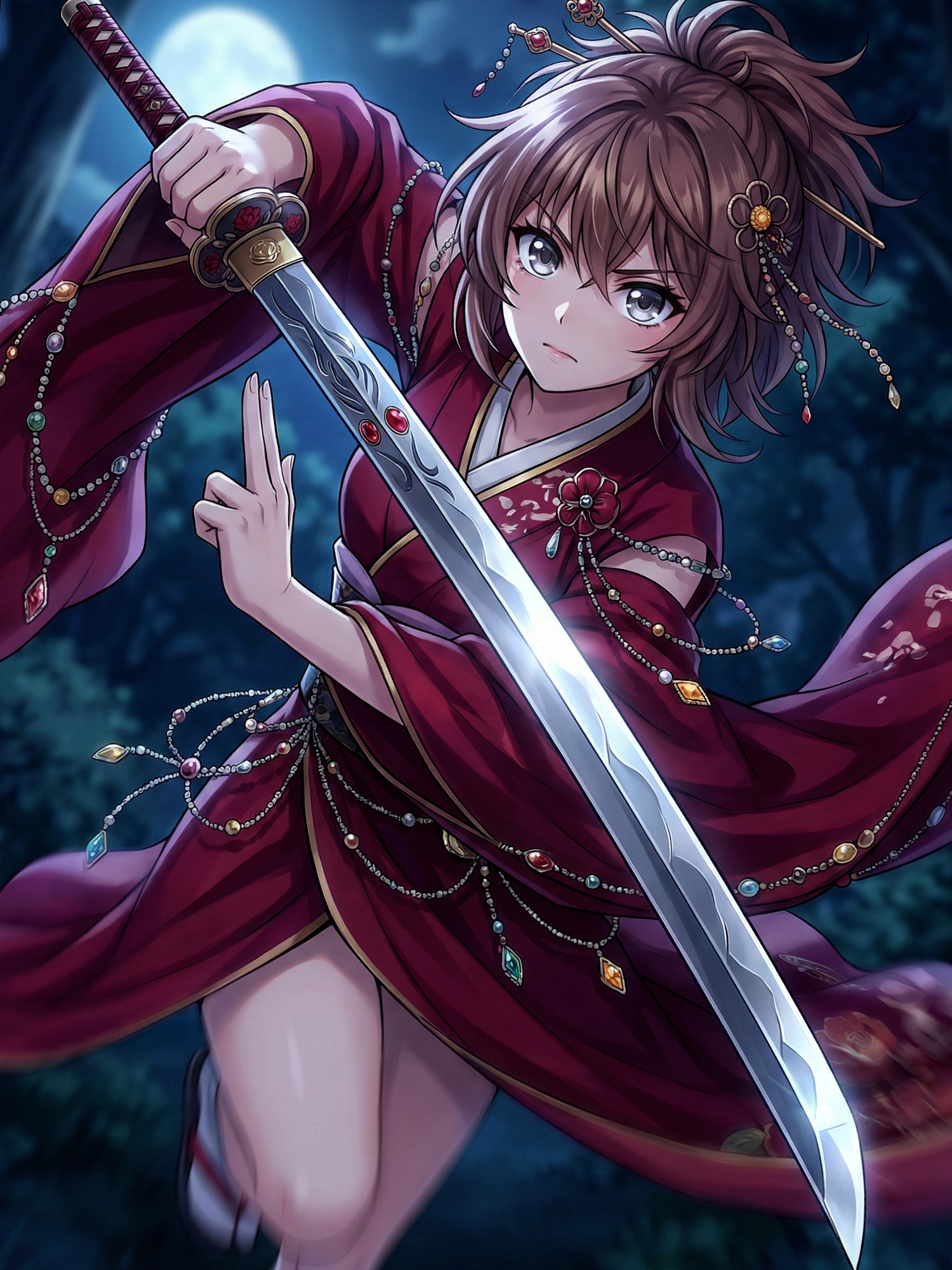
This blade symbolizes ancestral memory and tree-bound haunting.
It visualizes lingering lineage condensed into weapon form.
In modern readings, Furutsubaki no Rei is often interpreted as a symbol of grief tied to place — ancestral land, abandoned homes, and sites of repeated loss. The spirit reflects how environments absorb emotion and history.
Contemporary art and literature may frame the camellia spirit as memory itself — beautiful, painful, and immobile.
In some modern visual reinterpretations, Furutsubaki no Rei manifests as a yōtō — a blade veined like fallen petals. The sword does not chase; it remains, marking land that remembers.
Its relevance persists wherever the past refuses to fade.
Modern Reinterpretation – Furutsubaki no Rei as the Spirit That Remains
In modern interpretation, Furutsubaki no Rei—the Spirit of the Ancient Camellia—embodies place-bound grief: sorrow so deeply rooted in a landscape that it becomes indistinguishable from the land itself. Rather than haunting individuals, this presence haunts continuity—the persistence of memory where generations have come and gone. Abandoned villages, ancestral gardens, and shrines overgrown with moss often become visual metaphors for the camellia’s unblinking endurance.
The “fallen bloom” visualization presents Furutsubaki no Rei as an apparition seated beneath a tree whose petals fall all at once. She does not move, nor does she fade. Her kimono mirrors the texture of camellia petals—smooth, heavy, and faintly bruised at the edges. Light filters through the canopy in a muted red, turning the air itself into memory. Every petal that lands seems to whisper a name, a year, or a moment no longer spoken aloud. The spirit’s gaze is calm but unbearable, for it sees not the present, but everything that stayed behind.
The yōtō bound to her myth is known as the “Blade of Blooming Silence.” Its steel carries faint red veins like those within a petal, and when drawn, it releases a sound akin to soft wind through falling flowers. The weapon is not meant to strike—it marks. Wherever it rests, it signifies land that remembers loss. To bear it is to inherit stillness, to become part of the cycle of blooming and falling, year after year.
Through this modern lens, Furutsubaki no Rei becomes an emblem of cultural and emotional sediment: the quiet accumulation of lives, seasons, and grief that forms the foundation of identity. Her existence reminds us that some sorrows do not require resolution; they simply ask to be recognized. The camellia does not demand attention—it endures, shedding beauty even as it decays. The spirit remains because remembrance itself is sacred.
Musical Correspondence
Music inspired by Furutsubaki no Rei unfolds with deliberate restraint. Sparse melodic gestures—single piano notes, koto plucks, or breath-like synth tones—fall like petals, leaving silence as their echo. Low drones or bowed strings may sustain beneath them, creating the sense of something ancient vibrating faintly through the present.
Harmony remains unresolved, suspended in tonal ambiguity. Melodies descend rather than rise, reflecting both gravity and grace. The pacing is slow, allowing listeners to perceive each sound as an imprint, a presence left behind. Occasional abrupt cutoffs mimic the camellia’s natural fall—beautiful, sudden, and complete.
Through this soundscape, the composition evokes not mourning but continuity: the gentle awareness that what has passed still breathes in what remains. In the hush that follows each note, Furutsubaki no Rei endures—neither ghost nor memory, but the quiet persistence of beauty bound to loss.

She embodies arboreal sorrow and ancestral presence.
Her presence reflects lineage-bound memory made visible.
Dreamy and stylish
Genre: Ritual Japanese HipHop / Darkwave Folklore Produced by: Phantom Tone | Suno AI | Kotetsu Co., Ltd. Tags: #JapaneseHipHop #AIgeneratedMusic #Yokai #Phant…