
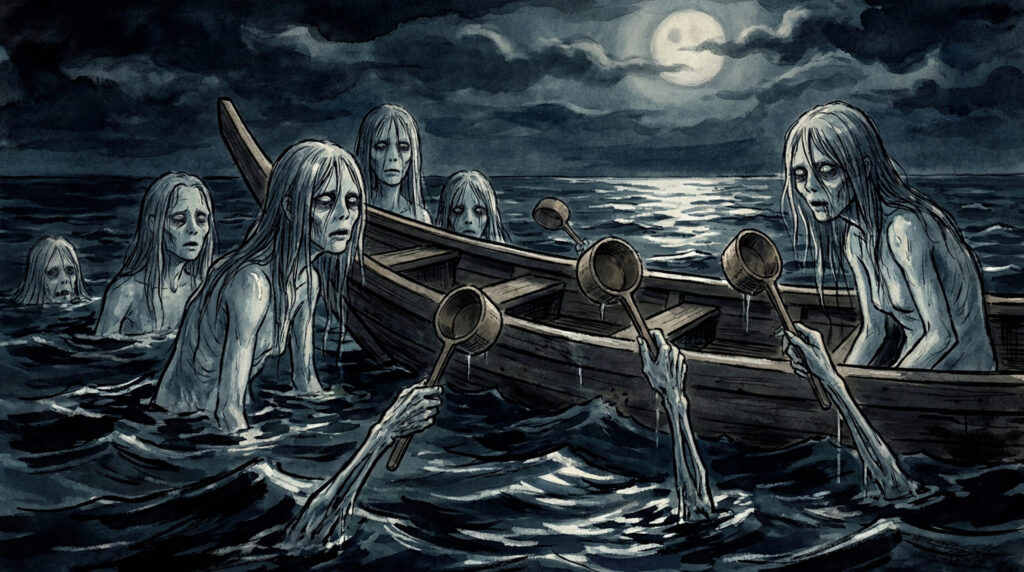
A ghostly apparition of drowned sailors haunting coastal waters.
It represents maritime disaster, lingering resentment, and death at sea.
Primary Sources
Classical & Mythological Records
Nihon Shoki (日本書紀)
Bizen Fudoki (備前国風土記)
Kibi region mythological traditions
Modern Folklore References
Yanagita Kunio — Kibi demon folklore
Komatsu Kazuhiko — Yōkai Encyclopedia
Funayūrei – The Dead Who Drift Back to Claim the Living at Sea in Japanese Folklore
Funayūrei are spirits of those who died at sea, appearing to sailors and fishermen as ghostly boats or figures that rise from the waves. Unlike land-bound ghosts, they do not haunt places—they intercept journeys.
They do not scream.
They do not chase.
They ask.
Funayūrei embody death that continues to travel.
Origins in Maritime Life and Mass Death
Premodern Japanese coastal life was inseparable from danger. Storms, currents, and fragile vessels led to sudden, collective death. Bodies were often unrecovered, rites incomplete.
Funayūrei arise from this condition: the dead who never reached shore, and therefore never fully crossed into the afterlife.
The sea keeps them moving.
From Water Dead to Maritime Interceptors
Where Mizushinin are bound to specific waters and Kuragebō drift as residue, Funayūrei retain purpose. They approach ships, engage the living, and reproduce disaster.
They do not rest.
They continue the voyage.
Appearance: Boats Without Weight
Accounts of Funayūrei vary, but share core features:
Ghostly boats emerging beside living vessels
Pale figures indistinct against fog and spray
Faces lacking clear emotion
Voices carried unnaturally across water
They resemble sailors who never disembarked.
You meet them mid-journey.
Behavior: The Request That Drowns
Funayūrei do not attack directly. Their defining action is solicitation:
They ask for a ladle or bucket
They request water or help
When given, they pour water into the boat
The vessel begins to sink
The act mirrors their own death.
Kindness becomes repetition.
Relationship with the Living
Traditional sailors developed countermeasures:
Using bottomless ladles
Refusing to answer voices at sea
Offering prayers before departure
Avoiding fog-bound encounters
The rules are practical, not moral.
Survival depends on knowledge.
Funayūrei Among Water Spirits
Funayūrei occupy a precise maritime layer:
- Suisei – water as essence
- Mizushinin – water-bound dead
- Funayūrei – mobile dead
- Watatsumi – sovereign sea deity
They are not rulers.
They are consequences in motion.
Symbolism and Themes
Unfinished Passage
Death without arrival.
Repetition of Disaster
The dead recreate their end.
Aid as Danger
Compassion exploited by circumstance.
The Sea as Corridor
No fixed boundary between worlds.
Related Concepts
Umibōzu (海坊主)
Colossal sea spirits.
→Umibōzu
Funa-yōkai (船妖怪)
Ship-associated supernatural beings.
Onryō (怨霊)
Vengeful spirits.
→Onryō
Marebito (稀人)
Otherworldly visitors.
→Marebito
Funayūrei in Folklore Records
Funayūrei appear widely in coastal lore, war tales, and Edo-period compilations. Their consistency across regions suggests shared maritime experience rather than isolated myth.
Every coast knows them.
Modern Cultural Interpretations
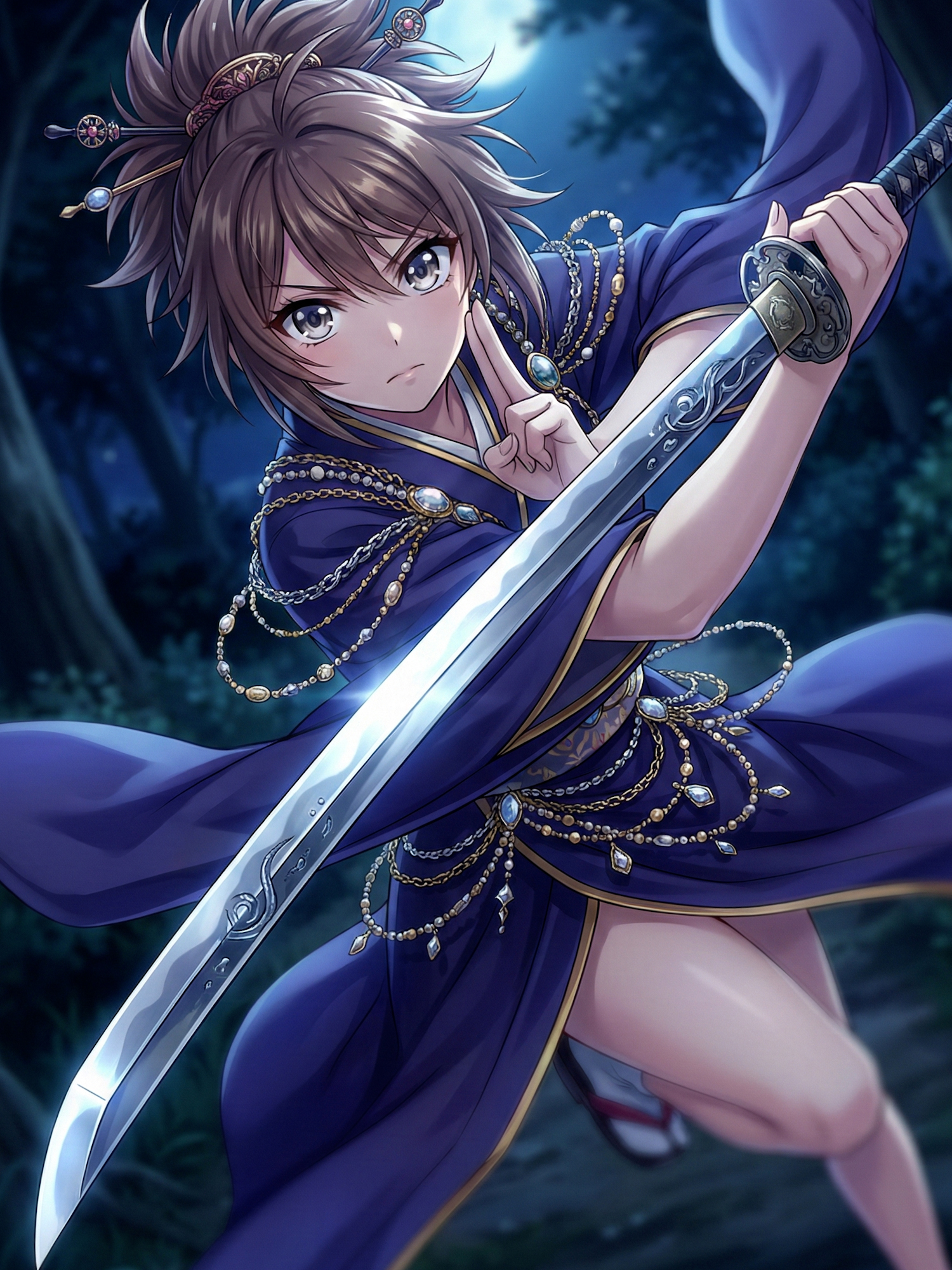
This blade symbolizes maritime death and lingering resentment.
It visualizes drowned memory condensed into weapon form.
Modern interpretations often view Funayūrei as metaphors for collective trauma — disasters that recur because their causes remain unaddressed.
Psychologically, they represent survivor’s guilt: the dead asking why the living continue.
In some modern visual reinterpretations, Funayūrei manifest as a yōtō — a blade that rises from waterlogged steel. The sword bears corrosion like barnacles, embodying memory rather than vengeance.
Funayūrei persist because the sea still takes lives.
Modern Reinterpretation – Funayūrei as the Dead Who Never Disembarked
In modern reinterpretation, Funayūrei — the vengeful spirits of those who perished at sea — have evolved beyond traditional ghostly terror. Today, they are understood as embodiments of collective memory and trauma, surfacing whenever loss remains unresolved. In literature, film, and art, the spectral sailors are reimagined not as avengers, but as witnesses — the drowned who refuse to vanish until their stories are acknowledged. Their haunting is not an act of wrath, but a call to remembrance.
The “fog-bound procession” visualization depicts Funayūrei emerging from mist that never fully clears. Figures drift alongside half-sunken boats, their forms half-human, half-current — translucent yet persistent. Lanterns float where faces should be, and faint ripples trace the passage of invisible oars. They do not cry out; they wait. Each wave that rises seems to carry a whisper, each echo from the fog a fragment of a conversation never finished. The horizon is absent, as if direction itself has drowned.
The yōtō associated with their myth is called the “Barnacled Blade.” Forged of steel submerged too long beneath salt and silence, it gleams with corrosion rather than polish. Its edge is uneven, its movements slow, as if burdened by the weight of memory. When drawn, droplets fall from it like seawater. This sword does not thirst for blood — it remembers it. It stands as a relic of journeys unfinished, of prayers swallowed by tide.
Through this lens, Funayūrei become not ghosts of punishment, but symbols of repetition. They haunt because the circumstances that created them — negligence, hubris, or indifference — persist. Their question is not “Why did we die?” but “Why did it happen again?” In this way, the Funayūrei transform from local legend into global metaphor — echoes of all disasters where the living sail on while the drowned remain beneath.
Musical Correspondence
The musical expression of Funayūrei begins with near-silence — faint drones, distant wind, and the creak of invisible rigging. Low strings pulse like underwater heartbeats, while soft percussive swells evoke waves against hulls. The tempo never stabilizes; it drifts, expanding and contracting like a tide unaware of land.
Fragments of melody rise briefly before dissolving into reverb, suggesting communication cut short. Repetition is central: motifs reappear with subtle distortion, mirroring cycles of loss that refuse resolution. Sparse brass or flute may emerge as foghorns of mourning, fading before they can complete their phrases.
By privileging motion without arrival, the music captures the essence of Funayūrei: voyages that continue long after the ship has sunk, memories that refuse to settle, and sorrow that moves endlessly across the sea — visible only when the mist lifts, and never for long.
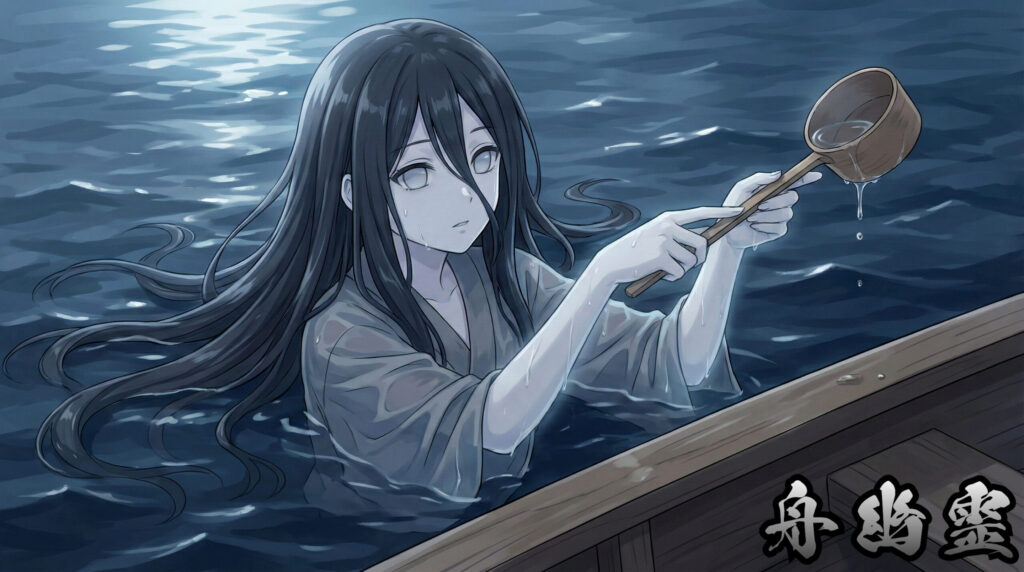
She embodies drowned sorrow and ocean-bound resentment.
Her presence reflects death at sea made visible.
Drowncall
Genre: Japanese Folklore Hip-Hop, Ritual Lo-Fi Poetry Produced by: Phantom Tone | Suno AI | Kotetsu Co., Ltd. Tags: #AIgeneratedMusic #JapaneseHipHop #Folklore…