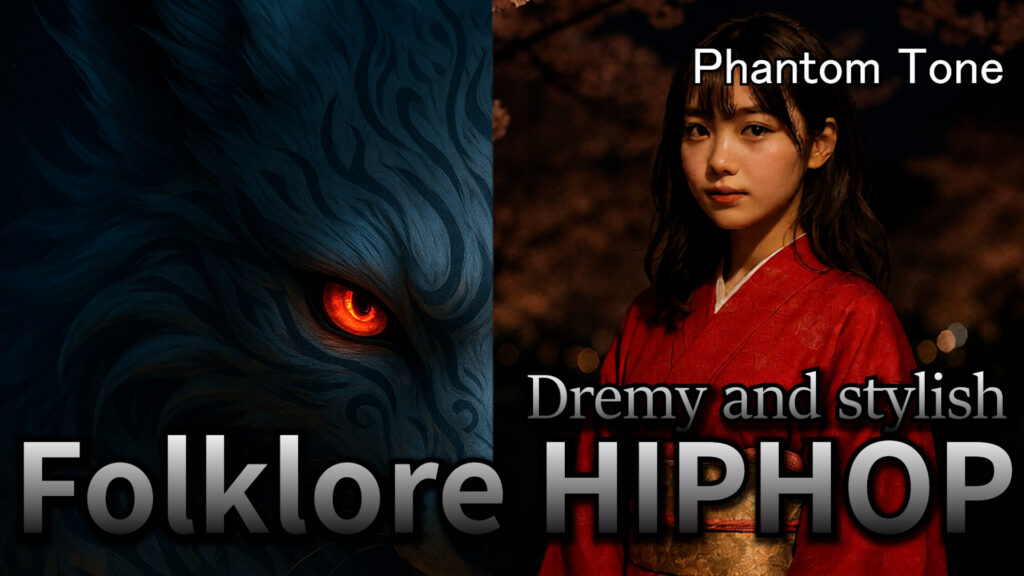

A wandering female yōkai associated with unending rain and abandoned children.
It represents misfortune, decay, and weather-bound sorrow.
Primary Sources
Classical & Mythological Records
Nihon Shoki (日本書紀)
Bizen Fudoki (備前国風土記)
Kibi region mythological traditions
Modern Folklore References
Yanagita Kunio — Kibi demon folklore
Komatsu Kazuhiko — Yōkai Encyclopedia
Ame-onna – Women Who Carry the Rain in Japanese Folklore
Ame-onna, or “rain women,” are among the most quietly pervasive figures in Japanese folklore: female beings whose presence is said to bring rain, dampness, and lingering gloom. Unlike violent yōkai or dramatic monsters, ame-onna influence the world indirectly. Where they go, the weather follows.
They are rarely described as malicious. Instead, they embody atmosphere—persistent rain, soaked roads, and the emotional weight of gray skies. Ame-onna do not attack; they arrive, and rain happens. Their power is subtle, unavoidable, and deeply human in feeling.
Ame-onna represent sorrow that falls slowly and does not easily lift.
Origins and Early Accounts
The concept of ame-onna emerged from folk explanations of unexplained or ill-timed rain, especially rain associated with specific individuals. In premodern communities, weather was inseparable from survival, travel, and ritual. When rain followed a person repeatedly, folklore offered a narrative explanation.
Early tales portray ame-onna as women who appear during storms, sometimes holding infants, sometimes wandering roads or villages under heavy rain. In some accounts, they are transformed humans—women who lost children, died in sorrow, or lingered between worlds.
Rather than singular mythic beings, ame-onna function as a category of presence, absorbing local beliefs about grief, fate, and weather.
Appearance and Atmosphere
Descriptions of ame-onna are evocative rather than precise:
Female figures soaked by constant rain
Long, dark hair clinging to the body
Worn or tattered clothing
A vacant or distant expression
Often carrying a child or bundle
Their forms blur with the rain itself. Water obscures detail, making them difficult to see clearly. This lack of sharp definition reinforces their role as atmospheric beings rather than physical threats.
They are seen, but never clearly.
Rain as Emotional Force
In Japanese folklore and literature, rain is closely tied to emotion—mourning, longing, endurance, and quiet despair. Ame-onna embody this emotional weather.
Their rain is not a sudden storm, but persistent drizzle. It does not destroy; it wears down. Roads become muddy, clothes heavy, spirits low. This slow pressure mirrors human sorrow that cannot be shaken off.
Ame-onna do not cause tragedy directly. They accompany it.
Human Encounters and Interpretation
Encounters with ame-onna are ambiguous. Seeing one may precede continued rainfall, illness, or misfortune, but rarely immediate danger. In some regions, ame-onna are feared as omens. In others, they are pitied as restless spirits.
Importantly, they are not driven away through violence. Rituals, prayers, or simple avoidance are more common responses. Their presence suggests inevitability rather than conflict.
They cannot be fought—only endured.
Symbolism and Themes
Rain as Fate
Ame-onna embody conditions that cannot be controlled.
Grief Made Weather
They externalize inner sorrow into the natural world.
Femininity and Endurance
Their stories often reflect silent suffering rather than aggression.
Presence Without Action
They influence events without direct intervention.
Related Concepts
Amefuri-bōzu (雨降り坊主)
Rain-bringing spirits.
Yuki-onna (雪女)
Weather-associated female yōkai.
→Yuki-onna
Marebito (稀人)
Otherworldly visitors.
→Marebito
Aramitama (荒御魂)
Violent divine aspects.
→Aramitama
Ame-onna in Art and Cultural Memory
Ame-onna appear in yōkai scrolls and later illustrations as solitary figures in rain-soaked landscapes. Artists emphasize vertical lines of rainfall, blurred silhouettes, and muted tones.
They are rarely central figures. Instead, they anchor mood—turning ordinary scenes into something heavy and uneasy.
Their imagery persists because it aligns closely with lived experience: everyone has walked under rain that felt personal.
Modern Cultural Interpretations
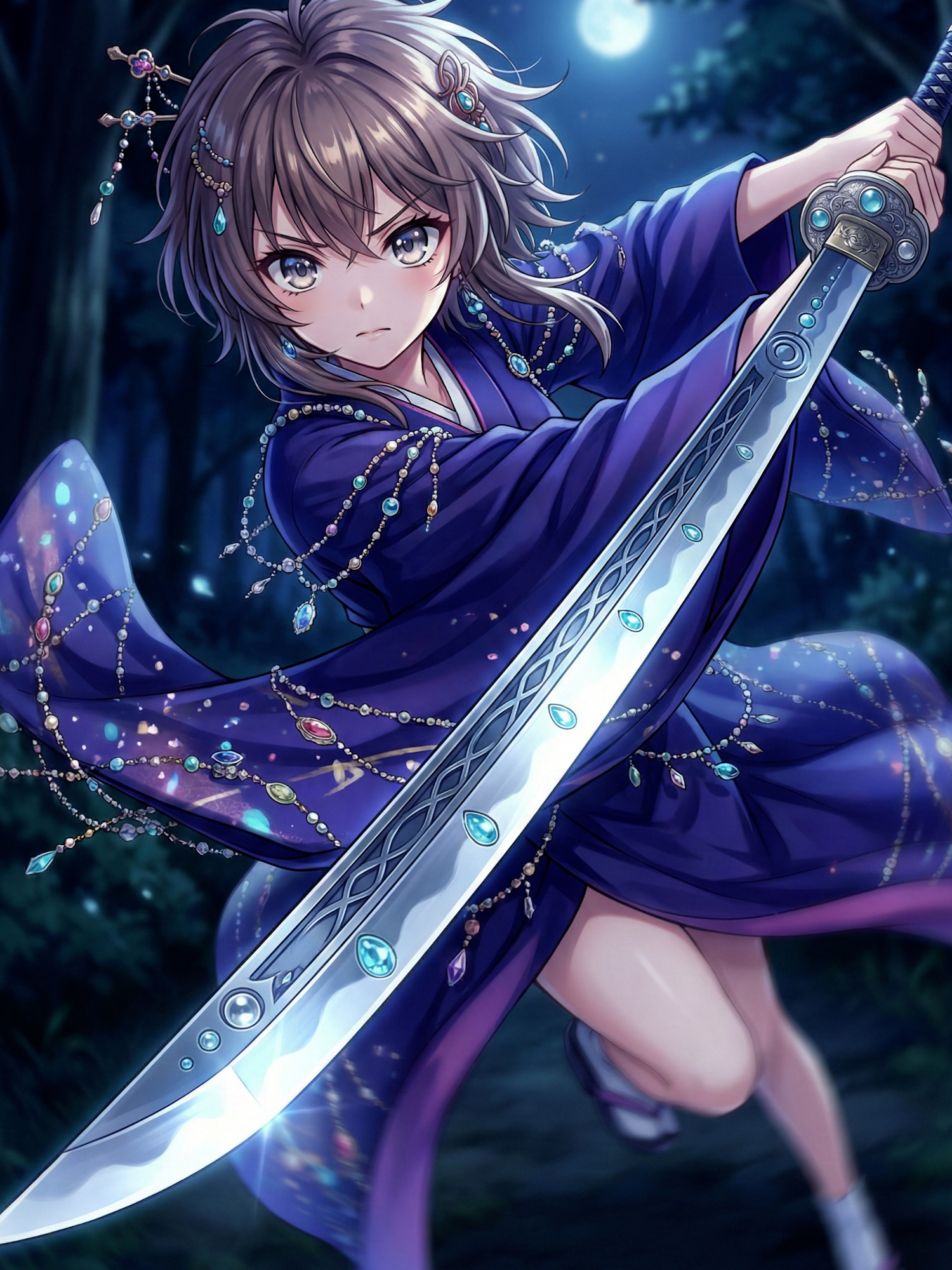
This blade symbolizes persistent rainfall and ritual neglect.
It visualizes weather-bound sorrow condensed into weapon form.
In modern culture, the idea of “rain women” has shifted toward metaphor. The term is sometimes used humorously for people associated with bad weather, yet traces of the original folklore remain.
Contemporary reinterpretations often frame ame-onna as symbols of emotional burden, depression, or trauma — conditions that follow individuals regardless of intent.
In some modern visual reinterpretations, ame-onna manifest as a yōtō — a blade that drips without rain. The sword carries weight through atmosphere rather than impact, embodying resonance rather than spectacle.
Their power lies in resonance, not spectacle.
Modern Reinterpretation – Ame-onna as Carriers of Lingering Sorrow
In this modern reinterpretation, the Ame-onna is not a threat but a presence — a quiet, lingering force that blurs the line between weather and emotion. Once a folkloric bringer of storms, she now exists as a symbol of persistence, of moods that never quite leave. Across literature, film, and art, the rain woman has evolved into an emblem of memory that refuses to dry, of feelings that return in cycles like monsoon seasons of the heart.
The “rain-bound maiden” visualization presents Ame-onna standing in an endless drizzle. Her form seems half-dissolved — outlines smudged by mist, kimono soaked in grey light. Droplets gather on her hair like glass beads, and her gaze carries the stillness of someone who has seen too much but learned not to speak. Around her, puddles ripple without wind. The world seems paused, waiting for her to move, yet she never does. She is less a person than an atmosphere: the embodiment of weather turned emotion.
The yōtō associated with her legend is called the “Blade That Drips Without Rain.” Forged not to wound but to weep, its surface trembles with condensation no matter the sky. When drawn, it emits a soft hiss like falling drizzle on stone. The weapon’s power lies in resonance — emotion carried through vibration rather than violence. It reminds its bearer that grief cannot be silenced, only tuned.
Through this modern vision, Ame-onna becomes an icon of endurance rather than despair. She does not rage or plead; she remains. Her story speaks to the slow kind of sorrow that outlasts catharsis — the quiet ache that lingers even after the storm has passed. The Ame-onna endures because melancholy, too, seeks continuity. Her rain is not punishment, but proof of feeling that refuses to evaporate.
Musical Correspondence
The corresponding composition unfolds like rainfall without beginning or end. Sparse piano notes fall irregularly, each leaving space for silence to breathe. Beneath them, low-frequency drones create a steady haze — the sound of water gathering at the edges of perception. Subtle field recordings of rain or distant thunder may weave through the mix, grounding the piece in realism while maintaining dreamlike restraint.
Harmonic progressions move slowly, circling unresolved intervals that never quite close. Soft strings or pads enter like mist, rising and fading in gentle cycles. The rhythm never breaks into climax; instead, it deepens — an accumulation of texture, weight, and emotion. The music feels suspended between sadness and peace, mirroring the Ame-onna’s own paradoxical grace.
By embracing continuity, restraint, and emotional resonance, the composition captures her essence: sorrow that becomes sound, rain that never ends, and silence heavy enough to echo.

She embodies rainfall-bound grief and wandering misfortune.
Her presence reflects sorrow made visible.
Dreamy and stylish
Genre: Ritual Japanese HipHop / Darkwave Folklore Produced by: Phantom Tone | Suno AI | Kotetsu Co., Ltd. Tags: #JapaneseHipHop #AIgeneratedMusic #Yokai #Phant…