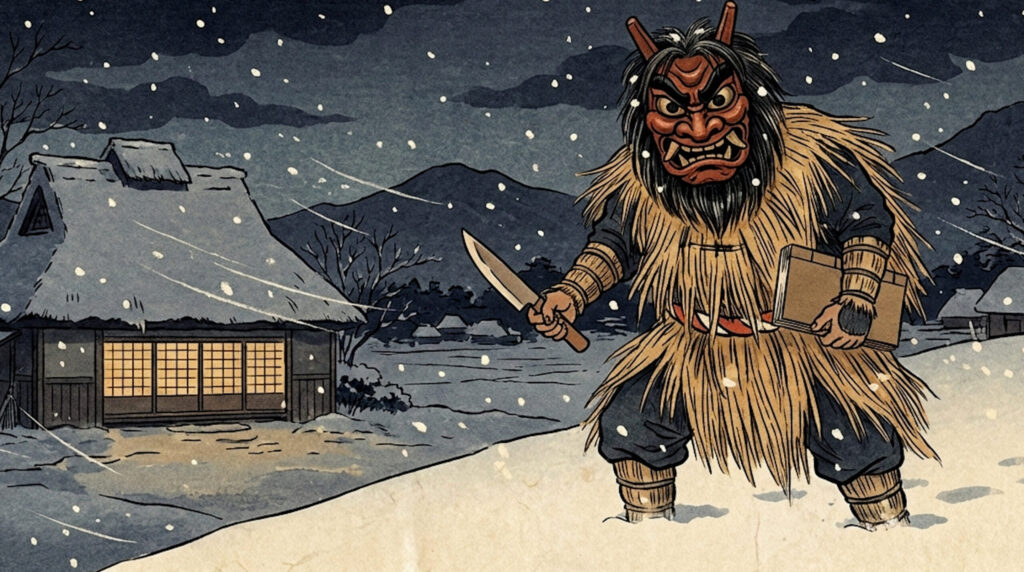
A visiting oni of the Oga Peninsula who admonishes laziness and moral neglect.
It represents discipline, seasonal renewal, and ritual correction.
Primary Sources
Classical & Mythological Records
Nihon Shoki (日本書紀)
Bizen Fudoki (備前国風土記)
Kibi region mythological traditions
Modern Folklore References
Yanagita Kunio — Kibi demon folklore
Komatsu Kazuhiko — Yōkai Encyclopedia
Namahage – Ritual Visitors of Discipline and Blessing from Akita
Namahage are among the most distinctive figures in Japanese folk tradition: fearsome, mask-wearing beings who visit households on winter nights, admonishing children and reminding families of moral and communal values. Originating in Akita Prefecture, namahage are not simply yōkai or demons, but ritual visitors whose role blends fear, instruction, and blessing.
Clad in straw cloaks and wearing terrifying ogre-like masks, namahage burst into homes shouting warnings such as “Are there any lazy children?” or “Have you been disobedient?” Despite their frightening appearance, their purpose is not punishment, but correction and protection. They leave behind blessings for health, good harvests, and family harmony.
Namahage occupy a rare position in Japanese folklore: beings who are meant to be encountered directly, face to face, as part of a living tradition.
Origins and Historical Background
The origins of namahage are layered and debated. One common explanation links them to ancient mountain deities or visiting gods (raihōshin), spirits who descend from the mountains at specific times of year to inspect and bless human communities.
Another interpretation connects namahage to moral folklore. The term “namahage” is often associated with the removal of “namomi”—blisters or calluses caused by sitting too long by the hearth—symbolizing the correction of laziness and idleness during harsh winters.
Over time, these ideas merged into a ritualized event held around New Year’s, marking both the end of the old year and the moral renewal of the household.
Appearance and Ritual Costume
The visual impact of namahage is deliberate and intense. Typical features include:
Demonic masks with horns, fangs, and glaring eyes
Straw raincoats (kede) covering the body
Large knives or buckets carried as symbolic tools
Loud voices and exaggerated movements
The masks are not standardized; each village may have its own style, reinforcing local identity. The combination of human performers and ritual costume blurs the line between human and spirit, making the encounter both theatrical and deeply unsettling—especially for children.
The House Visit Ritual
The core of the namahage tradition is the household visit. Namahage enter homes, question children about their behavior, and receive assurances from parents that lessons have been learned.
Importantly, the ritual follows a structured pattern. Adults know the rules, the children learn through fear and relief, and the namahage ultimately depart peacefully. This controlled confrontation transforms fear into reassurance.
Rather than chaos, the ritual reinforces order—both moral and social.
Namahage as Visiting Deities
Unlike yōkai who intrude unpredictably, namahage arrive by invitation. Their visit is anticipated, prepared for, and socially sanctioned. This places them closer to kami than monsters.
As visiting deities, namahage serve multiple roles:
Moral inspectors of household behavior
Protectors against misfortune
Bearers of blessings for the coming year
Symbols of communal unity
Their terrifying form is not a sign of evil, but of authority.
Symbolism and Themes
Fear as Education
Namahage use fear not to harm, but to teach and correct.
Renewal Through Confrontation
The ritual marks a moral reset at the turning of the year.
Community and Continuity
The tradition binds generations together through shared experience.
Boundary Between Human and Divine
Namahage exist temporarily between worlds, then return to the mountains.
Related Concepts
Oni (鬼)
Demonic beings.
→Oni
Marebito (稀人)
Otherworldly visitors.
→Marebito
Rai-jin (雷神)
Storm-associated divine beings.
Aramitama (荒御魂)
Violent divine aspects.
→Aramitama
Namahage in Art and Cultural Memory
Namahage imagery has become one of the most recognizable symbols of Akita. Masks, statues, and festival performances appear in art, tourism, and regional identity.
Despite commercialization, the core meaning remains intact: namahage are reminders of responsibility, diligence, and mutual care within the household and community.
Their continued presence demonstrates how folklore can survive not as myth alone, but as practiced tradition.
Modern Cultural Interpretations
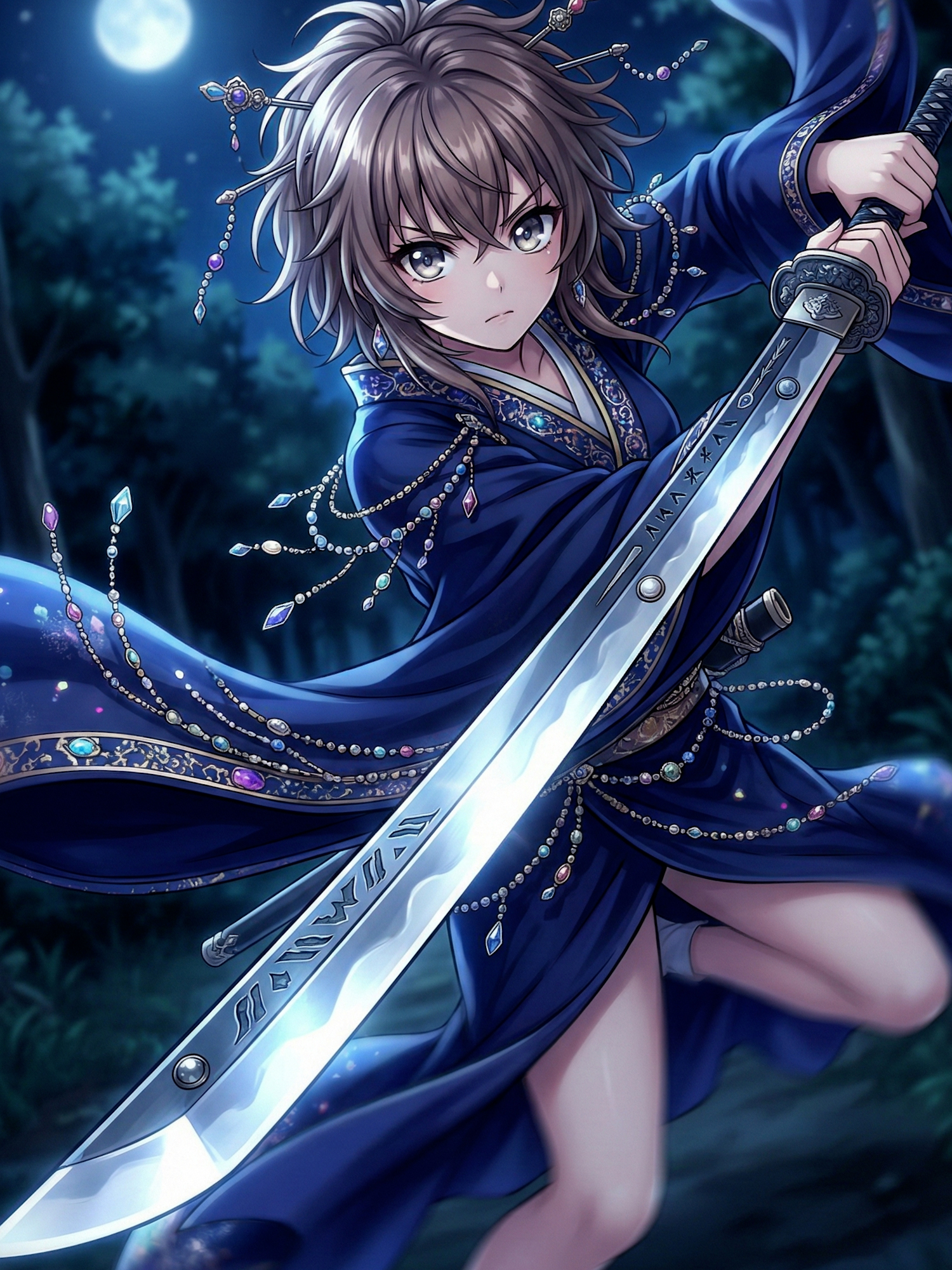
This blade symbolizes ritual correction and seasonal judgment.
It visualizes moral enforcement condensed into weapon form.
In contemporary Japan, namahage are often reinterpreted through media, festivals, and education. While softened for younger audiences, the essential structure remains: fear followed by reassurance, confrontation followed by blessing.
Modern interpretations sometimes emphasize namahage as symbols of cultural heritage rather than literal supernatural belief, yet the emotional impact of the ritual encounter remains powerful.
In some modern visual reinterpretations, namahage manifest as a yōtō — a blade used not for punishment but for marking renewal. The sword appears ceremonial, embodying correction rather than cruelty.
Namahage endure because they are not stories told from afar — they are experiences remembered.
Modern Reinterpretation – Namahage as Guardians of Moral Renewal
In this modern reinterpretation, Namahage are understood not as mythical demons, but as living traditions—ritual emissaries who step out of folklore and into the home. Their annual descent from the snowy mountains of Akita Prefecture remains one of Japan’s most vivid reminders that folklore is not confined to imagination, but enacted within community. Even softened for modern audiences, the essence endures: fear as cleansing, confrontation as care.
The “winter guardian” visualization reimagines Namahage as towering figures robed in straw and shadow, their masks glowing faintly with the warmth of firelight. Their eyes do not burn with malice but with vigilance. Snow swirls around them as they descend into the village—voices echoing between mountains and hearths. They arrive not to punish, but to awaken. Beneath the ferocity lies a sacred duty: to remind, to challenge, and to bless.
The yōtō of the Namahage is a blade of discipline — forged not from steel, but from ritual intent. Its surface bears streaks of crimson lacquer, each one representing past years of purification. When unsheathed, it hums faintly like wind passing through frozen reeds. It does not cut flesh, but carves memory — a symbolic marking of renewal. The sword’s purpose is restoration: to separate idleness from resolve, and fear from respect.
Through this lens, Namahage embody an unbroken lineage between terror and tenderness. They transform moral instruction into living theater — a dialogue between spirit and society. Their strength lies not in otherworldly power, but in presence: the shared heartbeat of ritual, echoing across generations. The Namahage endures because humanity still needs fear that heals rather than harms.
Musical Correspondence
The accompanying composition begins in shadow — a slow pulse of deep taiko and distant chanting evoking movement through snow. Gradually, the rhythm intensifies, layering raw vocal calls and resonant percussion that mimic the pounding footsteps of the visiting spirits. Dissonant flutes pierce the air, tracing the tension between fear and reverence.
As the ritual unfolds, the texture opens into calm: strings and wind instruments introduce a sense of purification, like dawn breaking over a village newly blessed. The earlier chaos resolves into steady rhythm, symbolizing acceptance and renewal after confrontation.
By merging intensity with stillness, the music captures Namahage’s dual nature — the roar that protects, the presence that teaches, and the silence that follows when balance is restored. It is not merely sound; it is ritual remembered in vibration, the heartbeat of winter transmuted into rhythm.
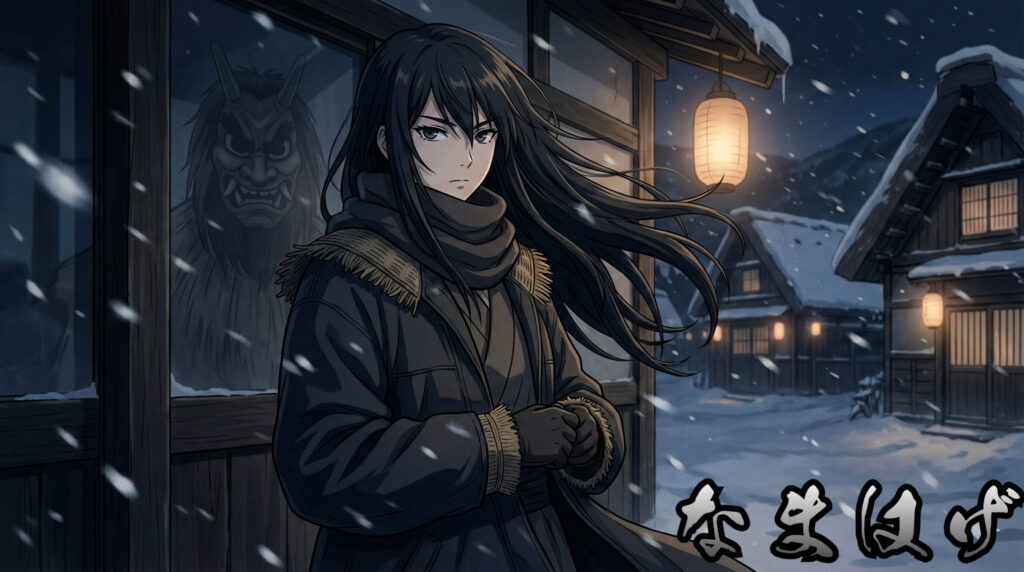
She embodies ritual discipline and seasonal guardianship.
Her presence reflects moral correction made visible.
Dreamy and stylish
Genre: Ritual Japanese HipHop / Darkwave Folklore Produced by: Phantom Tone | Suno AI | Kotetsu Co., Ltd. Tags: #JapaneseHipHop #AIgeneratedMusic #Yokai #Phant…