
A transformed warrior associated with betrayal and cursed strength.
It represents corrupted heroism and violent metamorphosis.
Primary Sources
Classical and Heroic Folklore Records
- Konjaku Monogatari-shū (今昔物語集)
- Otogi-zōshi (御伽草子)
- Minamoto no Raikō cycle legends
Modern Folklore References
- Komatsu Kazuhiko — Yōkai Encyclopedia
- Yanagita Kunio — Oni folklore studies
Onidōmaru – The Child Who Became an Oni in Japanese Folklore
Onidōmaru is a tragic and unsettling figure in Japanese folklore: a child whose suffering, resentment, and isolation gradually transform him into an oni. Unlike fully grown demon lords born into power, Onidōmaru represents corruption in progress—innocence twisted into monstrosity through neglect and cruelty.
He is not feared because he is strong, but because he is unfinished. Onidōmaru exists in transition, standing at the threshold between victim and threat.
Onidōmaru embodies the moment when childhood ends without salvation.
Origins in Tales of Cruelty and Abandonment
Legends of Onidōmaru appear in regional folklore and medieval storytelling, often linked to narratives about abused or ostracized children. In these tales, the child is subjected to relentless mistreatment—by guardians, villagers, or society itself—until anger and despair take root.
Rather than dying and returning as a ghost, Onidōmaru survives. This survival is crucial. The folklore suggests that continued suffering, not death, is what enables transformation.
The oni is not born—it is made.
The Gradual Transformation
Onidōmaru does not become an oni instantly. His change unfolds slowly:
Unnatural strength developing over time
A violent or uncontrollable temper
Physical changes such as horns or hardened skin
A growing separation from human empathy
These signs often appear while the child still looks mostly human, intensifying the horror. Those around him may sense danger, yet recognize their own role too late.
The transformation mirrors moral decay around him.
Appearance and Duality
Depictions of Onidōmaru emphasize contradiction:
A child’s body with oni features emerging
Eyes filled with fear and rage
Clothing torn or ill-fitting
A posture suggesting both vulnerability and threat
This duality makes Onidōmaru deeply uncomfortable to confront. He is neither fully monster nor fully child.
The viewer is forced to hold both truths at once.
Violence as Consequence, Not Cause
When Onidōmaru finally acts violently, folklore frames it as consequence rather than origin. His actions are terrifying, yet rooted in accumulated harm.
This distinction separates Onidōmaru from chaotic demons. His rage has context. His destruction reflects failure at every stage before him.
The oni reveals what was ignored.
Symbolism and Themes
Innocence Corrupted
Evil emerges from neglect, not nature.
Abuse as Transformation
Harm reshapes identity.
Society’s Responsibility
The monster reflects communal failure.
Irreversible Threshold
Some changes cannot be undone.
Related Concepts
Shuten Dōji (酒呑童子)
Ōeyama oni leader.
→Shuten Dōji
Ibaraki Dōji (茨木童子)
Oni warrior.
→Ibaraki Dōji
Oni (鬼)
Demonic beings.
→Oni
Aramitama (荒御魂)
Violent divine aspects.
→Aramitama
Onidōmaru in Folklore and Art
Onidōmaru appears less frequently than major oni, but his imagery is powerful. Artistic depictions often freeze him at the moment of change—horns just breaking through, eyes shifting from human to demonic.
This emphasis on transition reinforces the legend’s warning. The story is not about defeating the oni, but about recognizing when prevention has failed.
He is remembered as a cautionary figure.
Modern Cultural Interpretations
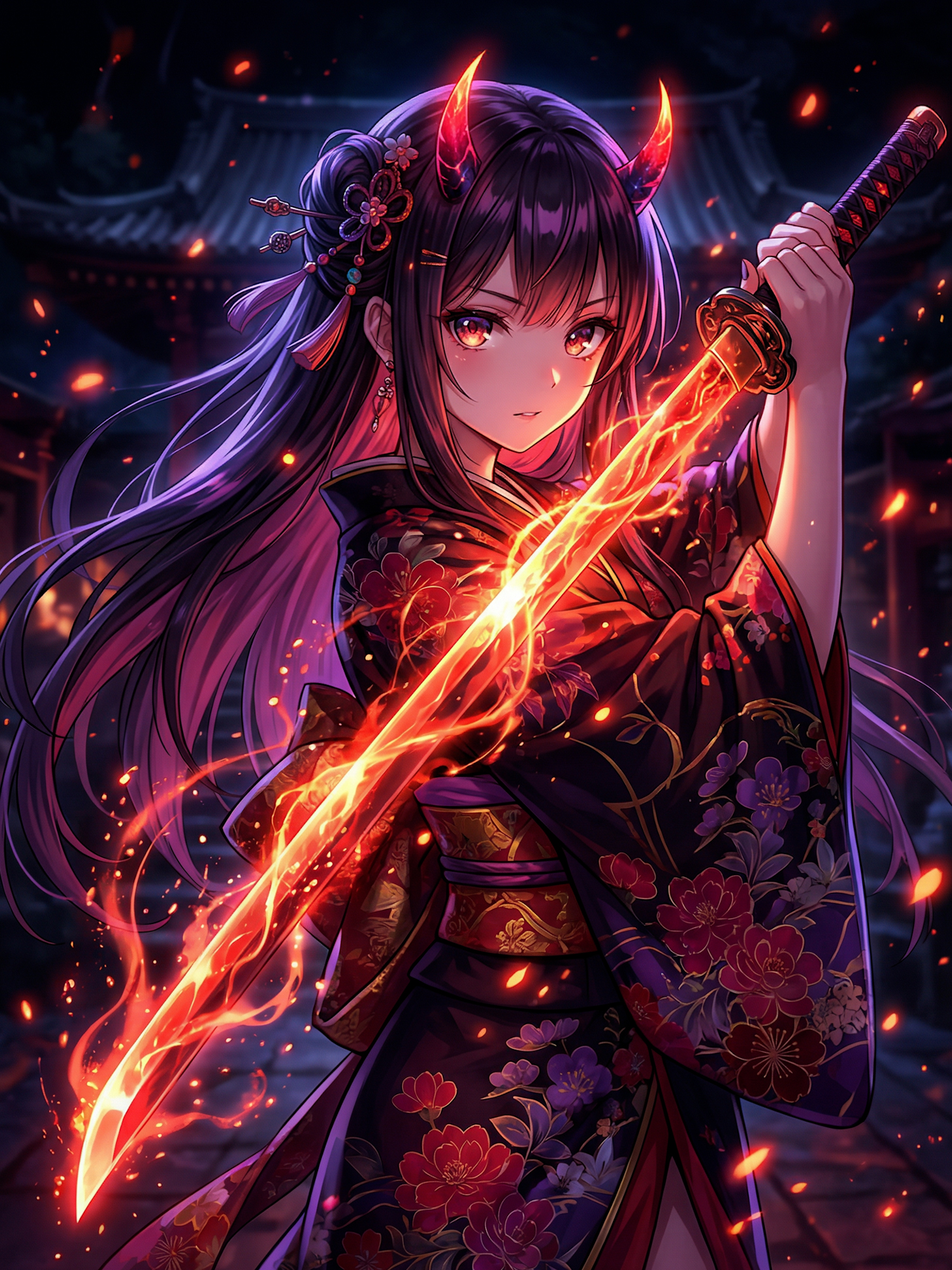
This blade symbolizes betrayed loyalty and twisted heroism.
It visualizes justice turned into calamity.
In modern reinterpretations, Onidōmaru is no longer framed solely as a tragic anti-hero, but as a manufactured weapon of violence — a being shaped not by destiny, but by abandonment, coercion, and systemic neglect. In visual reinterpretation frameworks, Onidōmaru is sometimes reimagined as a yōtō (cursed blade) — a weapon that does not arise from personal hatred, but from institutional failure. This blade is not born. It is produced. Its edge represents trauma hardened into function, and loyalty twisted into mechanical obedience. It does not choose targets. It is assigned them. Through this transformation, Onidōmaru ceases to be a child who became a monster — and becomes a structure that turns children into monsters. Onidōmaru endures because societies continue to produce weapons disguised as people.
Modern Reinterpretation – Onidōmaru as the Child Who Was Never Saved
In this modern reinterpretation, Onidōmaru becomes more than a figure of demonic inheritance — he is a portrait of what happens when tenderness is withheld too long. His transformation is not divine punishment or cursed fate, but the slow, predictable consequence of neglect. The monster is not born; it is built, piece by piece, in silence.
The “beautiful boy” or “androgynous youth” visualization captures the fragile moment between victimhood and vengeance. His expression is neither fury nor grief, but vacancy — the stillness of someone who has already detached from hope. Pale light catches along his hair, the color of ash before flame. His eyes, faintly luminous, suggest awareness without warmth — a consciousness that has seen too much and felt too little returned.
The yōtō he holds reflects both innocence and corruption: its handle is wrapped in frayed crimson thread, as though bound by the memory of restraint. The blade’s surface is uneven, like molten steel cooled in tears — imperfect, but alive. Around him, faint echoes of children’s laughter twist into whispers, fading as if memory itself recoils.
Through this lens, Onidōmaru becomes not an antagonist, but an embodiment of generational fracture — the living proof that cruelty unacknowledged becomes something autonomous. His story no longer warns against demons; it warns against indifference. The monster is what remains when compassion is systematically denied.
Musical Correspondence
The accompanying composition builds from fragility into distortion. Soft piano motifs drift across sparse reverb — lullaby-like at first — before layers of percussion and synthetic noise intrude. Each section collapses into the next with increasing dissonance, mirroring the erosion of innocence. The melody never disappears entirely; it becomes unrecognizable, transformed by what it survives.
Midway through, a single childlike voice hums a fragmented tune, quickly swallowed by distortion. The track resolves not with release, but with exhaustion — a low drone that feels like breath spent too early.
By merging tenderness with collapse, the music captures Onidōmaru’s emotional core: not wrath, but residue — the echo of what could have been saved, and what instead became something else entirely.

She embodies corrupted valor and cursed transformation.
Her presence reflects loyalty turned into vengeance.
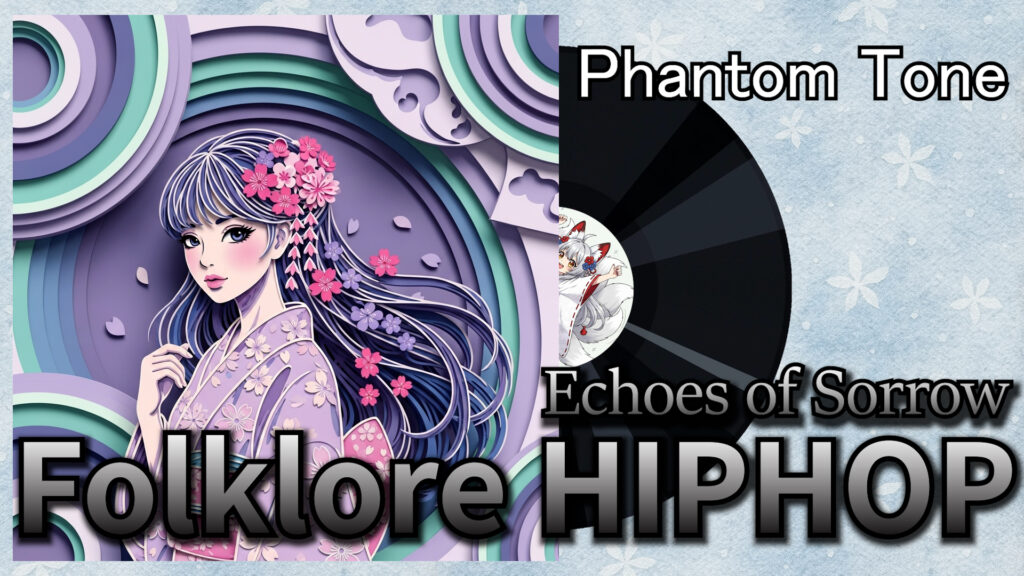
Echoes of Sorrow
Genre: Japanese Folklore HipHop / Darkwave Lo-Fi Produced by: Phantom Tone | Suno AI | Kotetsu Co., Ltd. Tags: #JapaneseFolklore #OniMyth #AIgeneratedMusic #Ph…
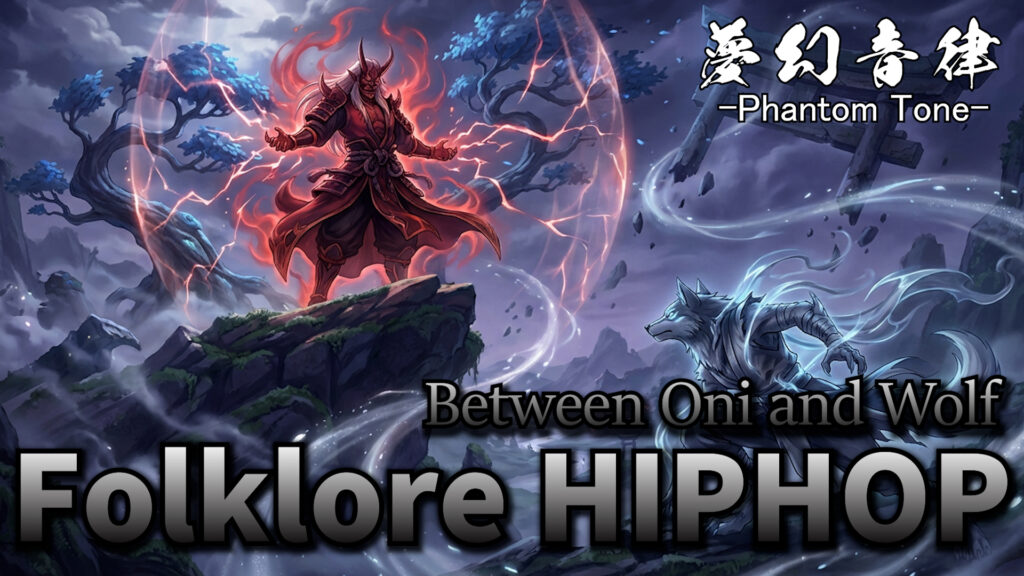
Between Oni and Wolf
Genre: Japanese Folklore Hip-Hop, Ritual Lo-Fi Poetry Produced by: Phantom Tone | Suno AI | Kotetsu Co., Ltd. Tags: #AIgeneratedMusic #JapaneseHipHop #Folklore…
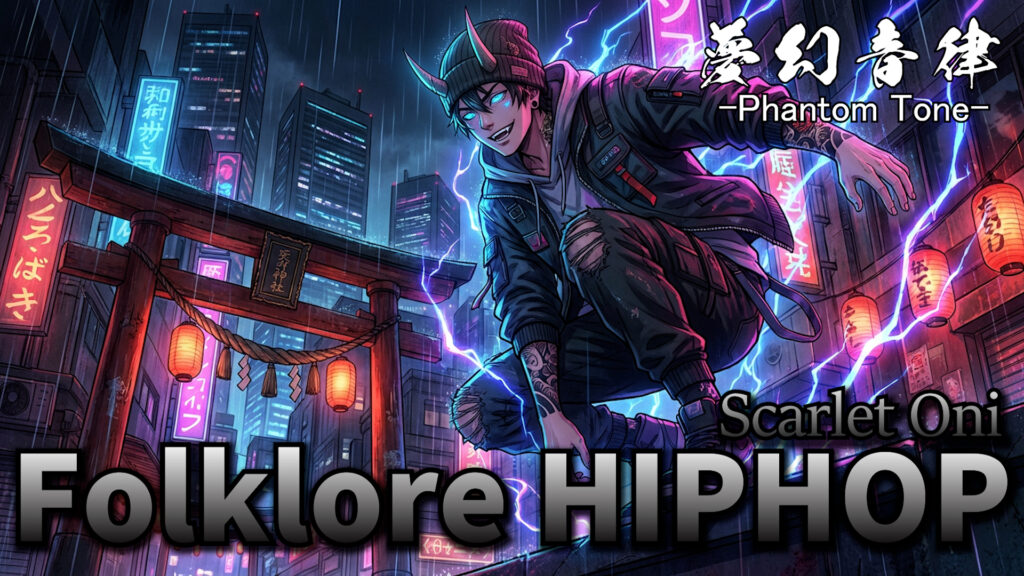
Scarlet Oni
Genre: Japanese Folklore HipHop / Darkwave Enka Trap Produced by: Phantom Tone | Suno AI | Kotetsu Co., Ltd. Tags: #JapaneseFolkloreHipHop #AIGeneratedMusic #P…