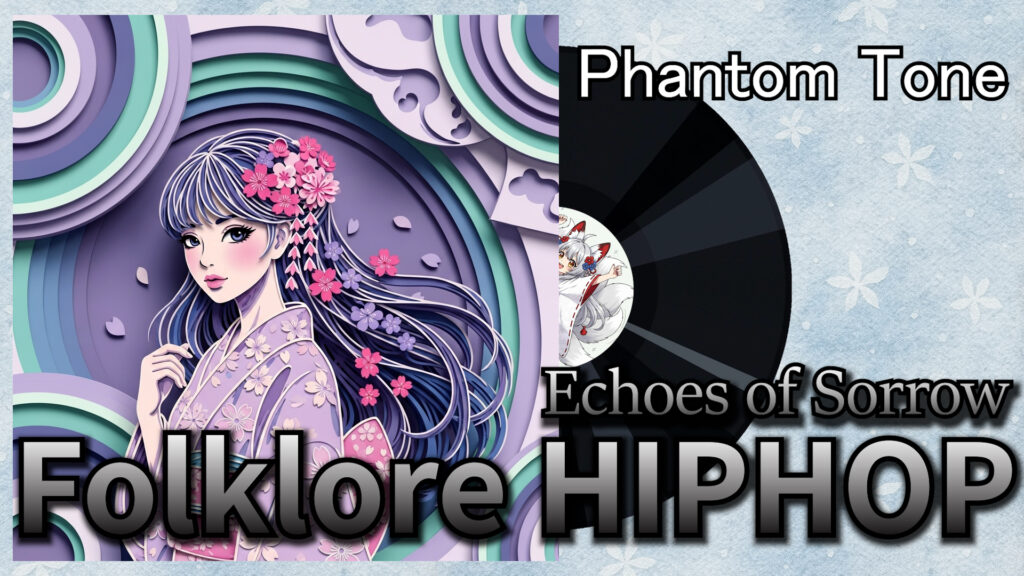

A woman transformed into a demon through jealousy and grief.
She represents emotional rupture and vengeful metamorphosis.
Primary Sources
Classical and Medieval Records
- Konjaku Monogatari-shū (今昔物語集)
- Uji Shūi Monogatari (宇治拾遺物語)
- Noh plays featuring Kijo archetypes
Modern Folklore References
- Yanagita Kunio — Onryō and Kijo studies
- Komatsu Kazuhiko — Yōkai Encyclopedia
Kijo – The Woman Transformed by Obsession and Suffering in Japanese Folklore
Kijo, literally “demon woman,” is not a single named entity but a category of transformation in Japanese folklore: a woman whose overwhelming emotions—jealousy, grief, rage, or despair—push her beyond the limits of human identity. Unlike oni born as monsters, kijo are made.
They are not creatures of instinct, but of experience. Each kijo begins as a human woman, shaped by betrayal, loss, neglect, or obsession until the boundary between emotion and form collapses.
Kijo embody suffering that has crossed the point of return.
Origins in Emotion and Social Constraint
Stories of kijo appear across classical literature, Buddhist setsuwa, Noh theater, and regional folklore. They reflect a social reality in which women were often bound by rigid roles, limited agency, and emotional suppression.
When these pressures became unbearable, folklore imagined transformation—not as liberation, but as consequence. The woman does not die and return; she lives on as something altered.
Kijo emerge where endurance fails.
Transformation Rather Than Possession
A defining feature of kijo is that they are not possessed by demons—they become them. The change is internal and gradual:
Jealousy that turns inward
Grief that refuses consolation
Love that becomes fixation
Resentment hardened by silence
Horns, fangs, burning eyes, or monstrous strength appear only after the emotional threshold is crossed. The body follows the mind.
This makes kijo especially tragic: no external evil can be blamed.
Appearance and Duality
Depictions of kijo emphasize contrast:
A woman’s form twisted by oni features
Long hair, often wild or unbound
Eyes reflecting fury and sorrow
A posture both powerful and broken
In many stories, moments of humanity remain—hesitation, memory, regret—making the figure deeply unsettling. The demon is not separate from the woman; it is her.
The viewer confronts both at once.
Violence as Expression, Not Purpose
Kijo are often violent, but violence is not their goal. It is expression—emotion released without restraint. Their actions may target lovers, rivals, families, or symbols of betrayal.
Yet folklore consistently frames the tragedy as irreversible. Once transformation occurs, return is rare or impossible.
The price of release is identity.
Symbolism and Themes
Emotion as Transformative Force
Feelings reshape the body and self.
Gendered Suffering
Constraint and silence fuel monstrosity.
Loss of Boundary
Human and demon become inseparable.
Tragedy Over Villainy
The monster is also the victim.
Related Concepts
Onryō (怨霊)
Vengeful female spirits.
→Onryō
Kanawa (鉄輪)
Ritualized curse folklore.
→Kanawa
Yamanba (山姥)
Mountain witch archetypes.
→Yamanba
Aramitama (荒御魂)
Violent spiritual aspects.
→Aramitama
Kijo in Literature and Performance
Kijo appear prominently in Noh plays such as Aoi no Ue and Kanawa, where restrained performance heightens psychological intensity. Masks convey fury frozen in discipline, reflecting emotion contained until rupture.
In visual art, kijo are depicted at moments of peak transformation—horns emerging, expressions split between anguish and rage.
They are remembered not for conquest, but for impact.
Modern Cultural Interpretations
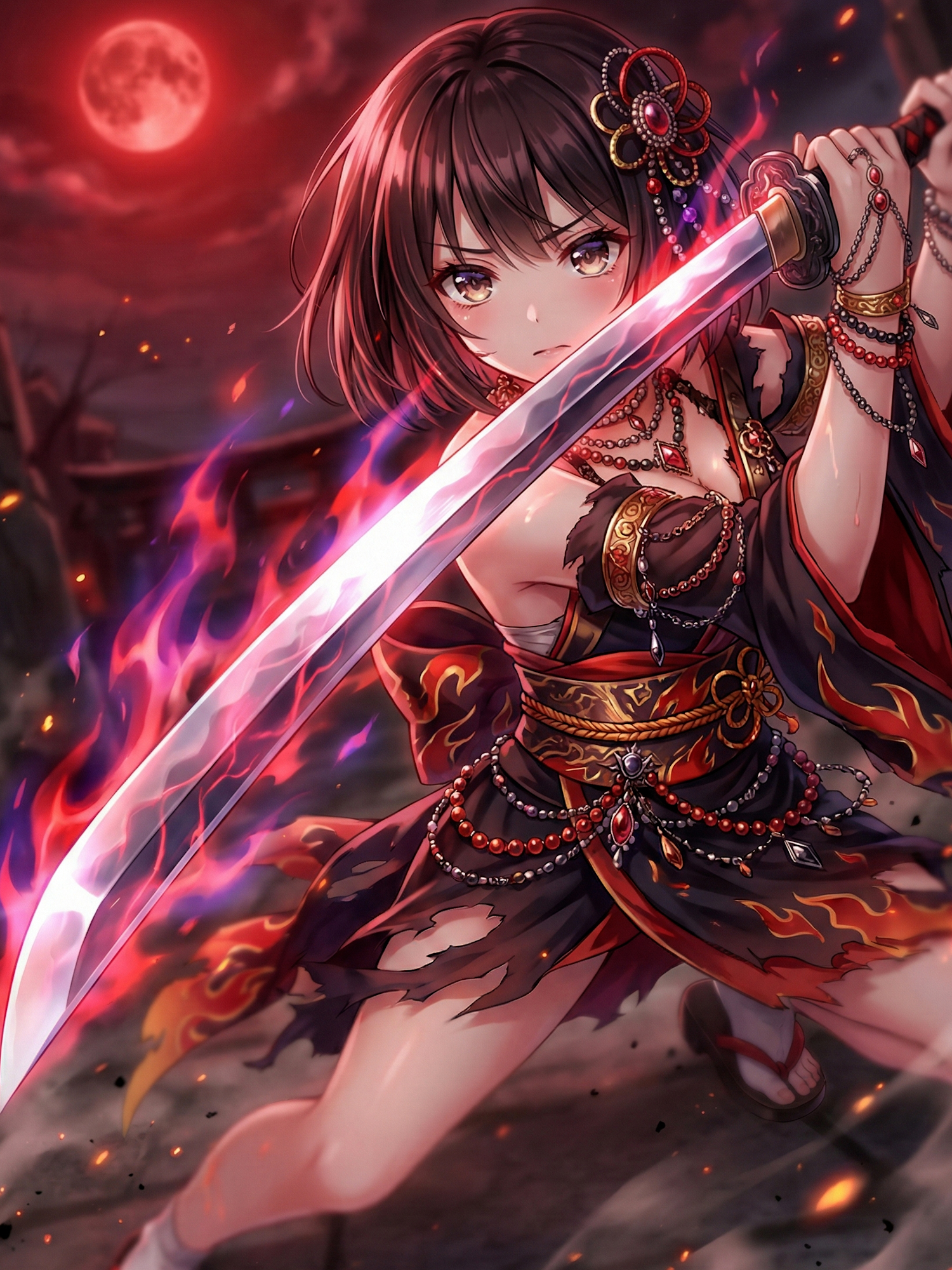
This blade symbolizes emotional combustion and ritualized hatred.
It visualizes sorrow sharpened into weapon.
In modern contexts, kijo are often reinterpreted through psychological and feminist lenses. They are read as manifestations of trauma, emotional repression, and the destructive consequences of denied agency rather than as embodiments of inherent evil.
Contemporary adaptations sometimes reclaim kijo as symbols of resistance or survival. However, traditional folklore remains uncompromising: power gained through transformation is inseparable from loss, and empowerment arrives with devastating cost.
In some modern visual reinterpretations, kijo are expressed as a yōtō — a cursed blade forged from suppressed emotion and accumulated grievance. The sword cuts not out of rage alone, but from the weight of what was never allowed to be spoken.
Kijo persist because the pressures that create them persist.
Modern Reinterpretation – Kijo as the Woman Who Became the Boundary
In modern interpretation, Kijo has evolved from a figure of pure malice into a mirror for human endurance stretched past its limit. She is no longer simply a monster; she is the form grief takes when silenced too long, the shape pain assumes when it has nowhere else to go. Her transformation is not a betrayal of humanity — it is its continuation, distorted through survival.
The “beautiful girl” visualization captures this paradox between horror and sorrow. Her appearance is exquisite yet unsettling: hair flowing like ink in water, eyes reflecting both defiance and exhaustion. Veins of faint crimson trace across her skin like cracks in porcelain — not wounds, but conduits of unspoken emotion. Around her, fragments of broken ritual implements hover in the air, caught between collapse and reverence.
She is not depicted mid-attack or in torment, but in stillness — the aftermath of becoming. Her weapon, the yōtō forged from suppressed emotion, rests lightly in her grasp. Its surface ripples with shadowed reflections, as if each layer of the blade contains a different memory. Her presence embodies the cost of transformation: power purchased through isolation, awareness paid for with form.
Through this lens, Kijo ceases to be a villain. She becomes an elegy for those who endured too much, too quietly. Her boundary is both protection and exile — a line drawn by those the world refused to hear.
Musical Correspondence
The accompanying composition unfolds like suppressed emotion resurfacing. It begins in near-silence: a single low drone, a heartbeat rhythm submerged beneath layers of reverb. Gradually, trembling strings and distant choral harmonics emerge, building density without resolution. Each addition feels like a fracture in restraint.
Midway through, distortion begins to bloom — not sudden, but inevitable. The rhythm fractures, melodies strain against their own patterns, and the texture swells toward collapse. Then, abruptly, everything recedes into silence — not peace, but exhaustion.
The final moments return to the drone, now warped and uneven. It is the sound of survival altered beyond recognition — fragile, haunted, still here.
Through this structure, the music mirrors Kijo’s essence: emotion too long contained, finally reshaping the world around it. It is not destruction for its own sake. It is transformation made audible.

She embodies grief-driven transformation.
Her presence reflects sorrow turned into wrath.
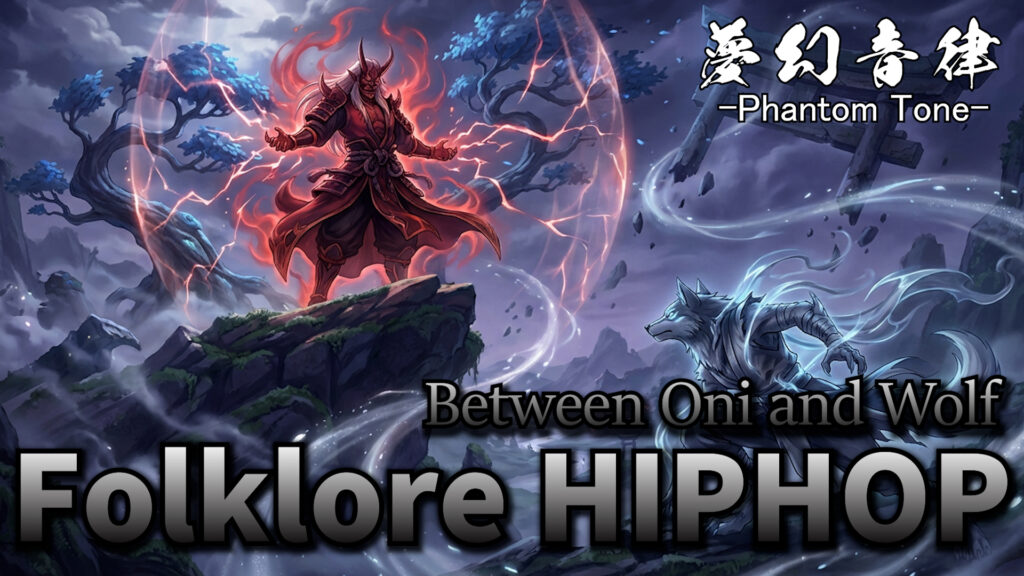
Between Oni and Wolf
Genre: Japanese Folklore Hip-Hop, Ritual Lo-Fi Poetry Produced by: Phantom Tone | Suno AI | Kotetsu Co., Ltd. Tags: #AIgeneratedMusic #JapaneseHipHop #Folklore…
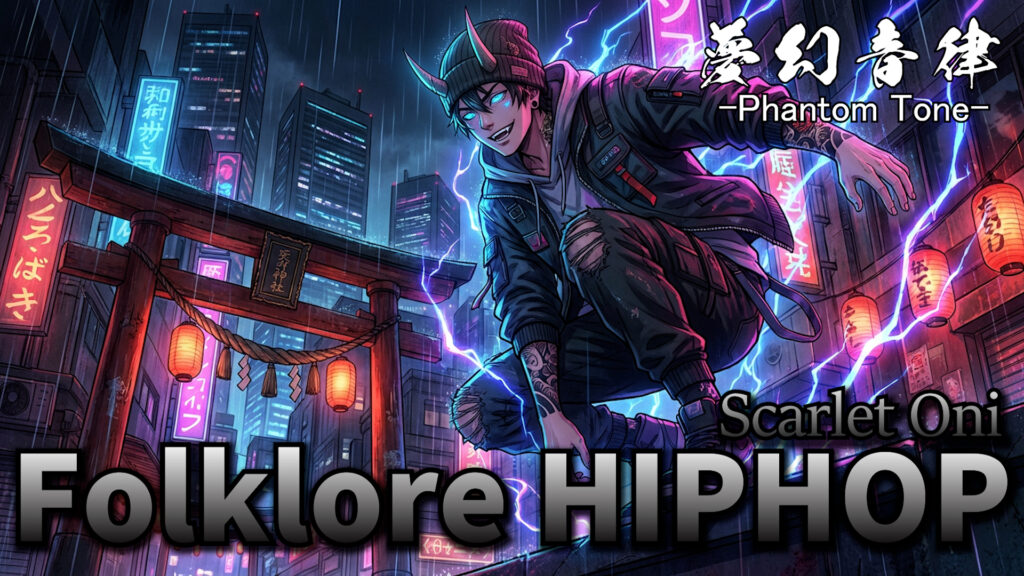
Scarlet Oni
Genre: Japanese Folklore HipHop / Darkwave Enka Trap Produced by: Phantom Tone | Suno AI | Kotetsu Co., Ltd. Tags: #JapaneseFolkloreHipHop #AIGeneratedMusic #P…
Echoes of Sorrow
Genre: Japanese Folklore HipHop / Darkwave Lo-Fi Produced by: Phantom Tone | Suno AI | Kotetsu Co., Ltd. Tags: #JapaneseFolklore #OniMyth #AIgeneratedMusic #Ph…