
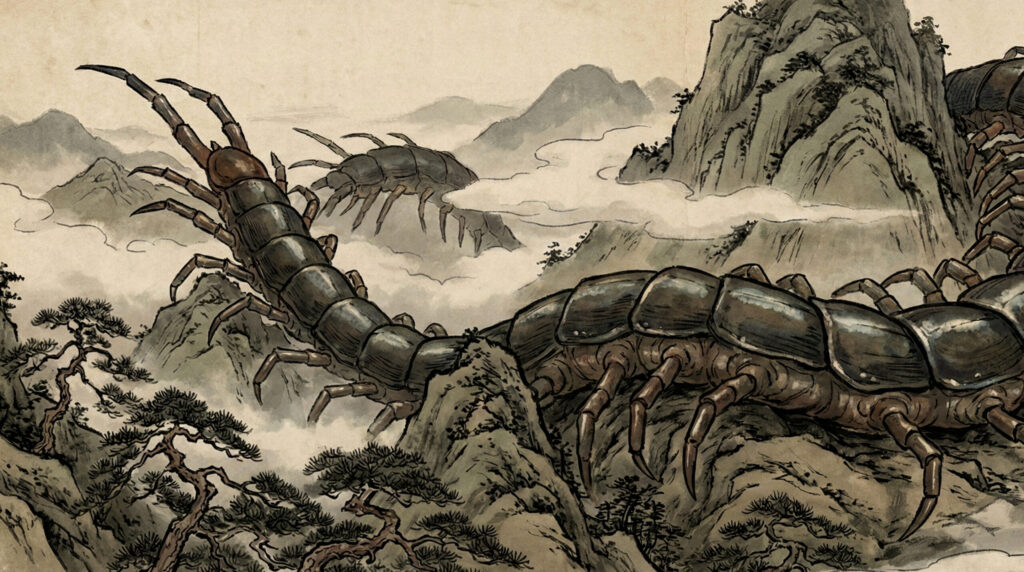
Ōmukade – Colossal Centipedes of Japanese Folklore
Ōmukade are among the most fearsome and viscerally unsettling creatures in Japanese folklore: gigantic centipedes whose size, venom, and relentless movement inspire deep dread. Unlike tricksters or ambiguous spirits, ōmukade represent overwhelming menace—creatures that crawl, coil, and advance without hesitation.
Often associated with mountains, caves, and remote regions, ōmukade are not merely enlarged insects. They are embodiments of unchecked aggression, territorial dominance, and the terror of nature magnified beyond human scale. Their many legs, armored bodies, and poisonous bite transform a familiar creature into something profoundly alien.
In folklore, the appearance of an ōmukade signals not mischief or moral testing, but direct existential threat.
Origins and Early Accounts
Legends of giant centipedes appear in early Japanese chronicles and regional folklore, especially in mountainous areas. One of the most famous tales involves the warrior Fujiwara no Hidesato (Tawara Tōda), who slays a colossal centipede that had been terrorizing a dragon palace beneath Lake Biwa.
In these stories, the ōmukade often inhabits cliffs, peaks, or deep caverns, emerging to prey upon animals, humans, or even dragons. Its scale defies ordinary combat, requiring heroic intervention or divine assistance.
These narratives reflect ancient fears of the wild—regions beyond cultivation where human order collapses and monstrous life thrives.
Appearance and Physical Terror
Descriptions of ōmukade emphasize excess and repetition:
Enormous length, stretching across valleys or wrapping around mountains
Countless armored segments and legs
Venomous fangs capable of killing instantly
Relentless, crawling movement without pause
Unlike serpents or dragons, which may possess elegance or intelligence, ōmukade are often portrayed as purely instinctual. Their terror lies in persistence rather than cunning. They advance, bite, and constrict without mercy.
This insectile inhumanity amplifies fear, removing any possibility of negotiation or understanding.
Enemies of Dragons and Gods
A notable feature of ōmukade lore is their antagonism toward dragons. In several legends, centipedes attack or threaten dragon deities, forcing divine beings to seek human help.
This inversion—where a lowly insect becomes the enemy of celestial beings—heightens the sense of unnatural imbalance. The ōmukade is not just dangerous; it violates the cosmic hierarchy.
Only exceptional heroes, armed with skill, courage, and often sacred weapons, can defeat such a creature. Victory restores balance between human, natural, and divine realms.
Symbol of Mountain Terror
Mountains in Japanese folklore are places of both sanctity and danger. Ōmukade embody the hostile aspect of these landscapes—steep cliffs, hidden crevices, and poisonous life.
Their association with mountains reinforces themes of isolation and escalation. Far from villages and protection, humans confront a force that dwarfs them physically and spiritually.
The centipede’s venom adds another layer of fear: not just death, but suffering and corruption of the body.
Symbolism and Themes
Overwhelming Nature
Ōmukade represent nature unchecked by human order or ritual.
Inhuman Persistence
Their endless legs and crawling motion symbolize relentless threat.
Cosmic Imbalance
Their conflict with dragons reflects disruption of the natural hierarchy.
Heroic Restoration
Their defeat reaffirms human courage aligned with divine order.
Ōmukade in Art and Folklore
In illustrated scrolls and later prints, ōmukade are often depicted coiling around mountains or looming over warriors. Artists emphasize scale, repetition, and texture—rows of legs, layered armor, and shadowed segments.
Unlike humorous yōkai, ōmukade imagery is uncompromising. There is little exaggeration for comedy; the intent is to inspire awe and fear.
These images cemented the centipede as one of the most physically terrifying beings in Japanese myth.
Modern Interpretations
In modern media, ōmukade often appear as boss monsters, ancient evils, or symbols of primordial fear. Games and anime emphasize their size, venom, and unstoppable movement, translating folkloric terror into spectacle.
Despite modernization, the core theme remains unchanged: the fear of being overwhelmed by something that cannot be reasoned with.
Ōmukade endure because they tap into a primal discomfort with crawling multiplicity and poison.
Conclusion – Ōmukade as Monsters of Relentless Threat
Ōmukade stand among the most straightforward embodiments of terror in Japanese folklore. They are not tricksters, teachers, or judges. They are threats—pure and immediate.
Through their immense size, venom, and inhuman persistence, they represent the danger lurking in untamed spaces. Their defeat is not moral correction, but survival.
In slaying the ōmukade, heroes do not learn lessons—they reclaim the world from something that should never have grown so large.
Music Inspired by Ōmukade (Giant Centipede)
Music inspired by ōmukade often emphasizes pressure, repetition, and unstoppable motion. Low, grinding rhythms and layered percussion can mirror the endless crawl of countless legs.
Dissonant textures, descending motifs, and sustained tension evoke the sense of something massive advancing without pause. Sudden surges in volume or tempo can represent venomous strikes and explosive confrontation.
By maintaining relentless momentum and oppressive weight, music inspired by ōmukade captures its essence: a force that does not negotiate, does not pause, and must be overcome—or endured.
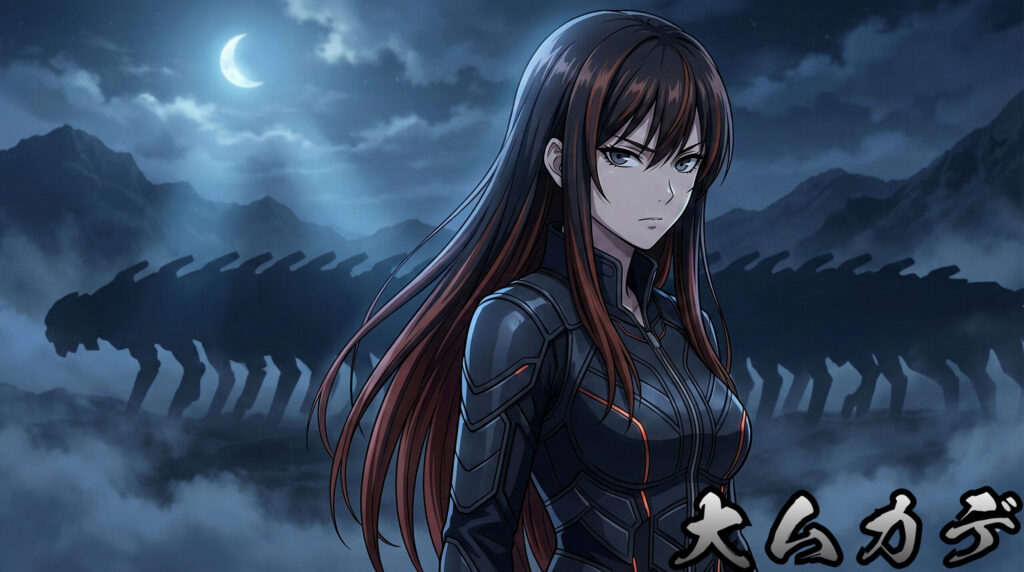
Dreamy and stylish
Genre: Ritual Japanese HipHop / Darkwave Folklore Produced by: Phantom Tone | Suno AI | Kotetsu Co., Ltd. Tags: #JapaneseHipHop #AIgeneratedMusic #Yokai #Phant…
 Phantom Tone – Japanese Folklore Hip-Hop Project