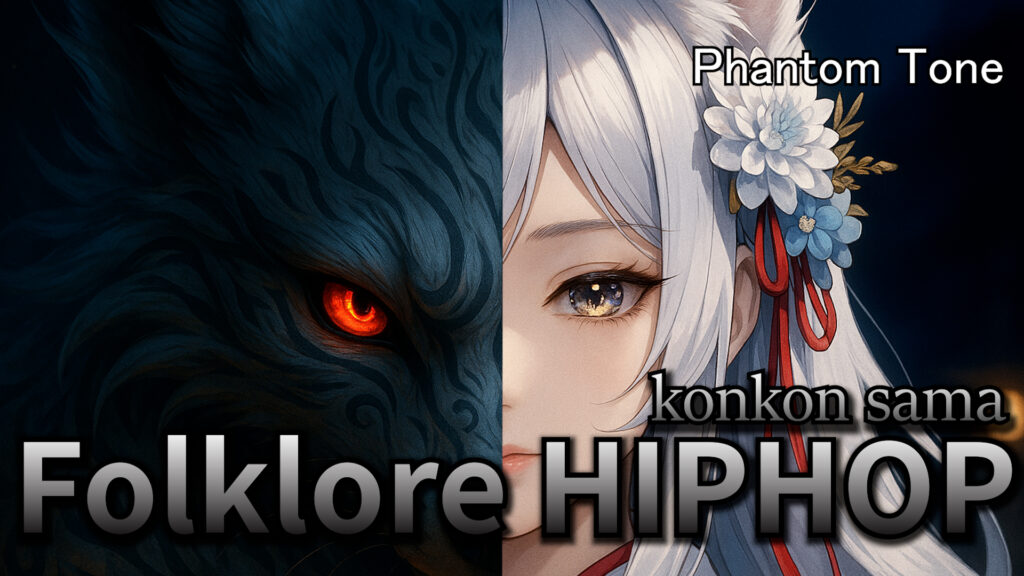

A wild fox spirit haunting rural edges.
It causes madness and illusion.
Primary Sources
Wild Fox Spirit Lore
- Konjaku Monogatari-shū (今昔物語集)
- Yanagita Kunio — Fox spirit belief studies
- Komatsu Kazuhiko — Yōkai Encyclopedia
- Regional countryside fox folklore
Yako – The Untamed Fox That Exists Outside Worship in Japanese Folklore
Yako refers to fox spirits that exist outside the framework of divine worship. Unlike revered Inari foxes bound to shrines and ritual order, Yako are untamed, unaffiliated, and morally unstable beings that inhabit fields, forests, and village outskirts.
They are not messengers of gods.
They are not protectors.
They act for themselves.
Yako embody power without sanction.
Origins in Fox Belief and Social Boundaries
Foxes have long occupied a complex position in Japanese belief—both feared and respected. While shrine-associated foxes (Inari kitsune) were integrated into religious systems, not all fox spirits were absorbed.
Yako emerge as the remainder: foxes that gained power without divine recognition.
Power exists.
Legitimacy does not.
Neither Kami nor Ordinary Yōkai
Yako occupy an unstable ontological position:
- Not kami, lacking shrine or ritual role
- Not simple yōkai, capable of intelligence and long-term schemes
- Not ancestral spirits, owing no loyalty to humans
They are self-directed entities.
They owe nothing.
Appearance: Familiar Yet Untrustworthy
Yako often appear as ordinary foxes or humans with subtle irregularities:
Eyes that linger too long
Smiles that feel misaligned
Shadows that flicker incorrectly
Voices that echo unnaturally
Their danger lies in plausibility.
You believe first.
You doubt later.
Behavior: Deception and Opportunism
Yako are known for:
Illusions (kitsunetsuki, false sights)
Possession without ritual structure
Trickery motivated by curiosity or resentment
Punishment of arrogance rather than sin
They are not chaotic. They are capricious.
The rules change mid-game.
Relationship with Humans
Humans cannot negotiate with Yako as they would with divine foxes:
Prayers may be ignored
Offerings may provoke mockery
Respect does not guarantee safety
Avoidance and humility are the only defenses.
Recognition comes too late.
Yako Among Fox Spirits
Within fox-related beings, Yako occupy a critical tier:
- Inari foxes – sanctioned, worshiped
- Zenko – benevolent white foxes
- Yako – unsanctioned wild foxes
They represent fox power without moral alignment.
Symbolism and Themes
Power Without Legitimacy
Strength beyond structure.
Boundary Dwelling
Fields, roads, margins.
Deception as Agency
Illusion as control.
Distrust of the Familiar
The known becomes dangerous.
Related Concepts
Wild Fox Motif
Untamed fox spirits.
Illusion & Possession Folklore
Spirits causing madness and misdirection.
Rural Boundary Yōkai
Beings inhabiting village edges.
Yako in Folklore Memory
Yako appear frequently in cautionary tales explaining madness, misfortune, or sudden reversal of fortune—especially when pride or disrespect is involved.
They are blamed when order collapses subtly.
No thunder.
Just confusion.
Modern Cultural Interpretations

This blade symbolizes rural possession and invisible deception.
It visualizes madness spreading without trace.
Modern readings often interpret Yako as metaphors for unsanctioned power — individuals or forces operating outside formal institutions and social contracts.
Psychologically, Yako represent distrust toward charm without accountability — influence that persuades without transparency.
In some modern visual reinterpretations, Yako manifest as a yōtō — a blade that glimmers without heraldry. The sword bears no crest, answering to no banner, and cuts without claiming authority.
Yako persist because unsupervised power still unsettles societies.
Modern Reinterpretation – Yako as the Spirit of Unbound Influence
In this reinterpretation, Yako is not a villain, but the embodiment of power that refuses enclosure — the elegance of autonomy mistaken for danger. She is the whisper outside the temple gates, the intelligence that thrives without blessing or boundary.
The “beautiful girl” form reflects this magnetic independence. Her expression is confident yet elusive, her eyes glinting with knowing amusement. Silk-like tails flow behind her as though shaped by thought itself, never still, never fully revealed. Around her, faint lights shimmer — not divine, but willful, flickering like persuasion made visible.
She does not deceive through cruelty, but through freedom. Her charm is not a trap but a choice — an invitation to wander beyond sanctioned paths. To meet her gaze is to feel the thrill of uncertainty, to sense that control is slipping in the gentlest possible way.
She stands where the sacred boundary dissolves, where charm overtakes doctrine. In her presence, truth feels negotiable and authority irrelevant — for she answers to nothing but herself.
In this visual reinterpretation, the Yako becomes the spirit of unbound influence — beauty detached from approval, intellect freed from obedience, and the quiet seduction of power that owes no explanation.
Musical Correspondence
The accompanying track translates cunning into sound. Shifting tempos and deceptive rhythmic cues mirror the fox’s unpredictable grace. Melodic fragments emerge with charm, only to twist mid-phrase into dissonance or silence, leaving the listener suspended between attraction and doubt.
Subtle percussive accents mimic footsteps through grass — movement glimpsed but never caught. Playful motifs shimmer and vanish, each promising coherence before dissolving into ambiguity.
Through volatility, charm, and controlled chaos, the music captures Yako’s essence: persuasion without allegiance, allure without anchor, and the mischievous balance between freedom and danger.

She embodies untamed illusion and quiet possession.
Her presence marks where sanity thins.
Dreamy and stylish
Genre: Ritual Japanese HipHop / Darkwave Folklore Produced by: Phantom Tone | Suno AI | Kotetsu Co., Ltd. Tags: #JapaneseHipHop #AIgeneratedMusic #Yokai #Phant…
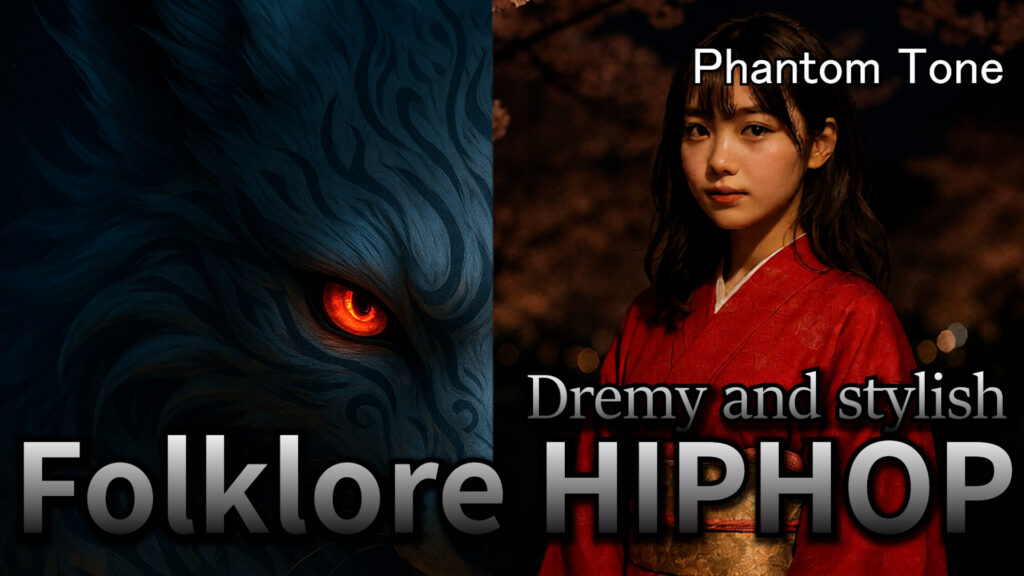
konkon sama
Genre: Ritual Lo-Fi Japanese HipHop / Shinto Folklore Fusion Produced by: Phantom Tone | Suno AI | Kotetsu Co., Ltd. Tags: #JapaneseHipHop #AIgeneratedMusic #W…