
A child spirit dwelling in deep mountains.
It guides or misleads travelers.
Primary Sources
Mountain Child Spirit Records
- Yanagita Kunio — Mountain child belief studies
- Komatsu Kazuhiko — Yōkai Encyclopedia
- Regional mountain village oral traditions
Yamawarawa – The Primal Mountain Child That Exists Before Name and Form in Japanese Folklore
Yamawarawa is not a single yōkai with a fixed shape or behavior. It is an ancient conceptual presence in Japanese folklore: a childlike being of the mountains that exists before classification, before moral alignment, and before stable form.
It is not yet a monster.
It is not yet a spirit with duty.
It is simply there.
Yamawarawa embodies existence prior to definition.
Origins in Pre-Classified Mountain Belief
Before yōkai were cataloged and named, mountains were understood as places where incomplete beings dwelled—entities neither human nor divine. Yamawarawa emerges from this pre-taxonomic layer of belief.
The word warawa (童) signifies more than “child.” It implies something unfinished, socially undefined, and spiritually unbound. When placed in the mountains, this concept becomes Yamawarawa: a presence still forming.
The mountain has not decided what it is yet.
Position Above Yamawaro and Yamawarashi
Yamawarawa functions as a root concept, from which later distinctions arise:
- Yamawarashi – the spiritual, ephemeral manifestation
- Yamawaro – the behavioral, mischievous manifestation
These are not contradictions, but outcomes. Yamawarawa is what exists before these paths diverge.
Form is not inherent.
It is chosen by circumstance.
Appearance That Refuses Fixation
Yamawarawa has no canonical appearance. Accounts describe it only in fragments:
A small shadow between trees
A child-sized silhouette that vanishes
Footsteps without weight
A presence sensed rather than seen
Any clear description collapses its nature. Once defined, it stops being Yamawarawa.
To name it fully would end it.
Behavior as Potential, Not Pattern
Unlike other yōkai, Yamawarawa does not act consistently:
Sometimes it watches
Sometimes it imitates
Sometimes it interferes lightly
Sometimes it does nothing at all
It has no fixed temperament. Its actions depend on context, environment, and human response.
Yamawarawa is possibility, not intent.
Relationship with Humans
Encounters with Yamawarawa are ambiguous. There is rarely danger, but rarely comfort. Humans often realize something was present only after it is gone.
Respect prevents escalation.
Dismissal invites repetition.
Yamawarawa reacts not to fear, but to recognition.
The Mountain’s Childhood
Yamawarawa can be understood as the mountain itself in an early, unshaped state—before authority, before hunger, before guardianship.
Where Yamanba represents survival hardened into monstrosity,
and the Mountain God represents law and sovereignty,
Yamawarawa represents the mountain before it chose either.
It is the beginning of the line.
Symbolism and Themes
Pre-Identity Existence
Being before role.
Childhood of Nature
Curiosity without morality.
Liminal Potential
Everything not yet decided.
Observation Without Judgment
Presence without intent.
Related Concepts
Child Guardian Motif
Protective yet mischievous child spirits.
Mountain Boundary Yōkai
Spirits guarding forest borders.
Lost Child Folklore
Spirits of vanished children.
Yamawarawa in Folklore Memory
Yamawarawa rarely appears by name in formal texts. Instead, it survives as an assumption—something villagers felt but did not label.
It is remembered through phrases like:
“Something small was there.”
“It felt like a child.”
“I couldn’t tell what it was.”
These are not failures of description.
They are accurate.
Modern Cultural Interpretations

This blade symbolizes playful misdirection and silent guidance.
It visualizes paths chosen by unseen hands.
Modern interpretations often read Yamawarawa as a metaphor for unstructured nature, pre-social identity, and early consciousness before categorization.
Psychologically, Yamawarawa represents the discomfort of encountering something that refuses labels — a presence that exists without explanation or taxonomy.
In some modern visual reinterpretations, Yamawarawa manifests as a yōtō — a blade that cannot be catalogued. The sword bears no consistent pattern, its form shifting just enough to resist classification.
Yamawarawa persists because not everything should be resolved.
Modern Reinterpretation – Yamawarawa as the Spirit of Undefined Becoming
In this reinterpretation, the Yamawarawa is not a creature of form, but of emergence — the living uncertainty that precedes identity. It embodies the tension between what could be and what will not yet decide, existing within the fragile moment before meaning hardens.
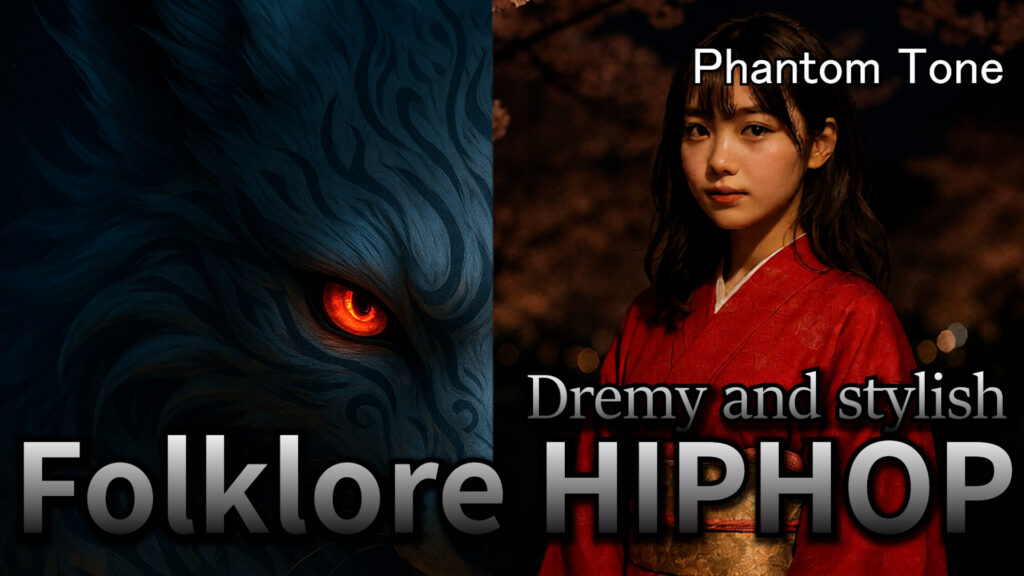
The “beautiful girl” form conveys that ambiguity through subtle instability. Her outline seems to shift with the light; her expression changes each time one looks. She is presence without permanence, an echo of self still learning how to remain.
Her beauty lies in incompletion. Nothing about her feels fixed — her garments flow like half-formed thought, her posture caught between childlike curiosity and ancient stillness. She invites recognition, yet slips from understanding the moment it arrives.
She does not demand definition; she resists it. Her existence is the question left unanswered, the glimpse that reminds us not all things are meant to settle into names.
In this visual reinterpretation, the Yamawarawa becomes the spirit of undefined becoming — beauty sustained by uncertainty, and life understood as something still inventing itself.
Musical Correspondence
The accompanying track gives sound to emergence. Fragmentary melodies rise and fall without destination, their phrases incomplete yet alive. Each note feels like an idea discovering itself mid-breath.
Irregular rhythms and suspended harmonies evoke instability as grace — the sensation of a pattern about to form, then gently refusing to do so. Silence becomes part of the composition, an acknowledgment of what cannot yet be known.
Through openness, hesitation, and unresolved tone, the music captures Yamawarawa’s essence: a presence still forming, beautiful precisely because it has not chosen what to become.

She embodies playful guidance and quiet disappearance.
Her presence marks paths that may or may not return.
Dreamy and stylish
Genre: Ritual Japanese HipHop / Darkwave Folklore Produced by: Phantom Tone | Suno AI | Kotetsu Co., Ltd. Tags: #JapaneseHipHop #AIgeneratedMusic #Yokai #Phant…