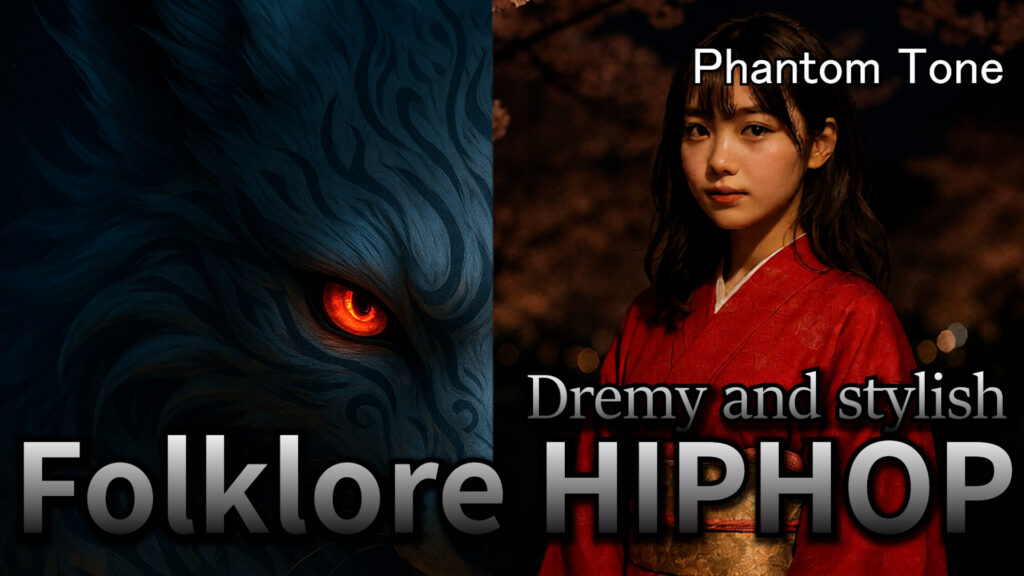

A spirit that returns voices from the mountains.
It represents unseen presence.
Primary Sources
Echo & Mountain Voice Lore
- Yanagita Kunio — Studies of Mountain Beliefs
- Komatsu Kazuhiko — Yōkai Encyclopedia
- Regional echo-omen folklore collections
Yamabiko – The Voice That Answers from the Mountain in Japanese Folklore
Yamabiko is a subtle and elusive yōkai in Japanese folklore, associated with echoes heard in mountains and valleys. When a voice is shouted and answered from afar, folklore once explained the reply not as physics, but as presence.
You speak.
Something responds.
But nothing appears.
Yamabiko embodies sound without body.
Origins in Mountain Acoustics and Human Wonder
Before scientific explanations of acoustics were widespread, echoes in the mountains felt intentional. The delay, distortion, and distance suggested a listener hidden beyond sight.
Yamabiko emerged as the name given to this experience—a spirit of the mountains that answers human voices, not with words of its own, but by repeating what it hears.
The mountain listens.
Appearance and Invisible Form
Unlike many yōkai, Yamabiko is rarely described visually. Some traditions imagine it as:
A small, elusive mountain spirit
A shadowy creature hiding among rocks or trees
A being that never reveals its shape
More commonly, Yamabiko has no form at all. It exists only as sound.
To see it would end it.
Behavior and Call-and-Response
Yamabiko’s defining behavior is mimicry:
It repeats voices thrown into the mountains
It answers cries, laughter, or calls
It never initiates sound
It fades if ignored
This interaction feels personal, even though it is empty of intent.
The reply belongs to you.
Not a Threat, Not a Guide
Yamabiko does not harm or lead travelers astray. Its role is neutral. Yet the experience can still unsettle—especially when the echoed voice feels altered or delayed too long.
The fear arises not from danger, but from uncertainty.
Is someone there?
Symbolism and Themes
Nature as Listener
The world responds.
Voice Without Speaker
Sound divorced from body.
Reflection of Self
You hear yourself returned.
Communication Without Intent
Response without meaning.
Related Concepts
Echo Spirits
Yōkai manifested through reflected sound.
Voice Without Body Motif
Disembodied vocal presences.
Mountain Boundary Folklore
Spirits marking deep forest borders.
Yamabiko in Folklore and Cultural Memory
Yamabiko appears in regional folklore and yōkai catalogs as a gentle explanation for an everyday mystery. It lacks malice, trickery, or lesson.
Its endurance comes from simplicity: it names a moment everyone has experienced.
The mountain answers—and that is enough.
Modern Cultural Interpretations

This blade symbolizes echoed will and invisible reply.
It visualizes answers delivered without speaker.
Modern interpretations often see Yamabiko as a metaphor for reflection, feedback, and the way actions return to their origin.
Psychologically, Yamabiko represents self-hearing — the unease of confronting one’s own voice separated from oneself, repeated without consent.
In some modern visual reinterpretations, Yamabiko manifests as a yōtō — a blade that answers rather than attacks. The sword returns force in kind, echoing movement rather than initiating it.
Yamabiko persists because echoes still feel uncanny.
Modern Reinterpretation – Yamabiko as the Spirit of Returning Voice
In this reinterpretation, Yamabiko is not a creature of mischief, but an embodiment of resonance — the awareness that every call eventually returns. It is the world’s quiet way of reminding us that sound never truly disappears, only travels beyond hearing before finding its way back.
The “beautiful girl” form personifies this echoing presence. Her expression is reflective, her lips slightly parted as though caught between speaking and listening. Around her, the air seems to shimmer — not with light, but with the memory of words repeated from unseen places.
She does not originate sound; she returns it. Her presence is both question and answer, collapsing the space between voice and reflection. To see her is to witness one’s own intention coming home, subtly altered by distance.
She reminds us that every utterance lingers somewhere — that the mountain, the air, and the self are all listeners in the same dialogue.
In this visual reinterpretation, Yamabiko becomes the spirit of returning voice — beauty formed from repetition, and identity revealed in the echo that answers back.
Musical Correspondence
The accompanying track translates echo into rhythm. Repetitive motifs and gentle delays form a call-and-response structure, where each sound chases its reflection across expanding space.
Soft reverberations and fading tones create depth, evoking the sensation of one’s own voice traveling through unseen valleys. Silence becomes part of the dialogue, shaping what is heard by what remains unspoken.
Through repetition, distance, and delay, the music captures Yamabiko’s essence: the voice that returns from beyond view, carrying with it both memory and transformation.

She embodies unseen response and mountain memory.
Her presence reflects voices that never belong to anyone.
Dreamy and stylish
Genre: Ritual Japanese HipHop / Darkwave Folklore Produced by: Phantom Tone | Suno AI | Kotetsu Co., Ltd. Tags: #JapaneseHipHop #AIgeneratedMusic #Yokai #Phant…