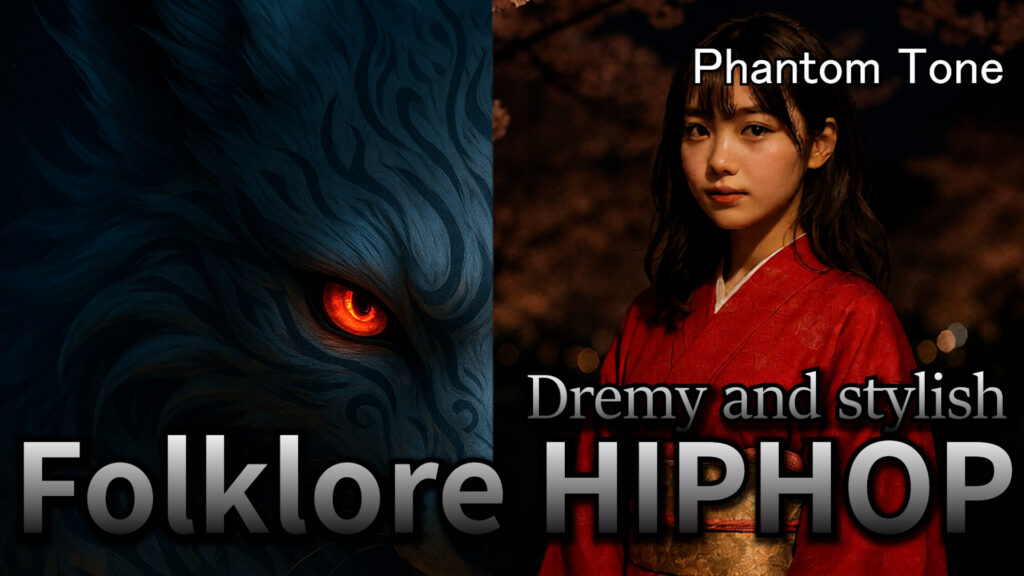

A procession of spirits serving mountain kami.
It enforces divine presence across territory.
Primary Sources
Mountain Deity & Attendant Lore
- Yanagita Kunio — Mountain belief studies
- Komatsu Kazuhiko — Yōkai Encyclopedia
- Regional shrine procession folklore
- Oral traditions of mountain kami retinues
The Retinue of the Mountain God – Beings That Move at the Will of the Mountain in Japanese Folklore
The Retinue of the Mountain God refers to a collective of beings believed to serve, embody, or act on behalf of the mountain deity in Japanese folklore. They are not a single yōkai, nor a fixed species. They are presence made plural—manifestations of the mountain’s authority.
They do not act independently.
They do not speak for themselves.
They move when the mountain decides.
The retinue embodies power delegated, not owned.
Origins in Mountain Worship and Animistic Hierarchy
Mountains in Japan have long been regarded as sacred realms—places of gods, ancestors, and transformation. Within this belief system, the mountain god (yamagami) is not solitary. Its will extends through lesser beings that patrol, warn, punish, or protect.
These attendants are not named consistently. They appear as animals, spirits, shadows, or human-like figures, depending on region and context.
The mountain is one body.
The retinue is its movement.
Forms That Shift with Function
The appearance of the mountain god’s retinue is fluid:
White wolves or dogs guarding paths
Deer or boars acting as messengers
Small, indistinct humanoid spirits
Sudden sounds, movements, or signs without form
They are recognized not by shape, but by behavior—by actions that feel purposeful and aligned with the mountain’s mood.
Form follows duty.
Behavior as Enforcement
The retinue does not terrorize indiscriminately. Its actions are conditional:
Guiding respectful travelers safely
Misleading or blocking the greedy
Punishing those who hunt or cut trees without permission
Marking boundaries that should not be crossed
Encounters are often indirect. A path vanishes. A sound warns. Fatigue overwhelms the uninvited.
The mountain does not argue.
It enforces.
Relationship with Humans
Humans do not worship the retinue directly. They are acknowledged through respect toward the mountain itself—offerings, silence, restraint, and ritual.
Those who recognize the signs may pass unharmed. Those who dismiss them may never understand what went wrong.
The retinue does not explain.
It responds.
Collective Identity Without Names
Unlike famous yōkai, the retinue often remains unnamed. Naming would individualize what is meant to remain collective.
They are not characters.
They are function.
This anonymity reinforces their authority. They cannot be bargained with because no single will governs them.
Symbolism and Themes
Delegated Divinity
Power flows downward.
Nature as Authority
The land commands obedience.
Boundaries Enforced Without Speech
Rules exist without explanation.
Collective Over Individual
Identity dissolves into role.
Related Concepts
Mountain Kami (山神)
Deity ruling mountain domains.
Divine Attendant Motif
Beings serving higher kami.
Procession Spirits
Folklore of sacred entourages.
The Retinue in Folklore Memory
Stories of the mountain god’s retinue often appear as explanations after the fact: why someone was saved, lost, or punished in the mountains.
The beings themselves are rarely described in detail. What matters is outcome, not spectacle.
Survival becomes proof.
Modern Cultural Interpretations
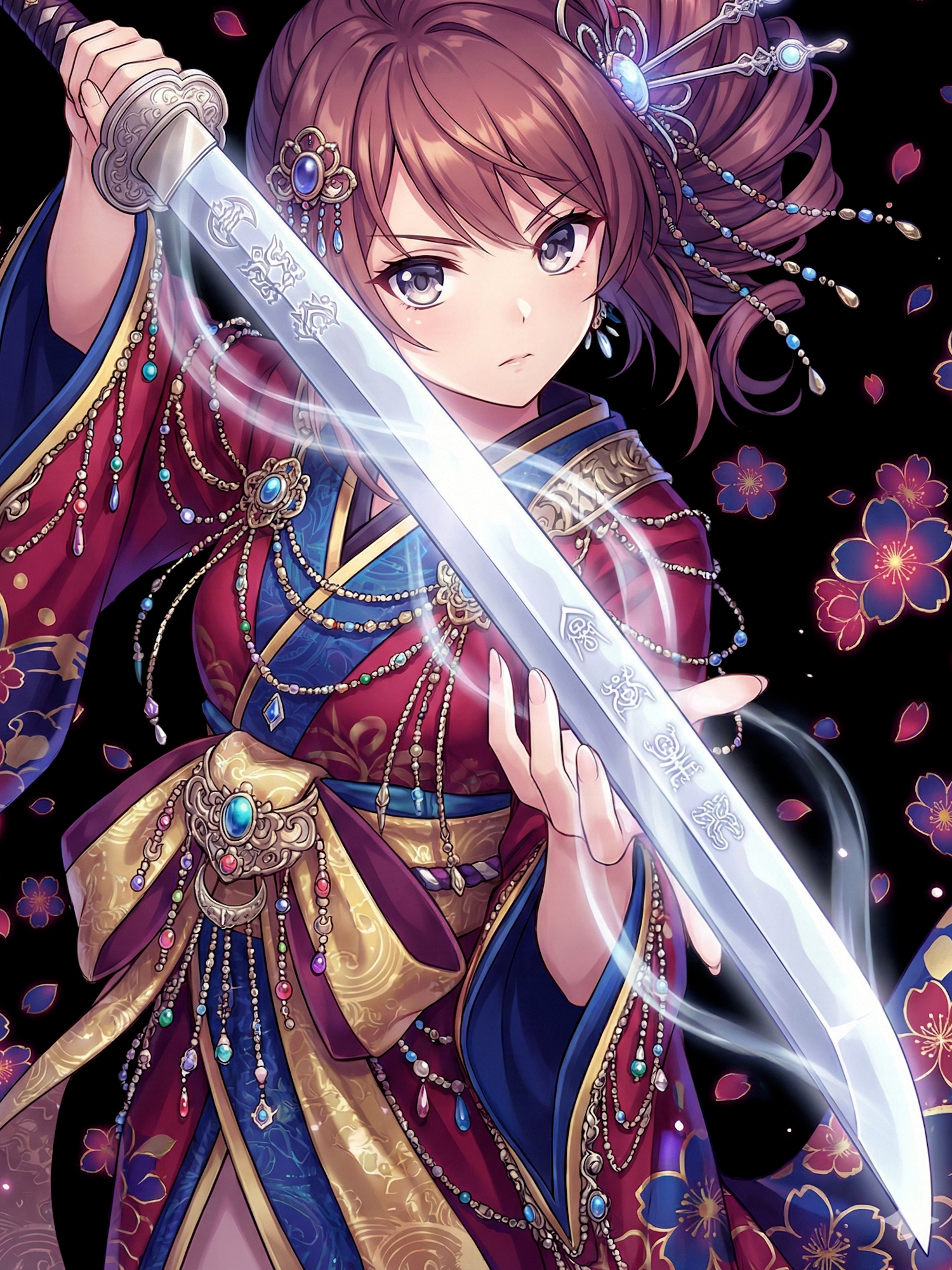
This blade symbolizes collective divine authority.
It visualizes punishment delivered by unseen procession.
Modern interpretations often read the retinue of the mountain god as a metaphor for environmental consequence — systems that respond automatically to human intrusion rather than moral intent.
Psychologically, they represent unspoken rules: limits enforced not by visible authority figures, but by circumstance itself — boundaries that activate only when crossed.
In some modern visual reinterpretations, the retinue manifests as a yōtō — a blade that moves only in response to trespass. The sword does not patrol; it reacts. Its presence embodies reaction rather than vigilance.
The retinue persists because nature still answers action with reaction.
Modern Reinterpretation – The Retinue as the Spirit of Automatic Consequence
In this reinterpretation, the retinue of the mountain god is not an army or a host, but a mechanism — the invisible reflex of the natural world. It does not act from command or will; it simply happens when boundaries are disturbed.
The “beautiful girl” form embodies the elegance of inevitability. Her expression is calm, almost detached, as if she knows the outcome before motion begins. Her attire echoes the forest canopy — shifting tones of bark, moss, and mist — merging her form with the mountain she serves.
She does not pursue trespassers; she responds to them. Her movements follow intrusion like wind follows sound. The air around her feels aware, carrying the sense that every disturbance is already measured and answered.
There is no hostility in her presence, only balance restored. She is the living articulation of cause and effect — consequence made graceful, inevitability given form.
In this visual reinterpretation, the retinue becomes the spirit of automatic consequence — beauty inseparable from reaction, and motion existing only because something has crossed the line.
Musical Correspondence
The accompanying track translates reaction into rhythm. Layered percussion and low harmonic swells create the impression of many forces responding as one — the mountain’s breath distributed through countless unseen agents.
Subtle phase shifts and rolling patterns evoke motion that is collective yet directionless, like trees bending in synchronized silence. Each sound seems to occur because something else has already moved.
Through structure, restraint, and the interplay of many within one, the music captures the retinue’s essence: the selfless movement of consequence, where nature itself enacts what must be done.

She embodies collective sacred command.
Her calm presence reflects law carried by many unseen hands.
Dreamy and stylish
Genre: Ritual Japanese HipHop / Darkwave Folklore Produced by: Phantom Tone | Suno AI | Kotetsu Co., Ltd. Tags: #JapaneseHipHop #AIgeneratedMusic #Yokai #Phant…