
Kijimunā – Forest Child Spirits of Okinawan Folklore
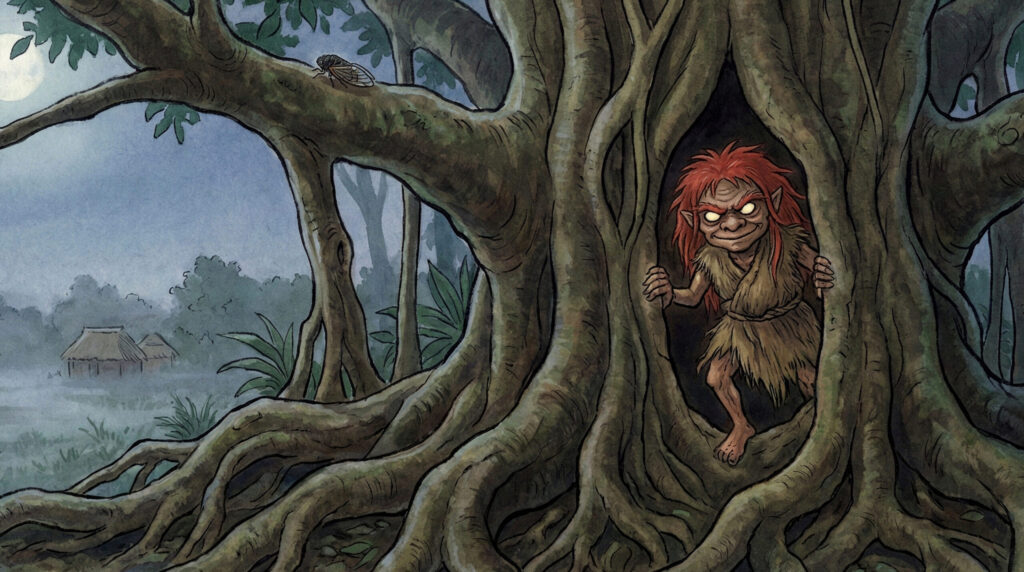
Kijimunā are distinctive spirit beings from Okinawan folklore, closely associated with ancient banyan trees (gajumaru) and the subtropical forests of the Ryukyu Islands. Often described as child-sized figures with red hair and playful expressions, kijimunā occupy a unique position between yōkai, nature spirits, and local deities.
Unlike fear-driven monsters or moral enforcers, kijimunā are primarily tricksters. They laugh, tease, and disrupt, but rarely with lasting harm. Their presence reflects a worldview shaped by close coexistence with nature—where spirits are not distant abstractions, but neighbors sharing the same land.
Rooted deeply in Okinawan environment and culture, kijimunā embody regional identity as much as supernatural belief.
Origins and Regional Context
Kijimunā belong specifically to the folklore of Okinawa and the former Ryukyu Kingdom, rather than mainland Japan. Their legends emerged from a subtropical landscape rich in dense forests, coastal villages, and sacred trees. Among these, the gajumaru tree holds special significance, often believed to serve as a dwelling place for spirits.
Early accounts portray kijimunā as forest-dwelling beings who occasionally interact with humans—especially fishermen, farmers, and children. They are not associated with formal religious doctrine, but with oral tradition, local customs, and everyday life.
This regional grounding sets kijimunā apart from many pan-Japanese yōkai. They are spirits of place, inseparable from the land itself.
Appearance and Characteristics
Descriptions of kijimunā are relatively consistent across stories:
Small, childlike stature
Bright red or reddish-brown hair
Mischievous facial expressions
Barefoot or lightly clothed
Often associated with trees, rivers, or beaches
In some tales, kijimunā resemble human children closely enough to be mistaken at a distance. Their otherness is revealed through behavior rather than monstrous features.
They are agile, quick to laugh, and fond of jokes—sometimes harmless, sometimes inconvenient.
Behavior and Human Encounters
Kijimunā are known for playful but disruptive behavior. Common stories describe them:
Stealing fish or tools and returning them later
Messing with fishing nets or boats
Laughing loudly when surprising humans
Playing with children near forests or shores
While they may cause trouble, kijimunā rarely inflict serious harm. However, angering them—by disrespecting nature or mocking them—can lead to ongoing mischief or bad luck.
Interestingly, many legends emphasize mutual respect. Humans who treat kijimunā kindly may receive help or protection in return.
Relationship with Nature
Kijimunā are inseparable from the natural environment. Their connection to gajumaru trees reflects broader Okinawan beliefs about sacred landscapes and spiritual presence in nature.
Rather than dominating or judging humans, kijimunā coexist alongside them. They react to human behavior toward the environment, reinforcing a reciprocal relationship rather than a moral hierarchy.
This ecological closeness gives kijimunā a gentler tone than many mainland yōkai, aligning them more closely with nature spirits than demons.
Symbolism and Themes
Playfulness and Disorder
Kijimunā represent chaos that is lighthearted rather than destructive.
Childhood and Wildness
Their childlike form reflects freedom, curiosity, and emotional immediacy.
Respect for Nature
They embody the consequences—positive or negative—of how humans treat their environment.
Regional Identity
Kijimunā symbolize Okinawan cultural distinctiveness within Japanese folklore.
Kijimunā in Folktales and Local Memory
Kijimunā appear primarily in oral stories passed down through generations. Unlike courtly myths or Buddhist tales, their stories are grounded in village life, fishing routines, and forest paths.
Encounters are often personal and anecdotal rather than epic. Someone laughs at night and later realizes a kijimunā was nearby. A fisherman finds his catch disturbed but senses no malice.
These small-scale stories reinforce kijimunā as familiar presences rather than distant legends.
Modern Interpretations
In modern Okinawa, kijimunā often appear as friendly mascots, characters in children’s books, and symbols of regional heritage. Their image has been softened further, emphasizing charm and friendliness over mischief.
Despite this, traditional stories still preserve their unpredictability. They are not pets or decorations—they remain spirits, deserving of respect.
Contemporary interpretations increasingly frame kijimunā as icons of environmental harmony and cultural preservation.
Conclusion – Kijimunā as Spirits of Playful Coexistence
Kijimunā are not monsters to be defeated nor judges to be feared. They are spirits of shared space—inhabitants of forests and shores who remind humans that nature is alive, responsive, and not entirely controllable.
Their laughter, tricks, and sudden appearances reflect a worldview where the supernatural is woven into daily life. Kijimunā teach not through punishment, but through playful disruption.
They endure as symbols of coexistence, reminding us that respect, humor, and restraint are essential when living alongside the unseen.
Music Inspired by Kijimunā
Music inspired by kijimunā often emphasizes lightness, rhythm, and organic texture. Percussive elements drawn from natural sounds—wood, water, wind—can evoke their forest origins.
Playful melodic fragments, call-and-response patterns, and sudden rhythmic shifts mirror their mischievous behavior. Rather than building toward heavy climaxes, such music thrives on motion and surprise.
By blending warmth, spontaneity, and subtle unpredictability, music inspired by kijimunā captures the spirit of a world where nature laughs, moves, and watches—just beyond the edge of human certainty.
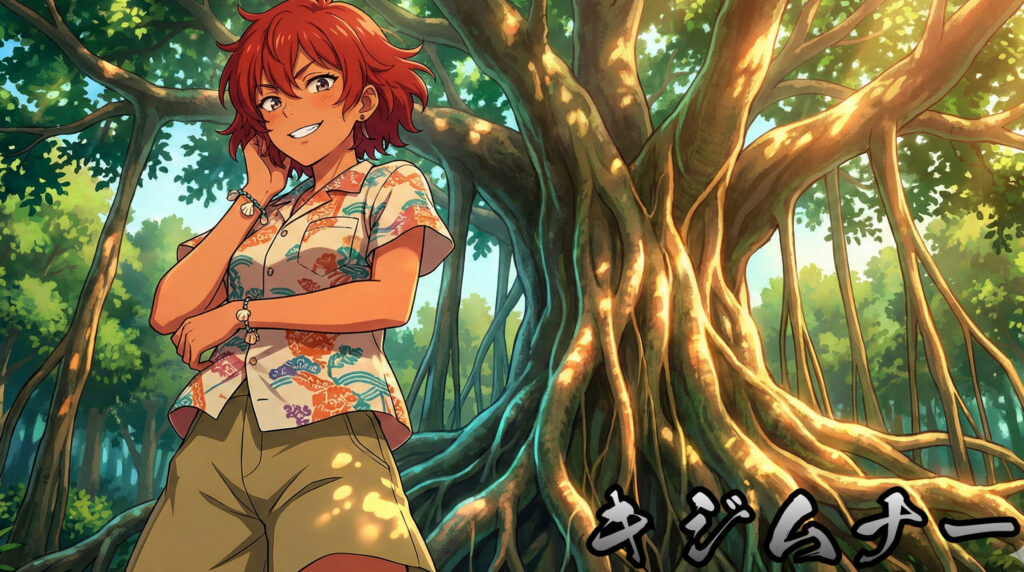
Dreamy and stylish
Genre: Ritual Japanese HipHop / Darkwave Folklore Produced by: Phantom Tone | Suno AI | Kotetsu Co., Ltd. Tags: #JapaneseHipHop #AIgeneratedMusic #Yokai #Phant…
 Phantom Tone – Japanese Folklore Hip-Hop Project