Kama-itachi – Wind-Blade Spirits of Japanese Folklore
Kama-itachi are swift, invisible, and unsettling figures in Japanese folklore: mysterious spirits associated with sudden winds, unexplained cuts, and the violence hidden within natural forces. Unlike towering demons or shape-shifting tricksters, kama-itachi are rarely seen directly. Their presence is felt through aftermath — sharp wounds appearing without pain, bloodless slashes, and the eerie realization that something has already passed.
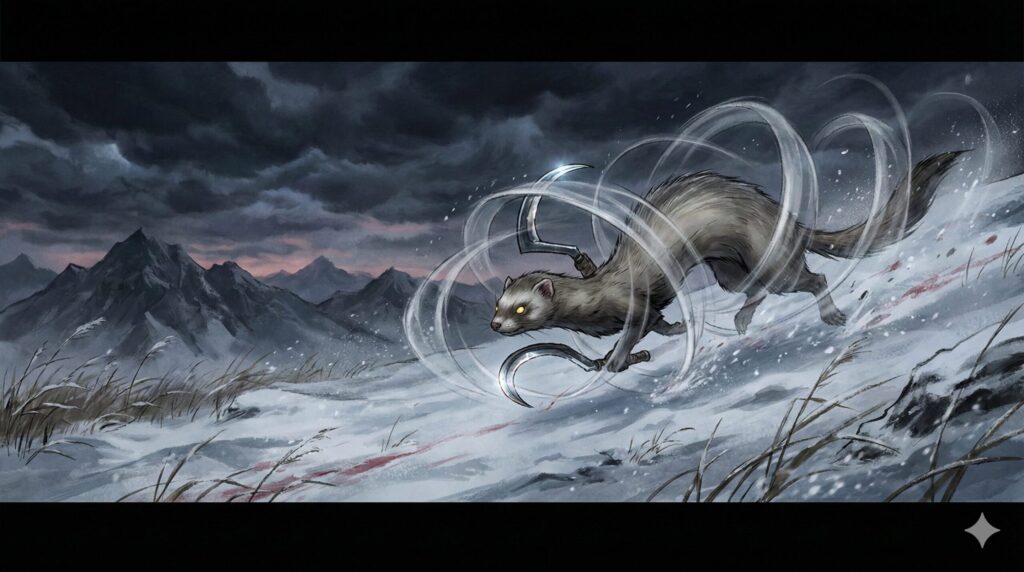
Often described as weasel-like beings armed with razor-sharp claws or sickle-shaped blades, kama-itachi embody speed, precision, and the danger of what moves too fast to perceive. They are not driven by malice or intention in the human sense, but act as manifestations of unseen motion and natural hostility.
Over time, kama-itachi have come to represent the fear of the invisible — the realization that harm can arrive silently, without warning, and without a visible attacker.
Origins and Early Accounts
The term kama-itachi (鎌鼬) combines kama (sickle) and itachi (weasel), reflecting both the shape of the wounds they inflict and the animal imagery used to explain them. The legend likely emerged as a folk explanation for mysterious injuries caused by strong winds, sharp ice, flying debris, or sudden falls in open plains and mountain paths.
Early records describe people who, while walking through windy fields or mountain passes, suddenly collapsed with clean, shallow cuts on their legs or torso — wounds that caused little pain at first, but bled afterward. Lacking a visible cause, these injuries were attributed to invisible creatures riding the wind.
Thus, kama-itachi entered folklore not as monsters with clear forms, but as explanations for natural phenomena beyond immediate understanding.
From Natural Hazard to Supernatural Entity
As folklore developed, kama-itachi gradually took on clearer identities. Later tales describe them as small, fast-moving beings that travel in gusts of wind, striking victims before vanishing instantly.
Some regional legends portray kama-itachi as acting in groups — one knocking a person down, another slicing the skin, and a third applying a salve to prevent pain. This tripartite structure emphasizes coordination and inevitability rather than cruelty, reinforcing the idea that kama-itachi operate according to an inhuman logic.
This evolution reflects a broader folkloric pattern: invisible dangers become personified, allowing people to narrate and contain fear through story.
Appearance and Movement
Descriptions of kama-itachi vary, but common elements include:
Weasel-like bodies or silhouettes
Sharp, sickle-shaped claws or forelimbs
Extreme speed, often invisible to the naked eye
Movement synchronized with sudden gusts of wind
Unlike yokai that rely on disguise or intimidation, kama-itachi are defined by absence. Their terror lies in their refusal to be seen. Even when depicted visually in later art, they appear blurred, fragmented, or half-erased — creatures of motion rather than form.
Kama-itachi and the Wind
Wind is central to kama-itachi lore. They do not merely travel on the wind — they are inseparable from it. Sudden whirlwinds, cold gusts, or sharp seasonal winds are often interpreted as signs of their passage.
This connection links kama-itachi to open landscapes: plains, mountain ridges, riverbanks, and snowy fields where wind moves freely and unpredictably. In these environments, humans are exposed, unprotected, and vulnerable — conditions perfectly suited to the legend.
The wind becomes not just a force of nature, but a carrier of unseen intent.
Symbolism and Themes
Invisibility and Sudden Violence
Kama-itachi represent harm without warning. Their attacks arrive without sound or sight, reflecting anxieties about accidents, illness, and random injury.
Speed Beyond Human Perception
Their defining trait is velocity — movement too fast to follow. This positions kama-itachi as symbols of forces that exceed human reaction and control.
Nature’s Indifference
Unlike vengeful spirits, kama-itachi do not target individuals for moral reasons. They strike indiscriminately, embodying nature’s lack of concern for human intention or virtue.
The Fear of Aftermath
Often, the true horror is not the moment of attack, but the realization afterward — the delayed pain, the sudden blood, the unanswered question of “what happened.”
Kama-itachi in Literature and Art
Compared to other yokai, kama-itachi appear less frequently in classical literature, but they are well documented in regional folklore and later encyclopedic works on supernatural phenomena.
In visual art and modern illustration, kama-itachi are typically portrayed:
Riding cutting winds across open fields
Appearing as blurred weasel-like figures
Striking from oblique angles, never head-on
Leaving thin, precise wounds as their signature
These depictions emphasize motion and sharpness rather than personality, reinforcing their role as forces rather than characters.
Regional Variations and Folk Explanations
Different regions interpret kama-itachi differently. Some view them as literal yokai, others as manifestations of cursed winds or unlucky terrain.
Local beliefs include:
Certain fields or paths being prone to kama-itachi
Protective charms or clothing to ward off wind spirits
Seasonal winds believed to increase their activity
Folk remedies applied to unexplained cuts
These practices reveal how folklore functioned as both explanation and coping mechanism in pre-modern life.
Modern Interpretations
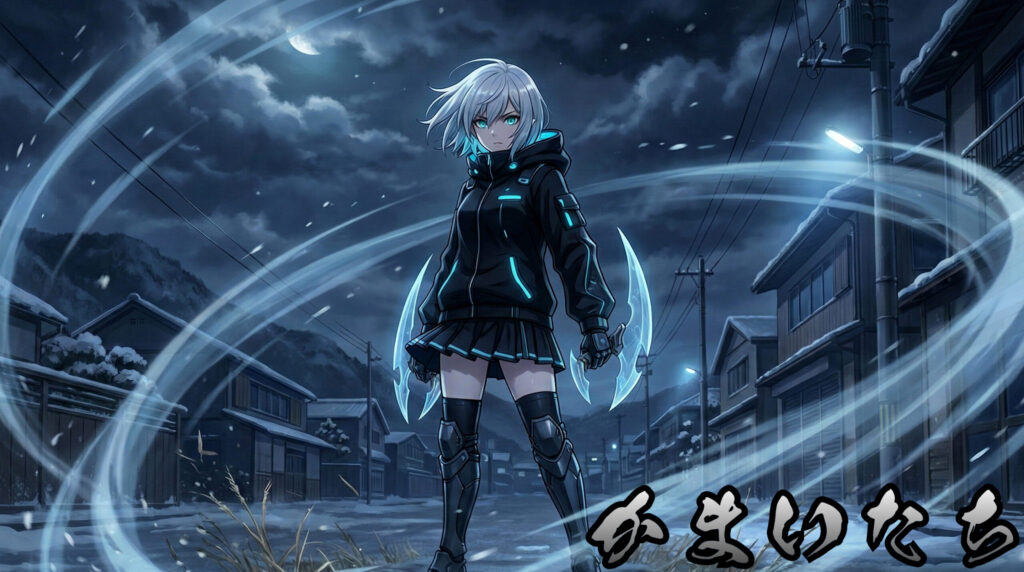
In modern media, kama-itachi are often reimagined as sleek, lethal beings — assassins, wind spirits, or embodiments of speed and precision. Anime, games, and novels frequently amplify their cutting ability and aerial movement, turning them into visually dynamic antagonists or anti-heroes.
Contemporary interpretations focus on their elegance and lethality rather than fear, transforming invisible danger into stylized motion and controlled violence.
Conclusion – Kama-itachi as Spirits of Unseen Motion
Kama-itachi embody the terror of what cannot be seen until it is too late. They are not driven by hatred, hunger, or desire, but by motion itself — a reminder that speed and force exist beyond human awareness.
As spirits of wind and sudden injury, they occupy a unique space in Japanese folklore: not moral judges or tricksters, but silent reminders of vulnerability. They do not announce themselves. They do not linger. They pass — and only afterward does the wound appear.
Music Inspired by Kama-itachi
Music inspired by kama-itachi often emphasizes velocity, sharpness, and abrupt change. Rapid rhythmic patterns, sudden breaks, and slicing accents can mirror the feeling of unseen movement and delayed impact.
Sparse textures followed by sudden bursts of sound evoke the silence-before-injury sensation, while high-frequency elements and cutting timbres reflect the precision of invisible blades. Irregular rhythms and shifting dynamics suggest unstable wind currents and unpredictable force.
Through these techniques, music inspired by kama-itachi captures not spectacle, but tension — the uneasy awareness that something has already moved past, leaving only its mark behind.
Lucid Tempest
Genre: Japanese Folklore HipHop / Dreamwave Produced by: Phantom Tone | Suno AI | Kotetsu Co., Ltd. Tags: #JapaneseFolklore #AIgeneratedMusic #LucidTempest #Ph…
 Phantom Tone – Japanese Folklore Hip-Hop Project
Dreamy and stylish
Genre: Ritual Japanese HipHop / Darkwave Folklore Produced by: Phantom Tone | Suno AI | Kotetsu Co., Ltd. Tags: #JapaneseHipHop #AIgeneratedMusic #Yokai #Phant…