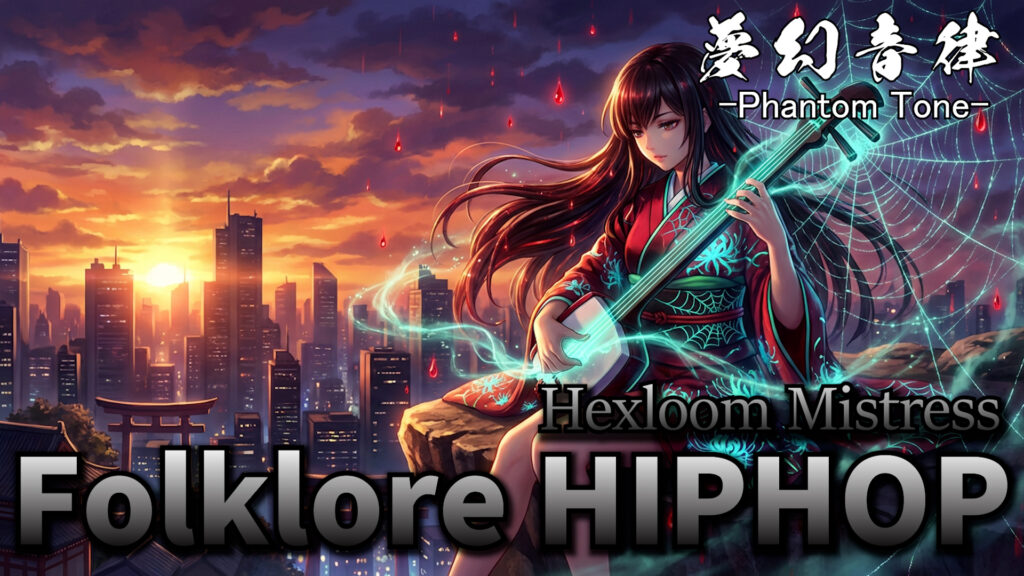
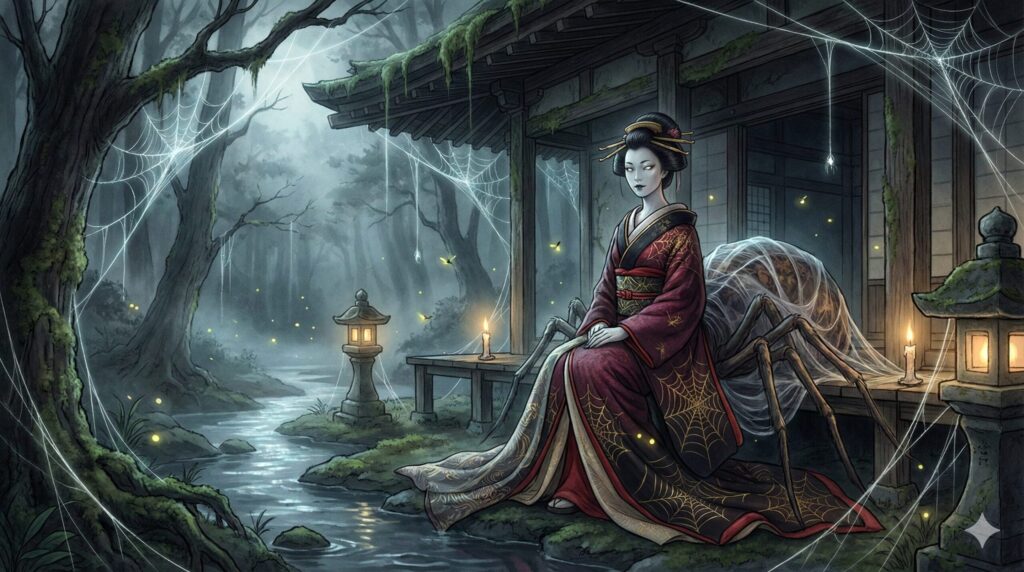
Jorōgumo – The Seductive Spider Woman of Japanese Folklore
Jorōgumo is one of the most hauntingly ambiguous figures in Japanese folklore: a beautiful woman who is, in truth, a monstrous spider yōkai. She appears not as a sudden terror, but as an invitation—charming, elegant, and alluring. Those who encounter her are not attacked immediately; instead, they are drawn in by beauty, music, and hospitality, only to discover too late that they have crossed into a predator’s web.
Unlike yōkai that rely on brute force or open violence, Jorōgumo operates through desire, illusion, and emotional manipulation. Her stories explore fear not as shock, but as gradual entrapment. She embodies the danger of appearances, the vulnerability of longing, and the lethal consequences of mistaking surface beauty for safety.
Origins and Early Depictions
The name jorōgumo (女郎蜘蛛) literally means “courtesan spider.” Early folklore suggests that ordinary spiders, after living for many years—often said to be several centuries—gain supernatural intelligence and the ability to shapeshift into human form. Among these transformed beings, the jorōgumo is the most infamous.
Edo-period texts and yōkai encyclopedias describe her as inhabiting remote mountain paths, waterfalls, or abandoned dwellings. She appears as a refined woman, sometimes playing music or inviting travelers to rest. Her spider form is rarely shown at first; instead, subtle hints—threads in the air, unnatural stillness, or strange sounds—foreshadow her true nature.
Early depictions emphasize deception rather than monstrosity. The horror lies not in what she looks like, but in what she is.
From Spider Spirit to Femme Fatale
Over time, the image of the jorōgumo evolved from a cautionary monster into a more complex symbol. While early stories focus on her predatory nature, later interpretations highlight her intelligence, autonomy, and calculated control over human desire.
She does not merely kill; she chooses. Victims are often lone men—travelers, monks, or warriors—whose isolation or arrogance makes them vulnerable. In some tales, she enslaves them with silk threads, drains their life force, or keeps them trapped as living ornaments within her lair.
This evolution reflects shifting cultural anxieties: fear of seduction, fear of illusion, and fear of being undone by one’s own desires.
Appearance and Abilities
Though descriptions vary, several traits recur across jorōgumo legends:
Shapeshifting Beauty
She appears as a graceful woman, often dressed elegantly and behaving with refined hospitality.
Hidden Spider Form
Her true body is that of a massive spider, sometimes revealed only at the moment of attack.
Silk Manipulation
She controls spider silk with supernatural precision, using it to bind, restrain, or immobilize victims.
Illusion and Enchantment
Music, conversation, and emotional intimacy are weapons as effective as her fangs.
Symbolism and Themes
The Deception of Appearances
Jorōgumo represents the danger of judging reality by surface beauty. Her stories warn against trust built solely on attraction.
Desire as a Trap
Unlike yōkai who attack indiscriminately, she preys on longing. Desire itself becomes the snare.
Female Power and Fear
Her autonomy and predatory role invert traditional power dynamics, making her both fascinating and threatening within patriarchal narratives.
Isolation and Vulnerability
Her victims are often alone, removed from social protection—highlighting how isolation amplifies danger.
Jorōgumo in Literature and Art
Jorōgumo appears frequently in Edo-period yōkai scrolls, kabuki-inspired imagery, and later popular literature. Artists depict her in moments of duality:
- playing a shamisen beside a hidden web,
- revealing spider limbs beneath flowing robes,
- ensnaring victims amid silken threads,
- gazing calmly as her illusion collapses.
These images solidified her status as both seductress and monster—an enduring icon of dangerous beauty.
Regional Variations and Local Legends
Different regions present distinct jorōgumo traditions:
- mountain pass legends where travelers vanish near waterfalls,
- tales of musicians lured into abandoned houses,
- stories where hunters narrowly escape after glimpsing spider legs beneath a kimono,
- rare accounts in which a jorōgumo spares a victim, suggesting personal motive rather than instinct.
These variations deepen her characterization as an intelligent, selective predator rather than a mindless beast.
Modern Interpretations
In modern manga, anime, and games, jorōgumo is frequently reimagined—sometimes as a villain, sometimes as a tragic anti-heroine. Contemporary interpretations often emphasize:
- her internal conflict between human emotion and monstrous instinct,
- the elegance of spider motifs merged with feminine beauty,
- themes of consent, power, and identity.
Despite stylistic changes, her core symbolism remains intact.
Conclusion – Beauty Woven with Predation
Jorōgumo endures because she embodies a quiet, unsettling truth: danger does not always announce itself. She is not chaos or brute force, but calculated allure—patience woven into silk. Her legends caution against the comfort of appearances and remind us that fascination itself can be fatal.
She stands as a symbol of desire turned predatory, beauty transformed into a weapon, and illusion spun so finely that escape becomes impossible.
Music Inspired by Jorōgumo
Music inspired by jorōgumo often balances elegance and menace. Graceful melodic lines can evoke her refined exterior, while underlying dissonance suggests the tension of hidden danger. Plucked strings and delicate rhythms may mirror the precision of spider silk, while sudden shifts in harmony reflect the moment when illusion collapses into terror.
Slow-building structures suit her patient nature, allowing beauty to dominate before darker textures emerge. Through contrasts between softness and threat, intimacy and restraint, music can capture the essence of jorōgumo—a presence that seduces first, ensnares next, and destroys only when escape is no longer possible.
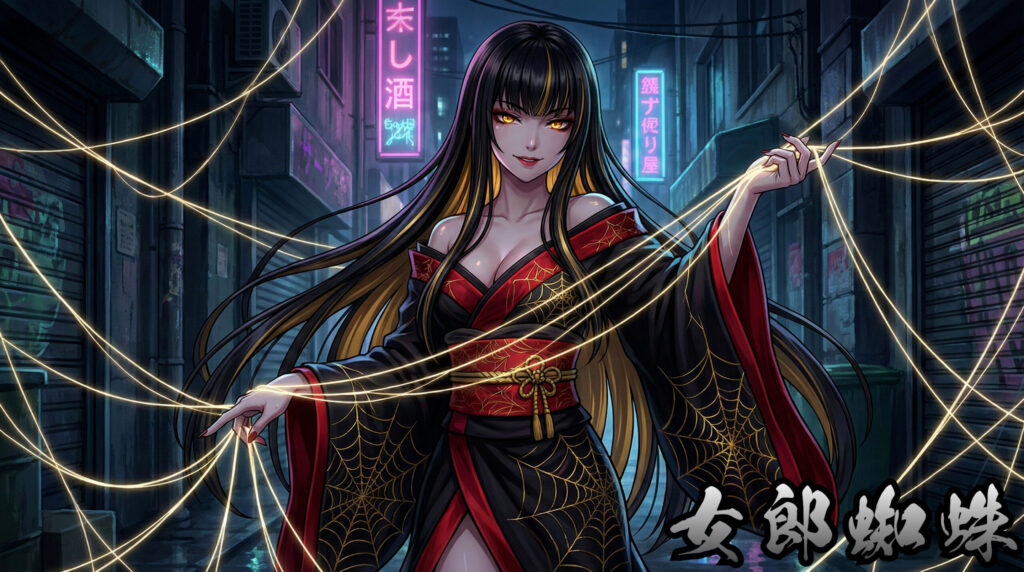
Hexloom Mistress
Genre: Japanese Folklore Hip-Hop / Darkwave Enka Trap Produced by: Phantom Tone | Suno AI | Kotetsu Co., Ltd. Tags: #AIgeneratedMusic #JapaneseHipHop #LoFiJapa…
 Phantom Tone – Japanese Folklore Hip-Hop Project