
Nuribotoke appears as a blackened, corpse-like monk spirit.
It embodies death-bound ritual pollution and silent presence.
Primary Sources
Classical & Temple Records
- Gazu Hyakki Yagyō (画図百鬼夜行) — Toriyama Sekien
- Konjaku Hyakki Shūi (今昔百鬼拾遺) — Toriyama Sekien
- Komatsu Kazuhiko — Yōkai Encyclopedia
- Temple folklore records of mortuary guardian spirits
Nuribotoke – The Buddha Figure Reduced to Shadow and Stain in Japanese Folklore
Nuribotoke is a deeply unsettling yōkai in Japanese folklore: a grotesque, shadow-like figure resembling a Buddha statue that has been smeared, darkened, and stripped of sanctity. It appears bloated, dripping, and indistinct—its form echoing reverence, yet emptied of enlightenment.
Unlike vengeful spirits or trickster yōkai, Nuribotoke does not act with intent. It simply exists—heavy, oppressive, and wrong.
Nuribotoke embodies faith that has lost its meaning.
Origins in Corrupted Sacred Space
The name “Nuribotoke” literally means “smeared Buddha.” Folklore associates it with neglected temples, abandoned altars, or improperly treated religious objects. In such spaces, where ritual has ceased and care has faded, the image of the Buddha becomes distorted.
Rather than offering protection or wisdom, the form decays into something stagnant and uncanny. The sacred does not vanish—it deteriorates.
Nuribotoke arises not from blasphemy, but from abandonment.
Appearance and Unholy Stillness
Descriptions of Nuribotoke emphasize heaviness and formlessness:
A swollen, Buddha-like silhouette
Skin or surface darkened as if coated in oil or soot
Drooping eyes or indistinct facial features
A body that appears to melt rather than move
It is often described as seated, immobile, and silent. Its presence fills space without motion, like a weight pressing down on the air.
The horror lies in immobility.
Encounter and Atmosphere
Nuribotoke is not aggressive. Those who encounter it report:
A sudden chill or pressure
Discomfort in sacred or once-sacred spaces
An instinctive urge to leave
A sense that something holy has gone wrong
The yōkai does not pursue. Its power is environmental. Remaining near it feels spiritually exhausting.
It drains meaning rather than life.
Sacred Form Without Function
What makes Nuribotoke disturbing is its resemblance to a Buddha image—an icon meant to represent enlightenment, compassion, and release from suffering.
Nuribotoke retains the outline but loses the essence. This inversion creates unease: the form promises transcendence, yet delivers stagnation.
The symbol remains.
The purpose is gone.
Symbolism and Themes
Decay of Faith
Belief requires care to endure.
Form Without Meaning
Symbols hollowed out.
Spiritual Stagnation
Enlightenment replaced by weight.
Neglect as Corruption
Disuse breeds distortion.
Related Concepts
Corpse-Guardian Yōkai
Spirits bound to funerary space.
Pollution & Purification Motif
Death-related spiritual boundary figures.
Household Yōkai
Domestic spirits associated with ritual anxiety.
Nuribotoke in Folklore and Art
Nuribotoke appears in Edo-period yōkai encyclopedias and illustrations as a grotesque parody of religious imagery. Artists often depict it with exaggerated bulk and darkness, emphasizing degradation rather than malice.
Its role is cautionary. Sacred spaces demand attention—not fear, but responsibility.
Modern Cultural Interpretations

This blade symbolizes silent mortuary boundary and ritual impurity.
It visualizes death that remains present after ceremony.
Modern readings often interpret Nuribotoke as a metaphor for empty ritual, institutionalized belief, and spirituality reduced to surface without sustained practice or reflection.
Psychologically, Nuribotoke represents burnout, loss of purpose, and reverence that has hardened into obligation rather than meaning.
In some modern visual reinterpretations, Nuribotoke manifests as a yōtō — a blade that appears ceremonial yet carries quiet corrosion. The sword dulls what it touches, eroding conviction rather than cutting flesh. Its presence signifies devotion drained of vitality.
Nuribotoke persists because meaning still erodes when neglected.
Modern Reinterpretation – Nuribotoke as the Yokai of Hollow Devotion
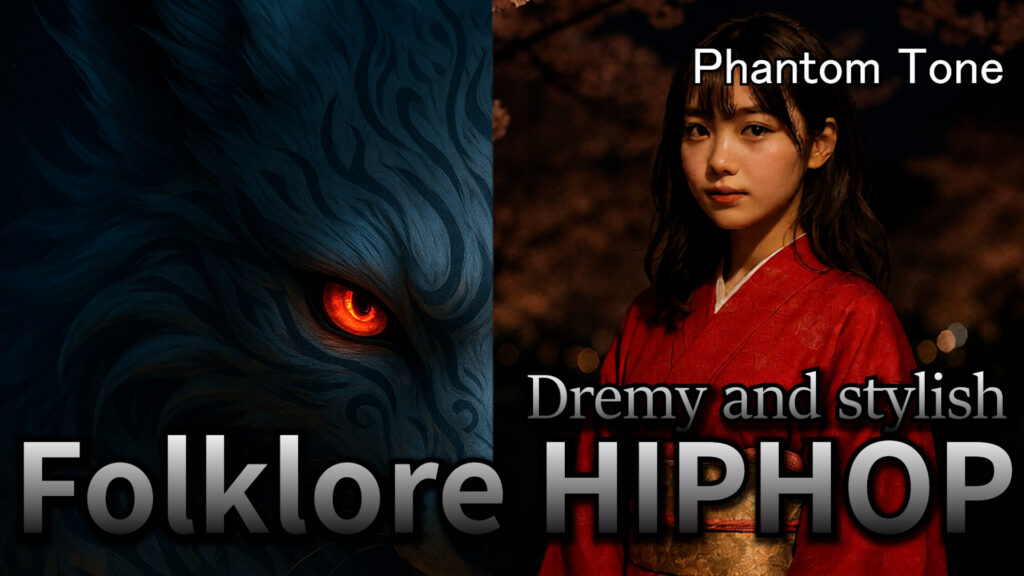
In this reinterpretation, Nuribotoke is not portrayed as an attacking apparition, but as a remnant of reverence left without living meaning.
The “beautiful girl” form does not judge. She remains.
Her quiet, expressionless gaze represents ritual without renewal — devotion practiced by habit rather than belief, form preserved after purpose has faded.
She does not curse. She does not guide. She only endures.
In this visual form, Nuribotoke becomes a contemporary yokai of hollow devotion — a spirit that preserves sacred shape after sacred meaning has gone.
Musical Correspondence
The accompanying track transforms spiritual stagnation into sound. Low drones, restrained motion, and heavy tonal centers evoke devotion that continues without destination.
Minimal harmonic shift and slow repetition mirror ritual repeated without renewal.
Together, image and sound form a unified reinterpretation layer — a modern folklore artifact of reverence that remains after belief has emptied.

She embodies lingering death and quiet mortuary presence.
Her calm form represents what remains after ritual ends.
Dreamy and stylish
Genre: Ritual Japanese HipHop / Darkwave Folklore Produced by: Phantom Tone | Suno AI | Kotetsu Co., Ltd. Tags: #JapaneseHipHop #AIgeneratedMusic #Yokai #Phant…