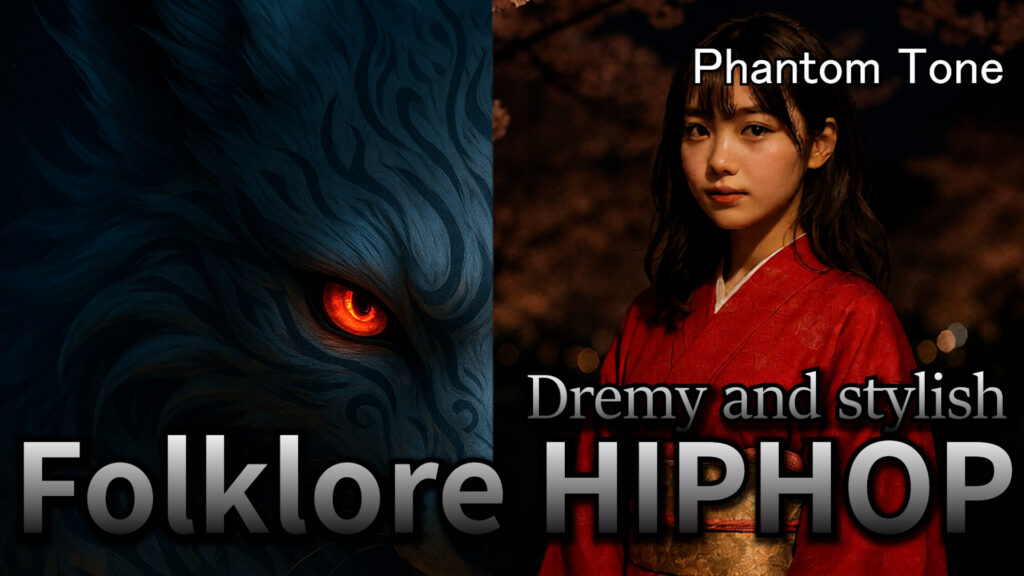

Ancient mirrors are believed to harbor spirits that reflect more than appearance.
They represent identity anxiety and hidden truth.
Primary Sources
Classical & Tsukumogami Lore
- Gazu Hyakki Yagyō (画図百鬼夜行) — Toriyama Sekien
- Komatsu Kazuhiko — Yōkai Encyclopedia
- Regional tsukumogami traditions
Kokyō no Rei – The Spirit That Watches from an Ancient Mirror in Japanese Folklore
Kokyō no Rei, the “Spirit of the Ancient Mirror,” is a quiet yet deeply unsettling presence in Japanese folklore: a spirit believed to dwell within old mirrors that have absorbed years of gazes, reflections, and unspoken emotions. Unlike roaming yōkai or violent apparitions, this spirit never moves. It watches.
Mirrors in Japanese belief are not neutral objects. They reflect truth, expose essence, and serve as boundaries between worlds. When a mirror ages, accumulating human presence without rest, it may awaken.
Kokyō no Rei embodies memory that looks back.
Origins in Sacred Mirrors and Tsukumogami Belief
Mirrors hold a sacred position in Japanese culture. The Yata no Kagami, one of the Imperial Regalia, represents wisdom and honesty. At the same time, everyday mirrors were intimate objects—witnesses to private moments, emotions, and identities.
When such mirrors were neglected, broken, or discarded, folklore imagined that the accumulated gaze within them did not fade. Under tsukumogami belief, an old mirror could gain spirit—not to act, but to remain aware.
Kokyō no Rei arises from prolonged witnessing rather than violent event.
Manifestation and Unnatural Reflection
Encounters with Kokyō no Rei are subtle and indirect:
A reflection that moves out of sync
A face that appears unfamiliar or delayed
Eyes within the mirror that seem to watch back
An oppressive stillness before the glass
The spirit rarely exits the mirror. Its power lies in inversion—the realization that the object of observation has become the observer.
The mirror no longer obeys.
Relationship with the Viewer
Kokyō no Rei does not attack. Instead, it destabilizes identity. Those who linger before an ancient mirror may feel:
Dissociation or loss of self-recognition
Memories surfacing uninvited
A sense of being judged or remembered
Fear without clear threat
The danger lies in fixation. The longer one gazes, the more the boundary between self and reflection erodes.
Mirror as Boundary
In folklore, mirrors function as thresholds—between truth and illusion, living and spiritual realms. Kokyō no Rei occupies this boundary permanently.
It does not cross over. It invites crossing. The viewer’s attention completes the circuit.
Thus, the spirit is activated not by presence, but by looking.
Symbolism and Themes
The Gaze Returned
Observation is never one-sided.
Identity as Fragile
The self depends on reflection.
Memory Without Voice
The past watches silently.
Objects That Remember
Use accumulates awareness.
Related Concepts
Tsukumogami (付喪神)
Objects that gain spirit through age and neglect.
→Tsukumogami
Mirror Spirits
Spirits inhabiting reflective objects.
Self-Recognition Anxiety
Fear related to reflection, identity, and truth.
Kokyō no Rei in Folklore and Art
While not always named explicitly, mirror spirits appear throughout Japanese ghost stories and cautionary tales. Old mirrors are treated with respect, often wrapped, stored carefully, or ritually disposed of to prevent spiritual awakening.
In art, ancient mirrors are depicted darkened, clouded, or cracked—suggesting age, distortion, and inward depth rather than clarity.
The fear lies in what is preserved.
Modern Cultural Interpretations
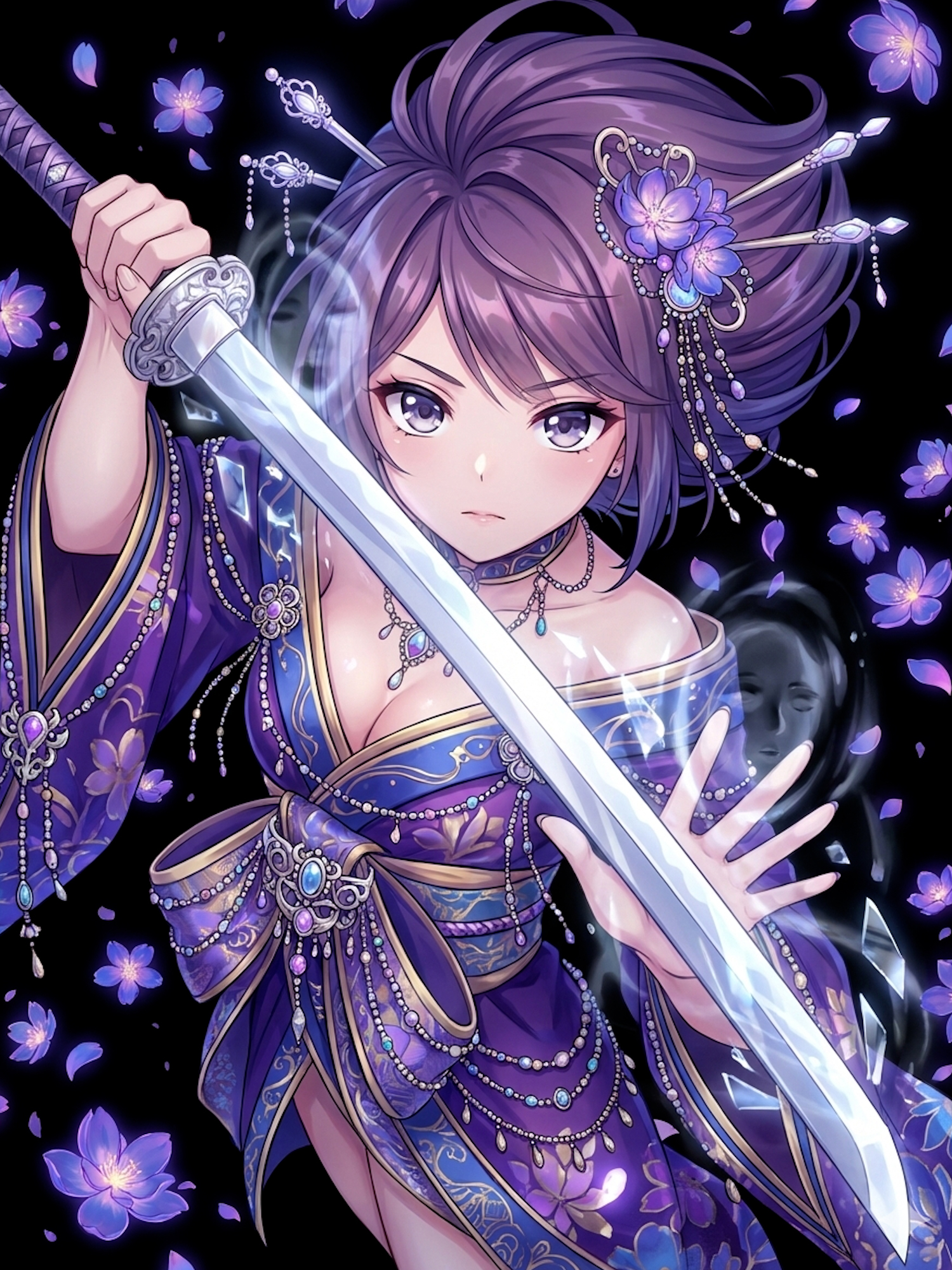
This blade symbolizes reflection, identity fracture, and concealed truth.
It visualizes danger hidden within self-recognition.
In modern contexts, Kokyō no Rei is often read as a metaphor for self-surveillance, identity fragmentation, and the psychological weight of being constantly seen. The mirror becomes not a tool of clarity, but a site of pressure.
Contemporary horror frequently uses mirrors as zones of dissociation, echoing the same folkloric logic: reflection is not passive — it reacts, remembers, and sometimes resists.
In some modern visual reinterpretations, Kokyō no Rei manifests as a yōtō — a blade whose surface is polished like a mirror. The sword reflects the wielder’s gaze before it reflects the world, forcing confrontation with fractured selfhood. Its danger lies in recognition rather than impact.
The spirit remains relevant because people still search mirrors for themselves.
Modern Reinterpretation – Kokyō no Rei as the Yokai of Self-Surveillance
In this reinterpretation, Kokyō no Rei is not a ghost bound to an object, but a phenomenon born from continuous self-observation.
The “beautiful girl” form represents the internalized watcher — not an external spirit, but the self that has learned to observe itself endlessly.
Her calm, unreadable expression mirrors the modern condition of being permanently visible — to devices, systems, and one’s own reflection.
She does not attack. She observes.
In this visual form, Kokyō no Rei becomes a contemporary yokai of reflective surveillance — a spirit generated not by hatred, but by constant visibility.
Musical Correspondence
The accompanying track translates recursive observation into sound. Looped motifs reflect upon themselves.
Subtle distortions mirror misalignment between self and reflection.
Together, image and sound form a unified reinterpretation layer — a modern folklore artifact recording the fear of being endlessly seen, even by oneself.

This contemporary form represents reflection, identity, and hidden presence.
She embodies self-recognition anxiety and concealed truth.
Dreamy and stylish
Genre: Ritual Japanese HipHop / Darkwave Folklore Produced by: Phantom Tone | Suno AI | Kotetsu Co., Ltd. Tags: #JapaneseHipHop #AIgeneratedMusic #Yokai #Phant…