
Chōchin-Obake is a lantern tsukumogami that appears at night, often with a single eye and tongue.
It represents fear born from familiar objects becoming animate in darkness.
Primary Sources
Edo-Period Illustrated Encyclopedias
- Gazu Hyakki Yagyō (画図百鬼夜行) — Toriyama Sekien
- Konjaku Hyakki Shūi (今昔百鬼拾遺) — Toriyama Sekien
Classical Folklore References
- Yanagita Kunio — Yōkai Dangi
- Komatsu Kazuhiko — Yōkai Encyclopedia
Chōchin-Obake – Animated Lantern Spirits of Night and Neglect in Japanese Folklore
Chōchin-obake are among the most iconic and approachable figures in Japanese yōkai folklore: animated paper lanterns that come to life after long neglect. Often depicted with a single large eye and an extended tongue, they drift through nighttime streets not as predators, but as reminders of objects forgotten and discarded.
Unlike fearsome monsters or vengeful spirits, chōchin-obake occupy a liminal space between humor and unease. They rarely harm humans. Their presence startles rather than threatens, turning the familiar into something briefly unsettling.
Chōchin-obake embody the moment when the ordinary refuses to remain inert.
Origins in Tsukumogami Belief
Chōchin-obake belong to the broader category of tsukumogami—tools and household objects that gain spirit after long use, traditionally said to awaken after a hundred years. This belief reflects a cultural worldview in which objects are not disposable, but participants in daily life.
Paper lanterns, fragile and ephemeral, were especially vulnerable to wear and abandonment. When torn, extinguished, or left unused, they were imagined to awaken as chōchin-obake, expressing quiet resentment through motion rather than violence.
In this way, chōchin-obake serve as moral reminders about care, respect, and impermanence.
Appearance and Visual Identity
The appearance of chōchin-obake is strikingly simple:
A worn paper lantern body
One oversized eye emerging from the lantern’s surface
A long tongue protruding from a torn seam
Occasional thin limbs or a floating presence
Their exaggerated features lean toward caricature rather than terror. The eye watches; the tongue mocks. This design balances the uncanny with the playful, making chōchin-obake memorable rather than horrifying.
They are instantly recognizable figures of yōkai culture.
Behavior and Encounters
Chōchin-obake typically appear at night, floating through streets, alleyways, or abandoned buildings. They may startle passersby, drift silently, or sway gently in the air.
They do not attack, curse, or pursue. Their power lies in surprise—the sudden realization that an inanimate object has agency. After the moment passes, they often disappear without consequence.
This non-hostile behavior places them among the least dangerous yōkai, though no less effective as symbols.
Humor, Mockery, and Unease
A defining trait of chōchin-obake is humor. Their single eye and dangling tongue often resemble teasing expressions. This playful grotesque quality reflects a broader tradition in Japanese folklore: fear softened by laughter.
Yet beneath the humor lies unease. Objects that should be passive are not. The boundary between user and tool, human and object, briefly collapses.
Chōchin-obake remind observers that familiarity does not guarantee control.
Symbolism and Themes
Neglect and Awakening
Forgotten objects gain presence.
The Uncanny Everyday
Fear emerges from ordinary items.
Humor as Mediation
Laughter tempers anxiety.
Impermanence of Use
Objects, like people, change over time.
Related Concepts
Tsukumogami (付喪神)
Everyday objects that gain spirit through long use and neglect.
→Tsukumogami
Light & Darkness Motifs
Yōkai associated with illumination, night travel, and visual deception.
Domestic Object Spirits
Household tools transformed into supernatural presence.
Chōchin-Obake in Art and Cultural Memory
Chōchin-obake appear frequently in Edo-period prints, yōkai encyclopedias, and festival imagery. Artists emphasize their simplicity and expressiveness, often placing them in otherwise mundane scenes.
Over time, they became emblematic of yōkai culture itself—appearing in mascots, decorations, and modern reinterpretations. Their enduring popularity stems from accessibility: they are strange, but not hostile.
They invite curiosity rather than fear.
Modern Cultural Interpretations

This blade symbolizes deceptive illumination and unstable guidance.
It visualizes light that misleads rather than protects.
In contemporary media, chōchin-obake are often portrayed as cute, comedic, or friendly spirits. While this softens their eerie qualities, it remains consistent with their traditional role as playful reminders rather than genuine threats.
Modern reinterpretations sometimes frame them as symbols of waste, overconsumption, or forgotten craftsmanship, adapting the tsukumogami concept to modern life and consumer culture.
In some modern visual reinterpretations, chōchin-obake appear as a yōtō — a blade that glows softly rather than shines sharply. The sword illuminates neglect, casting light on what has been discarded or overlooked rather than cutting through enemies.
Despite stylistic changes, their core message remains intact.
Modern Reinterpretation – Chōchin-Obake as a Contemporary Yokai
In this reinterpretation, Chōchin-obake is treated not merely as a playful tsukumogami, but as a visible trace of what has been used, enjoyed, and quietly discarded.
The “beautiful girl” form represents familiarity turned into residue — something that once belonged to daily life, now remaining only as memory, decoration, or background presence.
Her gentle smile and softly glowing colors mirror the warm light of lanterns that once guided people through night streets, while her drifting posture reflects detachment from present use.
She does not threaten or demand attention. She simply glows — reminding us that even forgotten things once held meaning.
In this visual reinterpretation, Chōchin-obake becomes a modern yokai of consumer residue — a quiet presence left behind by cycles of use and abandonment.
Musical Correspondence
The accompanying track translates this gentle afterlife into sound. Light, looping rhythms evoke repetition of use, while subtle tonal shifts suggest wear, fading, and emotional residue.
Soft melodies hover without direction, like light that remains after function has ended. Silence is treated not as absence, but as memory.
Together, image and sound form a unified reinterpretation layer — a modern folklore artifact representing objects that no longer serve, yet have not fully disappeared.

This contemporary form represents false guidance and playful deception.
She embodies light that attracts while concealing danger.
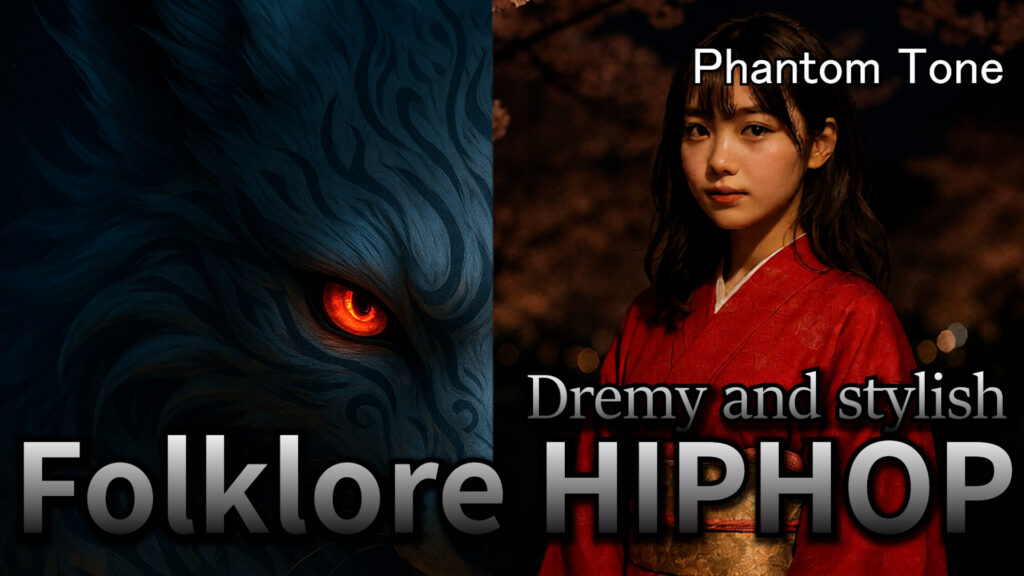
Dreamy and stylish
Genre: Ritual Japanese HipHop / Darkwave Folklore Produced by: Phantom Tone | Suno AI | Kotetsu Co., Ltd. Tags: #JapaneseHipHop #AIgeneratedMusic #Yokai #Phant…