What Is the Zashiki-warashi?
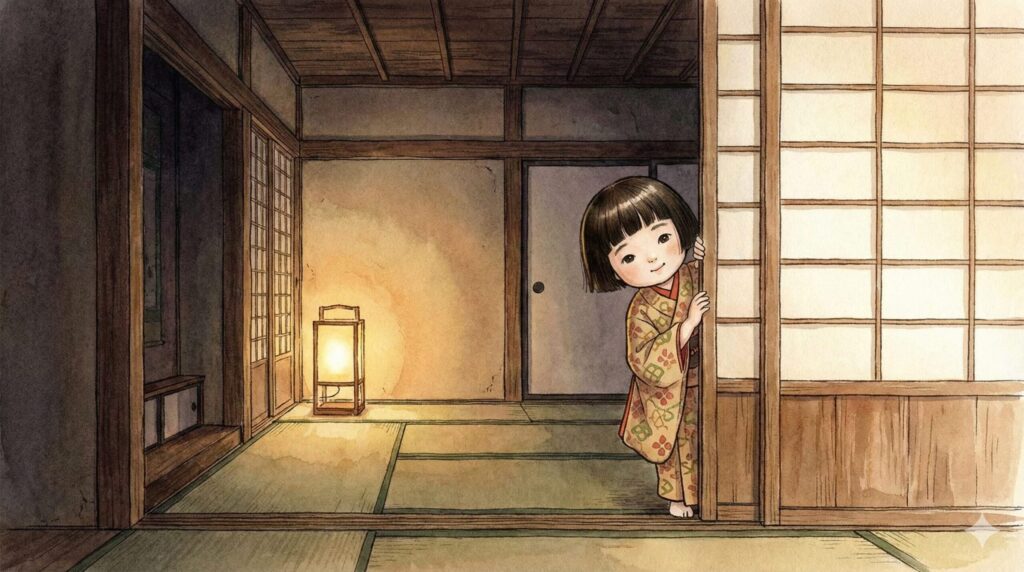
The Zashiki-warashi (座敷童), often translated as “parlor child” or “child spirit,” is one of the most beloved yet enigmatic figures in Japanese folklore. Unlike malignant spirits or vengeful ghosts, the Zashiki-warashi is traditionally regarded as a household guardian— a supernatural being that brings good fortune to families who accept its presence.
It typically manifests as a child between five and twelve years of age, appearing in old houses, inns, and rural estates. Reports often describe the spirit with rosy cheeks, a bobbed haircut, and simple traditional clothing such as a kosode. While its appearance is charming, the Zashiki-warashi possesses an ethereal quality: sighting one is said to herald prosperity, while its departure foretells the decline of a household.
Characteristics and Behavior
The Zashiki-warashi is known for playful mischief. It may run through hallways at night, leave small footprints in ash or dust, tug at futons, or make sudden laughter echo through quiet rooms. Objects may move on their own, doors may slide open, or children may speak of an “invisible friend.” These disturbances are not signs of haunting but rather indicators that the spirit has taken interest in the household.
Importantly, the Zashiki-warashi is not bound by malice. Its antics, though sometimes startling, reflect the innocence and unpredictability of childhood. Families who care for the spirit—by keeping a clean home, offering small treats, or acknowledging its presence—are believed to receive luck in business, harvests, or family health.
Symbolism of the Child Spirit
Interpretations of the Zashiki-warashi often center around the themes of domestic harmony, prosperity, and the fragility of good fortune. The spirit’s presence is considered an omen of abundance, while its departure signals spiritual and material decline—a concept deeply ingrained in rural Japanese belief systems.
Scholars suggest that the Zashiki-warashi may personify ancestral blessings, the memory of children lost to illness, or the household kami that governed prosperity in pre-modern Japan. As homes and families changed through the centuries, this figure became a symbolic reminder of the unseen forces that nurture or diminish a family’s well-being.
Related Concepts
Household Fortune Spirits
Spirits associated with prosperity and domestic luck.
Child-Form Yōkai
Yōkai appearing as children within households.
Domestic Blessing & Loss
Belief systems surrounding household fortune.
Zashiki-warashi in Regional Traditions
The most famous Zashiki-warashi legends originate from the Iwate Prefecture, especially in the old ryokan known as the Ryokufūsō. Visitors reported encounters with childlike spirits, and the house’s prosperity was often linked to their presence. When the building burned down, locals claimed the spirit departed, and misfortune followed.
Other versions appear across northern Japan, each with slight variations: some depict the spirit as a girl with long hair, others as a boy in warrior-style garments. Yet all agree on one thing—the spirit chooses its home carefully, and its loyalty is both a gift and a warning.
Modern Cultural Interpretations

This blade symbolizes fragile fortune, domestic blessing, and quiet protection.
It visualizes luck that must be preserved rather than exploited.
Today, Zashiki-warashi remains a beloved figure in Japanese storytelling, appearing in literature, horror films, children’s books, video games, and anime. Its blend of innocence and otherworldliness allows creators to portray it as comforting, uncanny, or quietly tragic.
Contemporary interpretations often connect Zashiki-warashi to themes of fading rural communities, abandoned homes, and the desire to preserve cultural memory. In a society facing depopulation and shifting lifestyles, the spirit becomes a metaphor for the soul of the household — carrying both its remembered past and its uncertain future.
In some modern visual reinterpretations, Zashiki-warashi appears as a yōtō — a blade that protects rather than conquers. The sword is said to mark a home’s fortune, its presence signaling quiet guardianship and lingering affection. It does not threaten; it watches, binding memory to place.
Zashiki-warashi persists because homes are more than structures — they are lived histories.
Modern Reinterpretation – Zashiki-warashi as a Contemporary Yokai
In this reinterpretation, Zashiki-warashi is no longer treated simply as a lucky child spirit, but as the living memory of a home — a presence that binds emotion, history, and fortune to a single place.
Historically, its appearance signified prosperity or decline. In modern society, this logic appears as nostalgia, depopulation, abandoned houses, and the quiet emotional gravity that remains in spaces once filled with life.
The “beautiful girl” form represents the softened face of memory — gentle, familiar, and therefore deeply affecting. She does not protect by force. She remains.
Her calm posture embodies affection that has nowhere to go — the quiet certainty that a place remembers who lived there.
In this visual reinterpretation, Zashiki-warashi becomes the personification of inhabited memory — a yokai that watches not to judge, but to remember.
Musical Correspondence
The accompanying track translates domestic memory into sound. Warm, muted tones and gentle rhythmic movement evoke empty tatami rooms still carrying footsteps.
Subtle melodic fragments drift without urgency, while lingering reverb simulates memory that does not fade.
Together, image and sound form a unified reinterpretation layer — not as folklore illustration, but as a contemporary myth of remembered homes rendered through audiovisual nostalgia.
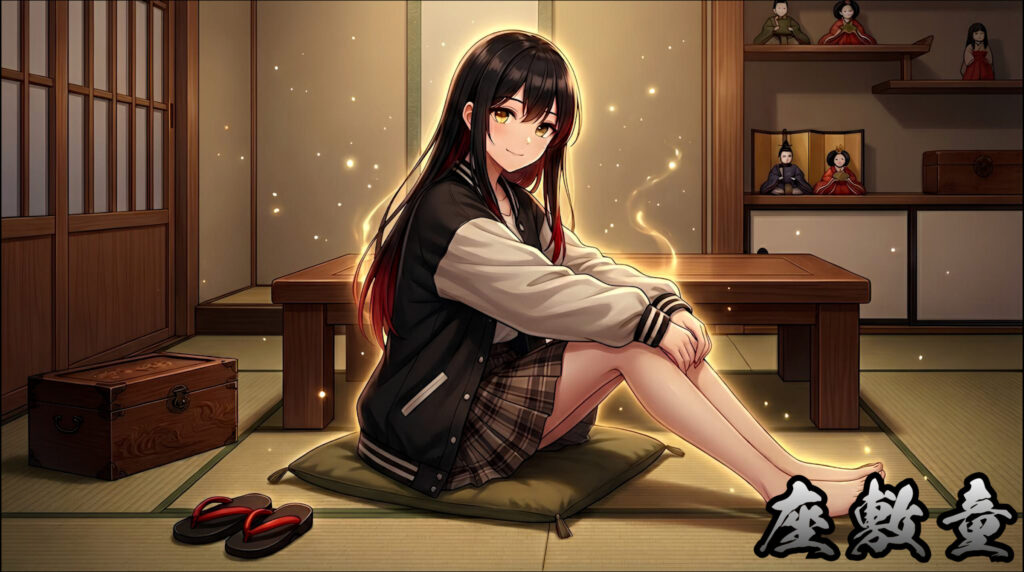
This contemporary form represents domestic blessing and fragile prosperity.
She embodies fortune, protection, and quiet household presence.
Distant Prayer
Genre: Japanese Ritual HipHop / Ethereal Lo-Fi / AI-generated Music Produced by: Phantom Tone | Suno AI | Kotetsu Co., Ltd. Tags: #JapaneseHipHop #AIgeneratedM…