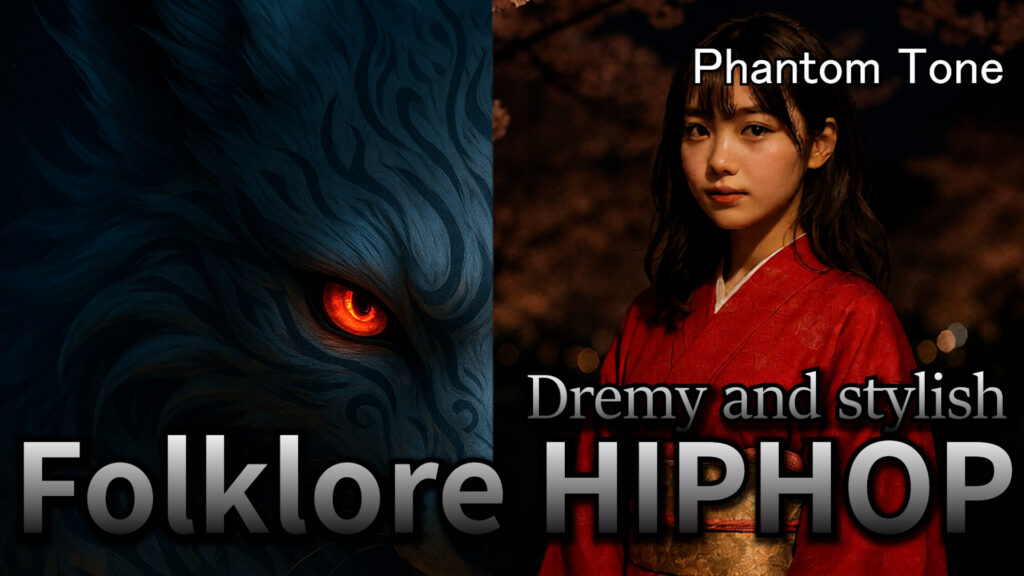

Nurarihyon is a yōkai known for entering homes as if it were the master.
It represents impostor authority and quiet household intrusion.
Primary Sources
Edo-Period Illustrated Encyclopedias
- Gazu Hyakki Yagyō (画図百鬼夜行) — Toriyama Sekien
- Konjaku Hyakki Shūi (今昔百鬼拾遺) — Toriyama Sekien
Classical Folklore References
- Yanagita Kunio — Yōkai Dangi
- Komatsu Kazuhiko — Yōkai Encyclopedia
Nurarihyon – The Uninvited Presence That Acts Like the Master in Japanese Folklore
Nurarihyon is one of the most elusive and conceptually unsettling yōkai in Japanese folklore. He does not threaten, attack, or frighten in obvious ways. Instead, he arrives quietly, behaves as if he belongs, and is accepted before anyone realizes something is wrong.
He enters homes unannounced.
He sits where the master would sit.
He drinks tea as if invited.
Nurarihyon embodies intrusion perfected through familiarity.
Origins in Domestic Ambiguity
Nurarihyon appears primarily in Edo-period folklore and yōkai collections, often depicted as an elderly man with a large, gourd-shaped head. Unlike many yōkai tied to specific locations or actions, Nurarihyon’s defining trait is social, not physical.
In tightly knit communities, social roles were clear. Someone who violated those roles without resistance posed a quiet threat. Nurarihyon personifies this anxiety: the outsider who is never challenged.
He does not break rules.
He bypasses them.
Appearance and Ordinary Authority
Descriptions of Nurarihyon emphasize his unremarkable presence:
An elderly man with a smooth, elongated head
Calm expression and relaxed posture
Traditional clothing worn casually
No visible weapons or supernatural traits
Nothing about him demands attention. His authority is assumed, not asserted. People defer to him instinctively, as though he were always meant to be there.
The danger lies in recognition delayed.
Behavior and Social Manipulation
Nurarihyon’s behavior is passive yet invasive. He:
Enters homes during busy hours
Takes the place of the household head
Accepts hospitality without asking
Leaves without explanation
No harm follows immediately. Yet his presence subtly displaces the true occupants, turning them into guests in their own home.
Control is achieved without force.
A Yōkai of Assumption
Unlike tricksters who deceive, Nurarihyon relies on assumption. No illusion is cast. No lie is spoken. People simply accept his role.
Some interpretations suggest that Nurarihyon represents the head of all yōkai—not through power, but through presence. He is the one who arrives last and is never questioned.
Authority is an agreement.
Symbolism and Themes
Power Through Acceptance
Control granted by silence.
Intrusion Without Violence
Boundaries eroded socially.
Familiarity as Threat
Comfort becomes vulnerability.
Leadership Without Claim
Authority assumed, not declared.
Related Concepts
Elite & Deceptive Yōkai
Yōkai that appear authoritative within households.
Household & Village Yokai
Spirits that enter homes as if they belong.
→Household & Village Yokai Index
False Authority Motif
Fear associated with impostor authority.
Nurarihyon in Folklore and Art
In Edo-period illustrations, Nurarihyon often appears calm and dignified, sometimes surrounded by other yōkai who treat him as a leader. This reinforces the idea that his dominance is recognized rather than enforced.
He is remembered not for actions, but for presence.
A guest who never asked permission.
Modern Cultural Interpretations
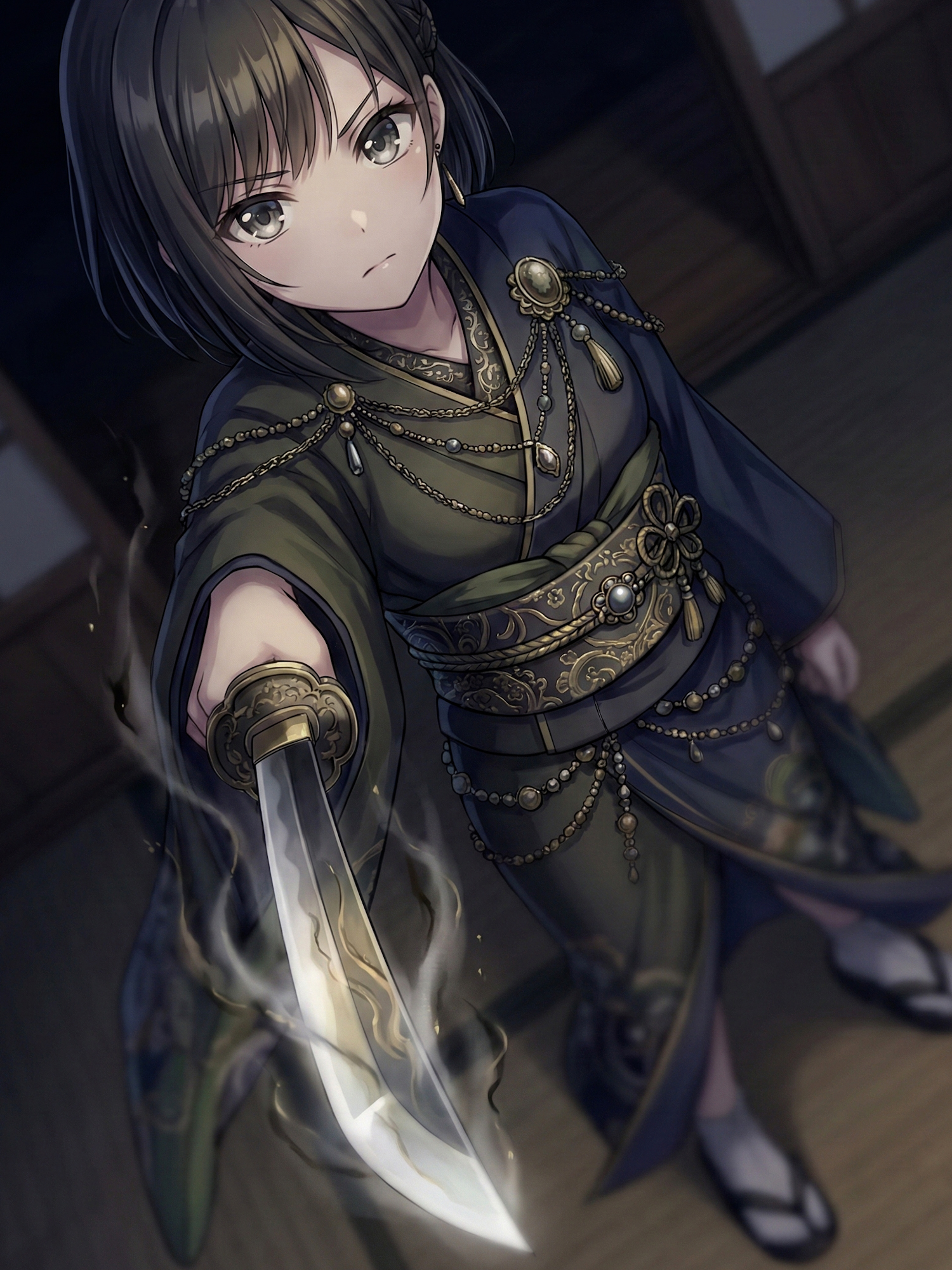
This blade symbolizes impostor authority and domestic infiltration.
It visualizes control disguised as familiarity.
In modern readings, Nurarihyon is frequently interpreted as a metaphor for unchallenged authority — power that operates quietly through familiarity rather than force. He embodies social complacency and systems that continue to function simply because they have always been present.
Contemporary interpretations often extend this reading to institutions, traditions, or individuals who maintain influence not through merit or justification, but through long-standing acceptance. Nurarihyon does not seize control; he assumes it.
In some modern visual reinterpretations, Nurarihyon appears as a yōtō — a blade that looks ceremonial, even ornamental. The sword rarely needs to be drawn; its authority lies in the assumption that it already governs the room. Resistance feels improper before it even begins.
Nurarihyon remains relevant because people still hesitate to question what feels established.
Modern Reinterpretation – Nurarihyon as a Contemporary Yokai
In this reinterpretation, Nurarihyon is no longer treated as a mischievous elder, but as a structural embodiment of unchallenged authority — power that governs simply by being present.
Historically, he enters homes as a guest and leaves as a master. In modern life, this logic appears as institutions, traditions, and roles that continue to rule not through justification, but through acceptance.
The “beautiful girl” form represents the softened face of authority — polite, calm, and therefore rarely questioned. She does not command. She assumes.
Her composed posture and quiet expression embody influence without enforcement — the unsettling normalcy of power that feels proper.
In this visual reinterpretation, Nurarihyon becomes the personification of normalized control — a yokai that rules not by threat, but by familiarity.
Musical Correspondence
The accompanying track translates polite domination into sound. Refined textures and steady rhythms establish comfort, while subtle harmonic deviations introduce quiet imbalance.
Delayed resolutions and unexpected chord changes mirror familiarity turned improper.
Together, image and sound form a unified reinterpretation layer — not as folklore illustration, but as a contemporary myth of unchallenged authority rendered through audiovisual language.

This contemporary form represents false authority and household infiltration.
She embodies impostor presence and domestic unease.
Dreamy and stylish
Genre: Ritual Japanese HipHop / Darkwave Folklore Produced by: Phantom Tone | Suno AI | Kotetsu Co., Ltd. Tags: #JapaneseHipHop #AIgeneratedMusic #Yokai #Phant…