

Nariya is a yōkai associated with warning cries heard at night.
It represents fear triggered by unseen sound signals.
Primary Sources
Edo-Period Illustrated Encyclopedias
- Gazu Hyakki Yagyō (画図百鬼夜行) — Toriyama Sekien
- Konjaku Hyakki Shūi (今昔百鬼拾遺) — Toriyama Sekien
Classical Folklore References
- Yanagita Kunio — Yōkai Dangi
- Komatsu Kazuhiko — Yōkai Encyclopedia
Nariya – The Presence Known Only by Sound in Japanese Folklore
Nariya is a subtle and elusive yōkai in Japanese folklore: a phenomenon recognized not by sight, but by sound alone. Footsteps echo where no one walks. Knocking resounds from empty rooms. Rustling, tapping, or creaking fills space without revealing a source.
Nariya does not appear.
It announces itself through sound—and nothing else.
Nariya embodies presence stripped of form.
Origins in Unexplained Domestic Sounds
Traditional Japanese homes were filled with auditory ambiguity. Wooden floors, sliding doors, wind, and temperature shifts created sounds that could not always be explained. At night, when vision failed, sound became dominant.
Folklore responded by naming these disturbances. When noise persisted without cause, when repetition suggested intention, people spoke of Nariya—a presence that reveals itself only through hearing.
Sound became evidence of awareness.
Sound Without Shape
Accounts of Nariya describe recurring auditory patterns:
Footsteps pacing empty corridors
Doors sliding open or shut without movement
Knocking from walls or ceilings
Soft voices without words
Rhythmic tapping that stops when investigated
Crucially, the sound vanishes when one approaches. Nariya never allows confirmation. The listener is left alone with the implication.
The absence is the proof.
Behavior and Non-Confrontation
Nariya does not attack, speak directly, or show itself. Its role is interruption rather than threat. It disrupts silence, focus, and certainty.
Those who encounter Nariya may feel:
Unease rather than fear
Heightened awareness of space
Difficulty sleeping
A sense of being acknowledged, not hunted
The yōkai’s power lies in persistence, not escalation.
Domestic Space as Stage
Nariya is most often associated with houses, storehouses, and lived-in structures. This ties it to familiarity. The sounds occur where one expects safety and routine.
By manifesting through sound alone, Nariya destabilizes the idea of control over one’s environment. The house no longer belongs solely to its occupants.
Someone else is listening.
Symbolism and Themes
Presence Without Visibility
Existence does not require form.
Sound as Intention
Noise becomes communication.
Uncertainty Over Threat
Fear emerges from not knowing.
Familiar Space Turned Strange
Home loses neutrality.
Related Concepts
Sound-Signal Yōkai
Yōkai known primarily through warning sounds.
Urban Boundary Spirits
Spirits appearing near streets and village edges.
Auditory Premonition
Fear created by warning noises without visible source.
Nariya in Folklore Memory
Unlike named monsters with fixed stories, Nariya persists as explanation rather than narrative. It is rarely defeated, banished, or confronted. Repairing the house, acknowledging the sound, or simply enduring it may cause it to fade.
The lack of climax is essential. Nariya is remembered not as an event, but as a condition.
Sound without closure.
Modern Cultural Interpretations
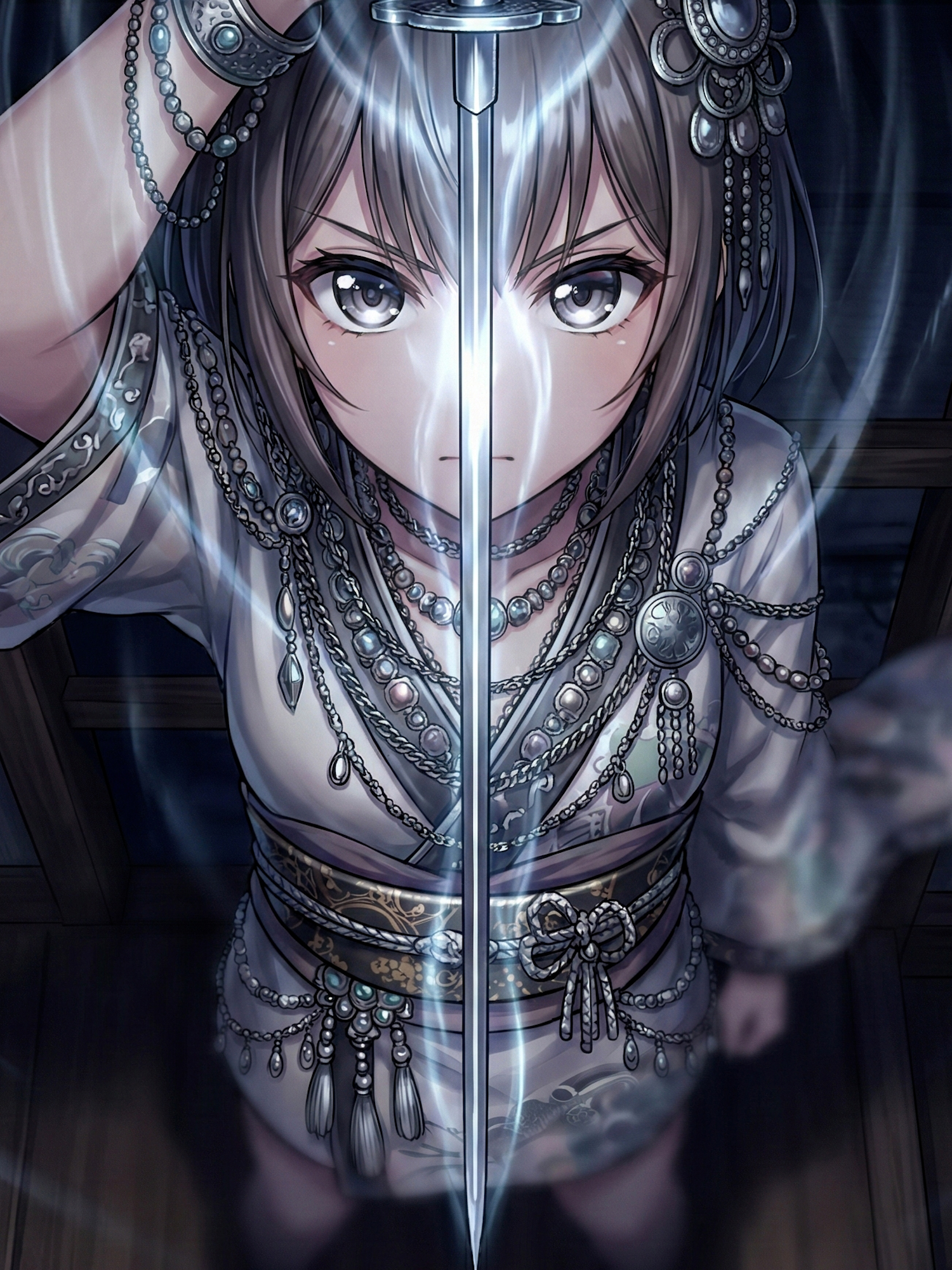
This blade symbolizes auditory warning, premonition, and unseen threat.
It visualizes fear generated through sound rather than sight.
In modern contexts, Nariya is often interpreted through psychological frameworks — as anxiety expressed through heightened auditory sensitivity, or as the human tendency to impose meaning on random, unexplained noise.
Contemporary readings also frame Nariya as a metaphor for unseen systems: surveillance without visibility, reactions without bodies, awareness that responds yet never reveals its source. Something is present, attentive, and active — but never locatable.
In some modern visual reinterpretations, Nariya manifests as a yōtō — a blade defined not by its edge, but by the sounds it produces. The sword reacts to motion, breath, or intent, emitting faint signals before any strike occurs. Its threat lies in anticipation, turning silence itself into tension.
Nariya remains relevant because silence is rare, and unexplained sound persists.
Modern Reinterpretation – Nariya as a Contemporary Yokai
In this reinterpretation, Nariya is no longer treated as a simple auditory ghost, but as a presence defined entirely by response — something that acknowledges without appearing.
Historically, Nariya is recognized only by sound that answers movement or speech. In modern life, this logic manifests as unseen systems: sensors, alerts, surveillance mechanisms, and reactive environments that respond without revealing their source.
The “beautiful girl” form functions as a visual anchor for an invisible presence — calm, neutral, and therefore difficult to place. She does not reveal. She confirms.
Her still posture and subdued gaze embody awareness without visibility — the unsettling certainty that something is paying attention.
In this visual reinterpretation, Nariya becomes the personification of unseen response — a yokai that unsettles not through pursuit, but through acknowledgment.
Musical Correspondence
The accompanying track translates responsive silence into sound. Distant echoes and irregular rhythmic fragments simulate motion without form, while repetition without resolution mirrors unanswered awareness.
Silence frames sound as intentional intrusion rather than ambience — making absence itself an active component.
Together, image and sound form a unified reinterpretation layer — not as folklore illustration, but as a contemporary myth of unseen presence rendered through spatial sound and restraint.

This contemporary form represents warning presence and unseen danger.
She embodies nocturnal auditory anxiety.
Dreamy and stylish
Genre: Ritual Japanese HipHop / Darkwave Folklore Produced by: Phantom Tone | Suno AI | Kotetsu Co., Ltd. Tags: #JapaneseHipHop #AIgeneratedMusic #Yokai #Phant…