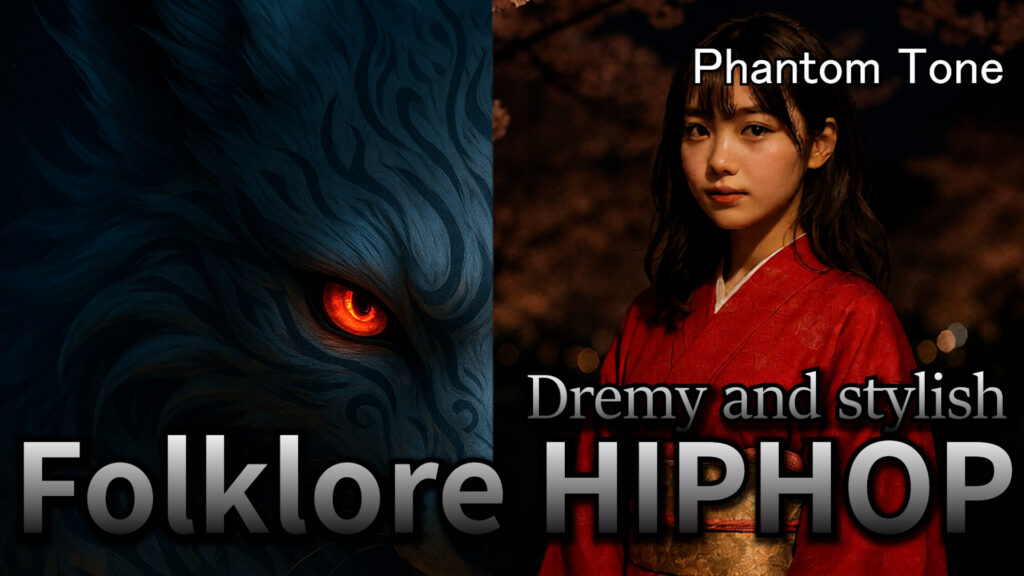
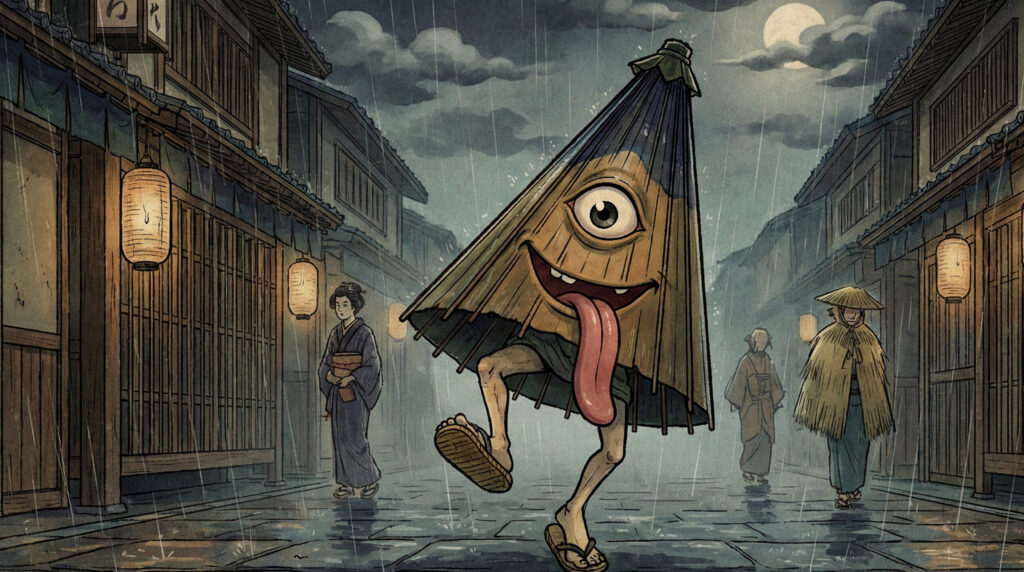
Karakasa-kozō is a one-legged umbrella tsukumogami known for playful mischief.
It represents neglected household objects gaining agency.
Primary Sources
Edo-Period Illustrated Encyclopedias
- Gazu Hyakki Yagyō (画図百鬼夜行) — Toriyama Sekien
- Konjaku Hyakki Shūi (今昔百鬼拾遺) — Toriyama Sekien
Classical Folklore References
- Yanagita Kunio — Yōkai Dangi
- Komatsu Kazuhiko — Yōkai Encyclopedia
Karakasa-kozō – Playful Umbrella Spirits of Japanese Folklore
Karakasa-kozō are among the most whimsical and instantly recognizable yōkai in Japanese folklore: animated paper umbrellas brought to life, typically depicted with a single large eye, a long tongue, and one hopping leg. Unlike fearsome monsters or ominous spirits, karakasa-kozō specialize in surprise rather than harm. Their presence transforms discarded objects into playful, unsettling beings.
Often appearing suddenly at night, hopping out from alleys or doorways, karakasa-kozō embody a gentle form of the uncanny. They rarely injure or curse humans. Instead, they startle passersby, provoke laughter or fear, and then vanish just as quickly. Their role is closer to prankster than predator.
Through their absurdity and charm, karakasa-kozō reveal a distinctly Japanese approach to the supernatural—where fear, humor, and everyday life coexist.
Origins and Tsukumogami Tradition
Karakasa-kozō belong to a broader category of beings known as tsukumogami: everyday tools and household objects that gain spirits after existing for many years. According to tradition, objects that are neglected, mistreated, or simply reach great age may awaken and take on life of their own.
Umbrellas, made of bamboo and paper, were common and fragile items in premodern Japan. When broken or discarded, they became natural candidates for supernatural reinterpretation. The karakasa-kozō is not a spirit summoned by ritual, but one born from abandonment and time.
This origin reflects a cultural sensitivity toward objects themselves—an idea that even mundane tools deserve respect and care.
Appearance and Distinctive Features
The visual design of karakasa-kozō is remarkably consistent and iconic:
A paper umbrella body forming the torso
One large eye set in the canopy
A long, exaggerated tongue
One or sometimes two legs, often hopping on a single foot
Occasionally a sandal or geta on the foot
This exaggerated, almost cartoonish appearance separates karakasa-kozō from darker yōkai. Their design emphasizes imbalance and motion, reinforcing their role as playful interrupters rather than serious threats.
Despite their humorous form, encountering one unexpectedly—especially at night—can still produce genuine shock.
Behavior and Encounters
Karakasa-kozō are known primarily for startling humans. Typical encounters involve:
Sudden appearance in dark streets or abandoned places
Leaping into view with exaggerated movement
Silent staring or playful gestures
Immediate disappearance after provoking a reaction
They do not chase, attack, or linger. Their satisfaction seems to come from the moment of surprise itself. In this way, karakasa-kozō act as embodiments of harmless mischief rather than malevolence.
Their actions rarely have consequences beyond embarrassment or momentary fear.
Symbolism and Themes
Animation of the Ordinary
Karakasa-kozō turn mundane objects into living beings, blurring the line between utility and spirit.
Playful Fear
They represent fear that is brief, harmless, and often followed by relief or laughter.
Neglect and Respect
As tsukumogami, they remind humans that discarded objects may still hold presence or memory.
Balance of Humor and Unease
Their form invites amusement while still retaining an uncanny edge.
Related Concepts
Tsukumogami (付喪神)
Objects that acquire spirit through long-term use and neglect.
→Tsukumogami
Umbrella & Tool Spirits
Everyday implements transformed into yōkai.
Playful Domestic Yōkai
Yōkai that frighten through mischief rather than violence.
Karakasa-kozō in Art and Folklore
Karakasa-kozō appear frequently in Edo-period yōkai scrolls and illustrated encyclopedias, often depicted mid-hop or staring directly at the viewer. Artists emphasized their asymmetry and exaggerated features, making them visually memorable.
Stories involving karakasa-kozō are typically short and episodic. Someone is startled; the umbrella spirit vanishes. There is no moral punishment, curse, or lingering danger. The encounter exists purely as an experience.
This simplicity has helped karakasa-kozō endure as one of the most approachable yōkai figures.
Modern Cultural Interpretations
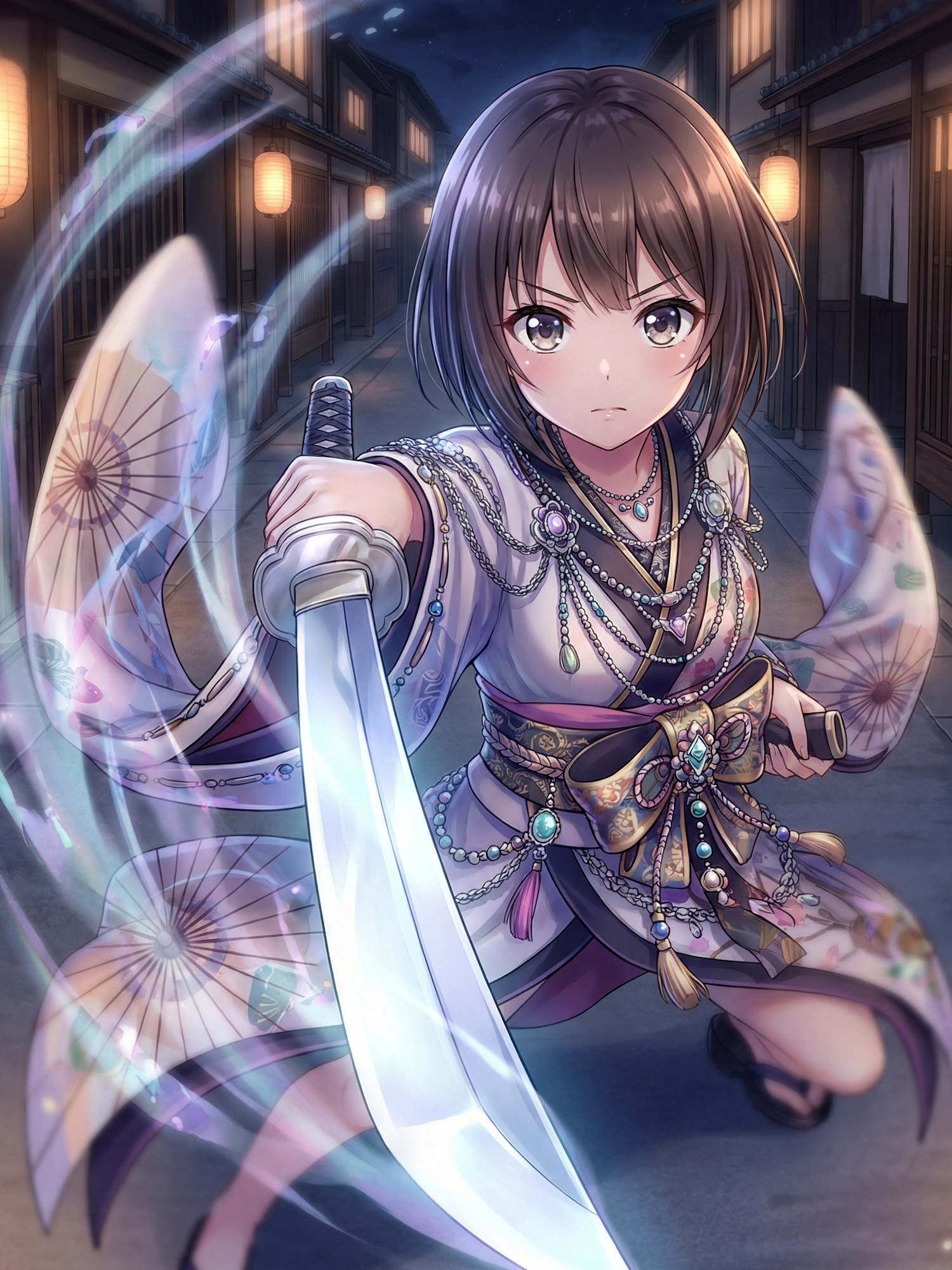
This blade symbolizes forgotten objects, playful threat, and material memory.
It visualizes mischief born from long-term neglect.
In modern media, karakasa-kozō are often portrayed as cute mascots, comedic side characters, or nostalgic icons of traditional yōkai culture. Their playful, instantly recognizable design makes them especially suited for animation, merchandise, and lighthearted reinterpretation.
Even when heavily stylized, they retain their core identity: a spirit born from the ordinary, meant to surprise rather than harm. Contemporary depictions emphasize charm, whimsy, and harmless mischief over fear.
In some modern visual reinterpretations, karakasa-kozō appear as a yōtō — a blade disguised as something familiar and unthreatening. The sword hides its edge behind humor and nostalgia, reminding the viewer that even playful folklore carries a quiet warning: the mundane can still awaken.
This balance makes karakasa-kozō enduring representatives of the lighter, humorous side of Japanese folklore.
Modern Reinterpretation – Karakasa-kozō as a Contemporary Yokai
In this reinterpretation, Karakasa-kozō is no longer treated simply as a comical tsukumogami, but as a manifestation of playful disruption — the moment when ordinary objects briefly step outside their assigned roles.
Historically, it appears as a hopping umbrella that startles passersby before vanishing. In modern society, such moments translate into interruptions: notifications, pop-ups, reminders, and playful disturbances that briefly break routine without lasting harm.
The “beautiful girl” form represents the friendly surface of disruption — cheerful, approachable, and therefore rarely resisted. She does not threaten. She surprises.
Her light posture and simplified design embody mischief without malice — the quiet joy and fleeting unease of something harmless becoming strange.
In this visual reinterpretation, Karakasa-kozō becomes the personification of playful interruption — a yokai that exists not to punish, but to momentarily awaken attention.
Musical Correspondence
The accompanying track translates playful disruption into sound. Bouncy tempos and off-beat accents simulate hopping motion, while sudden pauses and tonal shifts evoke momentary surprise.
Simple melodic figures repeat with variation, mirroring brief, mischievous encounters.
Together, image and sound form a unified reinterpretation layer — not as folklore illustration, but as a contemporary myth of playful interruption rendered through audiovisual language.
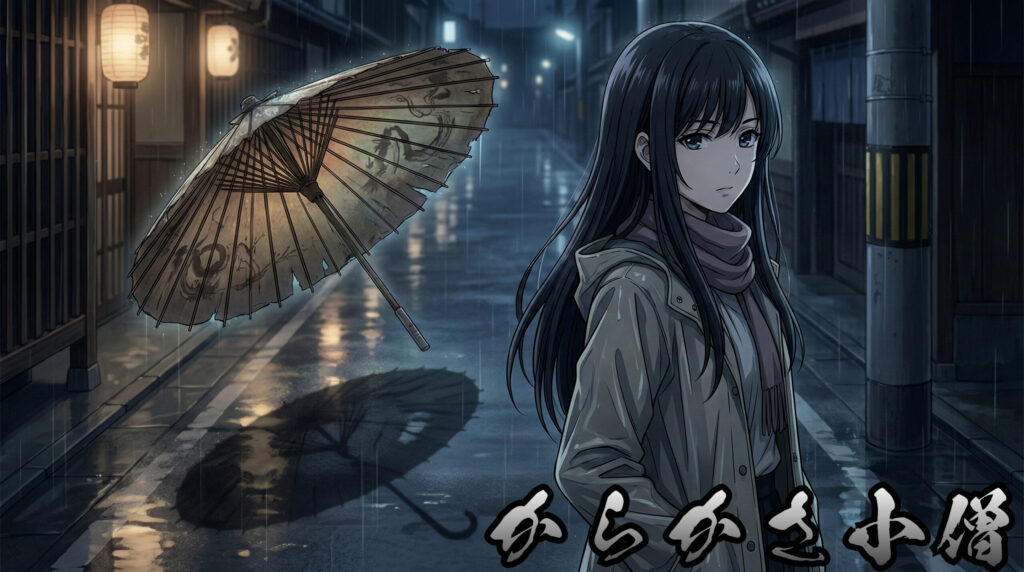
This contemporary form represents abandoned tools and playful domestic fear.
She embodies material memory and quiet mischief.
Dreamy and stylish
Genre: Ritual Japanese HipHop / Darkwave Folklore Produced by: Phantom Tone | Suno AI | Kotetsu Co., Ltd. Tags: #JapaneseHipHop #AIgeneratedMusic #Yokai #Phant…