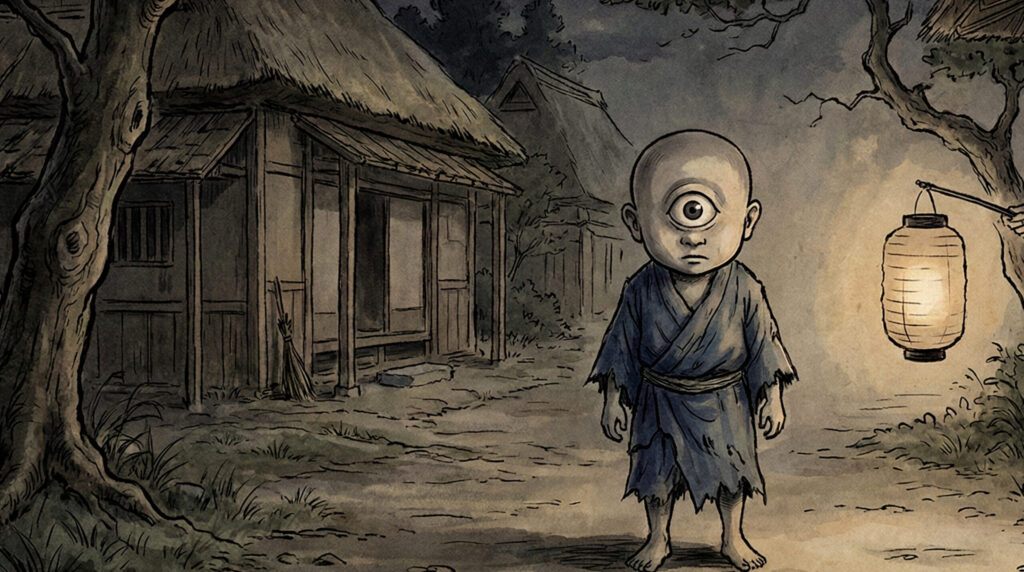
Hitotsume-kozō is a child-like yōkai characterized by a single eye.
It represents familiar domestic space made uncanny through minor anomaly.
Primary Sources
Edo-Period Illustrated Encyclopedias
- Gazu Hyakki Yagyō (画図百鬼夜行) — Toriyama Sekien
- Konjaku Hyakki Shūi (今昔百鬼拾遺) — Toriyama Sekien
Classical Folklore References
- Yanagita Kunio — Yōkai Dangi
- Komatsu Kazuhiko — Yōkai Encyclopedia
Hitotsume-kozō – One-Eyed Child Spirits of Japanese Folklore
Hitotsume-kozō are among the most understated yet unsettling yōkai in Japanese folklore: childlike spirits characterized by a single large eye set in the center of their face. Unlike fearsome demons or violent apparitions, they rarely cause direct harm. Instead, their power lies in sudden appearance, visual shock, and the quiet disturbance of the familiar.
Often described as resembling ordinary children—shaven-headed, wearing simple robes or kimono—hitotsume-kozō blend into human spaces until their defining feature is revealed. This moment of recognition transforms the mundane into the uncanny. They do not roar, attack, or curse; they simply look back.
Their enduring presence in folklore reflects a subtle kind of fear: not of destruction, but of perception altered just enough to feel wrong.
Origins and Early Depictions
The origins of hitotsume-kozō are difficult to trace precisely, as they appear sporadically in Edo-period collections of yōkai tales and illustrated encyclopedias. They are often grouped among minor household or roadside spirits—entities encountered unexpectedly rather than summoned by ritual or legend.
Early depictions emphasize their ordinariness. A hitotsume-kozō might appear in a hallway, at a temple gate, or along a quiet road at night. Only when one looks closely does the single eye become apparent. This delayed revelation is central to their effect.
Some scholars suggest that hitotsume-kozō evolved from older one-eyed supernatural motifs found across cultures, adapted into a distinctly Japanese, non-threatening form that emphasizes surprise rather than terror.
Appearance and Behavior
Descriptions of hitotsume-kozō are remarkably consistent:
Childlike body and proportions
One large eye centered on the face
Often bald or with very short hair
Simple clothing resembling that of monks or village children
Quiet demeanor, rarely speaking
They typically appear alone and vanish quickly, sometimes laughing softly or simply disappearing once noticed. They do not pursue humans, nor do they inflict physical harm. Their role is momentary—a brief rupture in normal perception.
This lack of aggression places hitotsume-kozō apart from many other yōkai. Their presence is unsettling precisely because it lacks obvious purpose.
The Uncanny Child
Children in folklore often occupy a liminal space between innocence and danger. Hitotsume-kozō amplify this tension. Their childlike form suggests harmlessness, while their single eye disrupts expectations of normal human appearance.
The eye itself carries symbolic weight. Vision, awareness, and judgment are all bound to the act of seeing. A single, unblinking eye confronting the viewer can evoke feelings of exposure, scrutiny, or imbalance. In this way, hitotsume-kozō quietly reverse the act of observation: the observer becomes the observed.
They do not threaten action—only awareness.
Symbolism and Themes
Disruption of the Ordinary
Hitotsume-kozō appear in everyday settings, reminding viewers that the supernatural can exist just beneath the surface of normal life.
The Power of the Gaze
Their defining feature emphasizes seeing and being seen, creating unease without violence.
Innocence Without Comfort
Their childlike form lacks warmth, suggesting innocence stripped of reassurance.
Minor Fear, Lingering Effect
They embody a fleeting scare that leaves a lasting impression rather than lasting damage.
Related Concepts
Child-Form Yōkai
Yōkai appearing as children and unsettling familiar domestic boundaries.
Household & Village Yōkai
Domestic spirits embedded in everyday social space.
→ Household Yokai Index
Liminal Innocence
Fear produced by innocence combined with anomaly.
Hitotsume-kozō in Folktales and Art
In yōkai scrolls and illustrated books, hitotsume-kozō are often drawn humorously or neutrally, standing calmly and facing the viewer. This visual presentation reinforces their passive role—they exist to be noticed, not to act.
Stories involving hitotsume-kozō are typically short and uneventful. Someone encounters one, reacts with shock, and the yōkai disappears. The lack of narrative escalation is intentional; the encounter itself is the point.
This simplicity has allowed hitotsume-kozō to persist as iconic minor yōkai, instantly recognizable despite minimal storytelling.
Modern Cultural Interpretations

This blade symbolizes distorted innocence and quiet domestic unease.
It visualizes fear arising from familiarity altered by minor anomaly.
In modern media, hitotsume-kozō often appear as background characters, mascots, or recurring visual motifs rather than central antagonists. Their simple design lends itself to stylization, shifting easily between cute and unsettling depending on context.
Contemporary interpretations frequently emphasize themes of surveillance, observation, and social anxiety, reframing the single eye as a metaphor for constant awareness rather than a supernatural oddity.
In some modern visual reinterpretations, hitotsume-kozō are imagined as a yōtō — a blade marked by a single, unblinking eye set into the guard or steel. The sword does not threaten through force; it unsettles by watching. To hold it is to feel observed, as if every action is already noted.
Despite these updates, their core identity remains unchanged: a quiet presence that disturbs simply by existing.
Modern Reinterpretation – Hitotsume-kozō as a Contemporary Yokai
In this reinterpretation, Hitotsume-kozō is no longer presented as a folkloric oddity, but as a quiet manifestation of observation — a presence defined by being seen and by seeing.
Historically, its single eye interrupts the normal order of perception. In modern society, this interruption has transformed into constant awareness: surveillance systems, digital tracking, and the psychological tension of always being watched.
The “beautiful girl” form functions as the softened face of observation — gentle, silent, and therefore rarely questioned. She does not threaten. She witnesses.
Her fixed gaze and simplified form embody unease born not from action, but from attention — the subtle disturbance of knowing that presence itself can observe.
In this visual reinterpretation, Hitotsume-kozō becomes the personification of quiet surveillance — a yokai that unsettles not by violence, but by awareness.
Musical Correspondence
The accompanying track translates observational tension into sound. Sparse arrangements and isolated tones simulate distance and restraint, while a single repeating motif functions as the “eye” of the composition — continuously present, quietly marking time.
Sudden pauses and soft dissonance introduce momentary ruptures in normal rhythm, evoking the brief but unforgettable recognition of being seen.
Together, image and sound form a unified reinterpretation layer — not as folklore illustration, but as a contemporary myth of quiet observation rendered through audiovisual language.
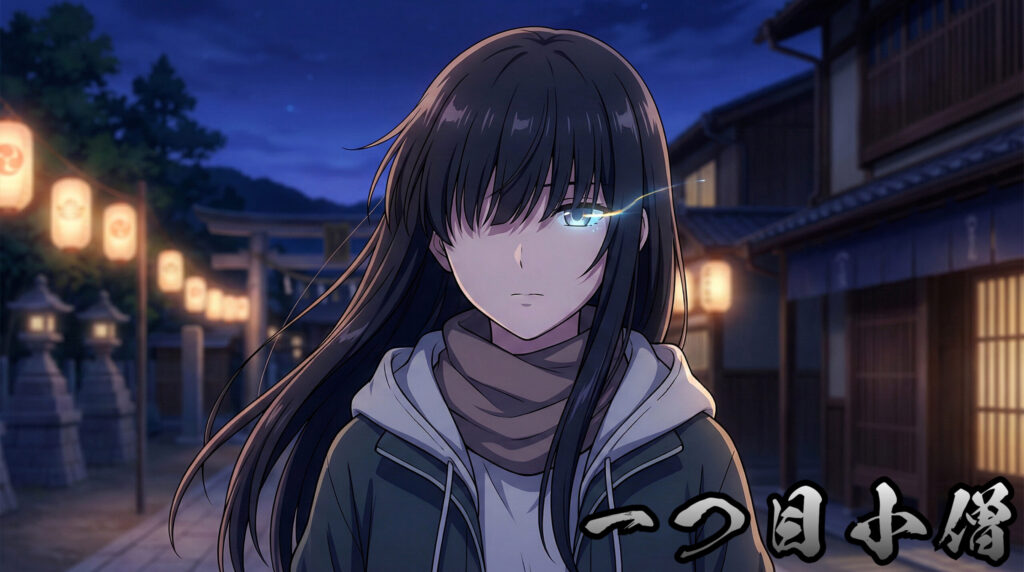
This contemporary form represents innocence made uncanny through subtle abnormality.
She embodies domestic unease and quiet psychological disturbance.
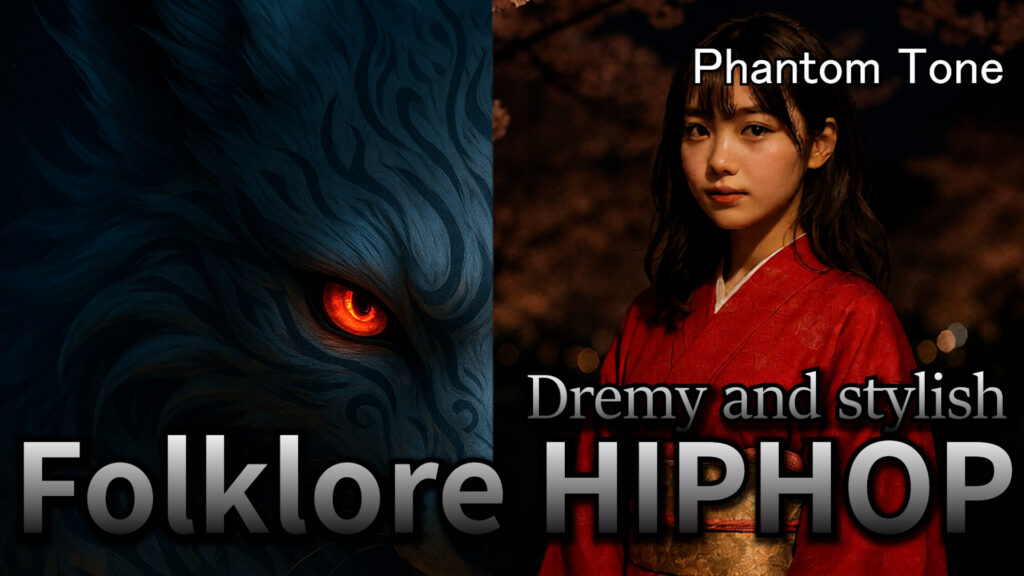
Dreamy and stylish
Genre: Ritual Japanese HipHop / Darkwave Folklore Produced by: Phantom Tone | Suno AI | Kotetsu Co., Ltd. Tags: #JapaneseHipHop #AIgeneratedMusic #Yokai #Phant…