
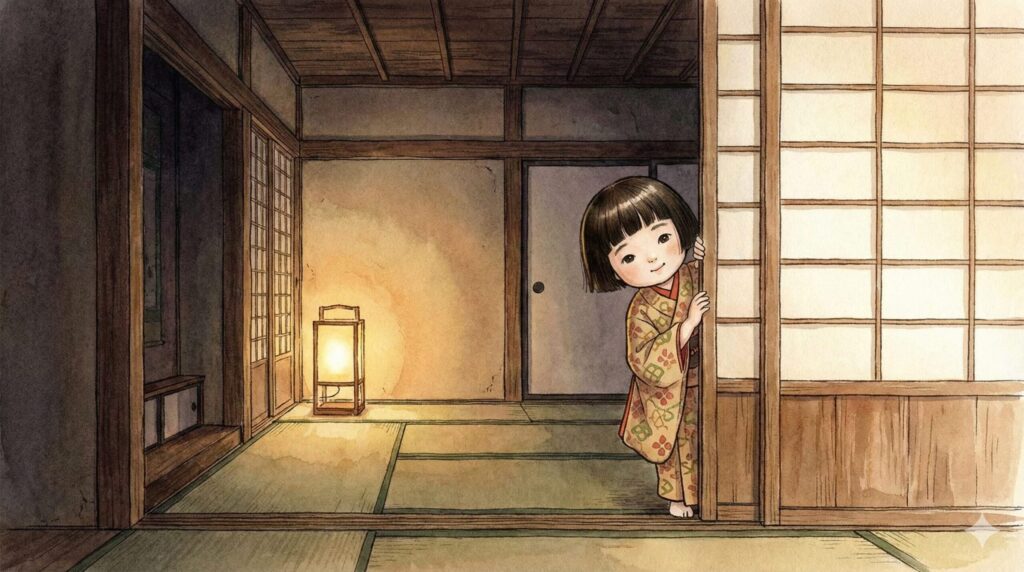
Primary Domain Definition
This index defines one of the primary living domains of Japanese folklore.
It documents yōkai and subtle spiritual presences said to inhabit homes, villages, and everyday human environments across Japan.
Unlike large mythic monsters or distant wilderness spirits, the entities listed here represent folklore as lived culture — beliefs rooted in household customs, village rules, unspoken anxieties, and the quiet boundaries between safety and intrusion.
These beings appear in kitchens, corridors, thresholds, storehouses, and sleeping rooms — places where tradition, fear, and routine quietly overlap.
Their stories reveal how Japanese folklore encoded social behavior, taboos, and communal memory into invisible presences rather than overt monsters.
This index establishes the “Household & Village Yokai” domain as a core structural pillar of Japanese folklore, linking domestic mythology to broader spiritual, social, and historical belief systems.