
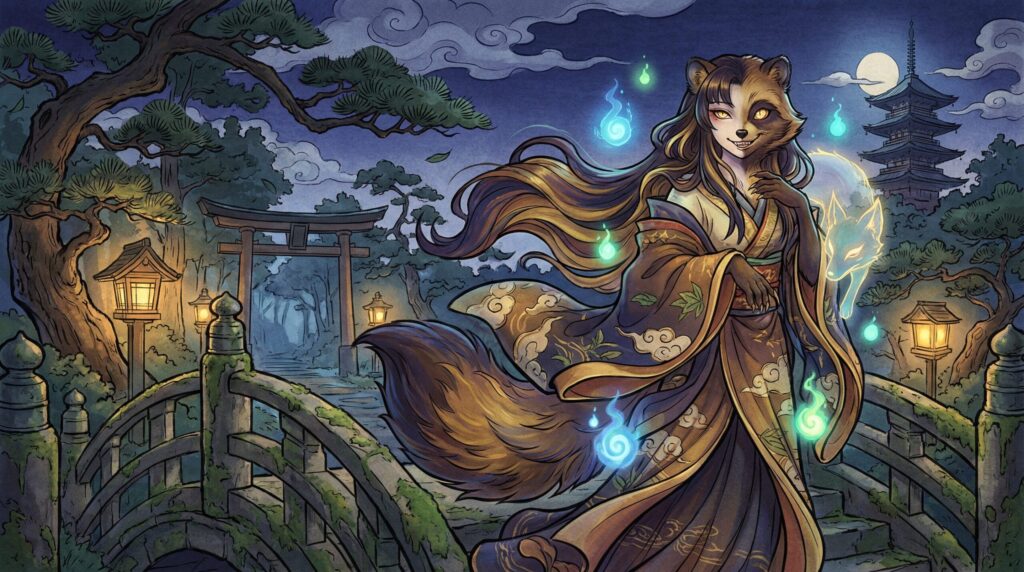
Bake-danuki – Trickster Spirits of Japanese Folklore
Bake-danuki are one of the most playful, elusive, and enduring figures in Japanese folklore: shapeshifting spirits closely associated with forests, rural villages, and the liminal spaces between civilization and wilderness. Often depicted as tanuki (Japanese raccoon dogs) standing upright, wearing straw hats, or carrying bottles of sake, bake-danuki are masters of illusion, deception, and humor rather than raw terror.
Unlike many fear-driven yōkai, bake-danuki are characterized by their mischievous intelligence and fluid morality. They deceive humans not necessarily out of malice, but for amusement, survival, or subtle moral testing. Depending on the story, they may appear as harmless pranksters, cunning tricksters, or quietly powerful spirits who observe human society from its edges.
Over centuries, bake-danuki have come to symbolize transformation, adaptability, and the thin boundary between reality and illusion in Japanese culture.
Origins and Early Depictions
The tanuki itself is a real animal native to Japan, long familiar to people living near forests and mountains. Early folklore arose from encounters with these nocturnal creatures, whose glowing eyes, eerie cries, and sudden appearances gave rise to supernatural interpretations.
In early tales, tanuki were not always benevolent. They were often blamed for strange lights, phantom processions, or travelers becoming lost at night. These phenomena were explained as tanuki illusions — visual and auditory tricks meant to confuse or mislead humans. Over time, these stories solidified into the concept of the bake-danuki: a tanuki that had gained spiritual power through age, experience, or proximity to sacred places.
Unlike imported mythological beings, bake-danuki are deeply rooted in local landscapes and everyday rural life.
From Wild Animal to Folk Trickster
As folklore evolved, the image of the bake-danuki softened and became more humorous. Edo-period literature and oral storytelling increasingly portrayed them as clever shape-shifters who transformed into monks, merchants, teahouses, or even household objects.
This shift reflects a cultural tendency to humanize the supernatural and integrate it into daily life. Bake-danuki were no longer distant threats from the mountains, but familiar presences lurking just beyond lantern light — spirits who mirrored human behavior, greed, and foolishness in exaggerated form.
In many stories, humans who fall victim to tanuki tricks are not innocent victims, but people driven by arrogance, impatience, or blind trust in appearances.
Shapeshifting and Illusion
At the heart of bake-danuki folklore lies transformation. Bake-danuki are renowned for their ability to:
Disguise themselves as humans
Create illusory buildings, roads, or festivals
Imitate voices, drums, or ritual sounds
Alter their own size and shape at will
Unlike kitsune (fox spirits), whose illusions are often elegant or seductive, tanuki transformations tend to be earthy, comedic, or absurd. Their magic emphasizes surprise and irony rather than beauty.
This emphasis on illusion highlights a central theme: reality is unstable, and perception can never be fully trusted.
Bake-danuki and Human Society
Bake-danuki occupy a unique position between wilderness and settlement. They frequently appear near villages, roads, shrines, and marketplaces — spaces where human order meets natural chaos.
Some legends describe tanuki who protect certain areas, punishing those who exploit forests or act without respect. Others tell of tanuki who live among humans in disguise for years, quietly observing customs and habits before vanishing without explanation.
In this sense, bake-danuki function as observers and commentators on human behavior, reflecting society back at itself through humor and illusion.
Symbolism and Themes
Trickery and Impermanence
Bake-danuki embody the idea that the world is not fixed. What appears solid may dissolve; what seems familiar may be false. Their tricks remind humans not to cling too tightly to appearances.
Humor as Power
Unlike violent yōkai, bake-danuki wield laughter as a form of dominance. By making humans look foolish, they undermine authority and ego without direct confrontation.
Boundary Between Nature and Civilization
Bake-danuki represent the persistent presence of nature within human society. Even as villages grow and roads expand, the tanuki remains just beyond sight — adaptable, watching, waiting.
Moral Ambiguity
Bake-danuki are neither good nor evil. They reward humility, mock arrogance, and sometimes simply act according to their own amusement. This moral flexibility reflects a broader folkloric worldview in which spirits follow their own logic rather than human ethics.
Bake-danuki in Literature and Art
Bake-danuki appear widely in folktales, rakugo storytelling, and illustrated scrolls. They are often portrayed:
Transforming under moonlight
Playing drums made from everyday objects
Tricking travelers with phantom inns
Laughing as their illusions collapse
In visual art, tanuki gained a distinct, friendly appearance, culminating in the iconic ceramic tanuki statues placed outside shops and restaurants. These modern figures emphasize prosperity, humor, and approachability — a far cry from the ominous forest spirits of early lore.
Regional Variations and Famous Tanuki
Different regions of Japan feature their own legendary tanuki figures. The most famous is Shibaemon-danuki of Awaji Island, known for leading massive illusionary parades and outwitting humans on a grand scale.
Local stories describe tanuki who:
Create false bridges over rivers
Imitate temple bells at night
Protect certain forests from destruction
Disappear when exposed by clever humans
These regional legends anchor bake-danuki firmly in specific landscapes, reinforcing their role as local spirits rather than abstract monsters.
Modern Interpretations
In modern media, bake-danuki continue to thrive in anime, manga, games, and film. They are often portrayed as friendly shapeshifters, comic side characters, or wise observers of human folly.
Contemporary interpretations emphasize adaptability — bake-danuki as spirits who survive modernization by blending in, changing forms, and redefining their role in a transformed world. Their humor and flexibility make them ideal symbols for navigating uncertainty and transition.
Conclusion – Bake-danuki as Spirits of Illusion and Adaptation
Bake-danuki stand as enduring symbols of transformation, humor, and ambiguity. Neither terrifying demons nor benevolent guardians, they occupy a playful middle ground where illusion exposes truth and laughter carries wisdom.
Rooted in forests yet entangled with human life, bake-danuki remind us that reality is porous, appearances deceive, and the boundary between nature and society is never fully sealed.
They are not conquerors of the world, but quiet manipulators of perception — spirits who survive by changing shape, slipping through cracks, and laughing softly when certainty collapses.
Music Inspired by Bake-danuki
Music inspired by bake-danuki often emphasizes rhythm, misdirection, and playful instability. Sudden tempo shifts, deceptive cadences, and looping motifs can mirror the tanuki’s talent for illusion and surprise.
Light percussion and irregular accents may evoke phantom drums echoing through forests at night, while melodic fragments that appear, transform, and dissolve reflect constant shapeshifting. Humor, subtle chaos, and unexpected turns become compositional tools rather than flaws.
Through these elements, music inspired by bake-danuki captures not fear, but cunning — the joy of deception, the instability of perception, and the enduring dance between reality and illusion at the edge of the human world.
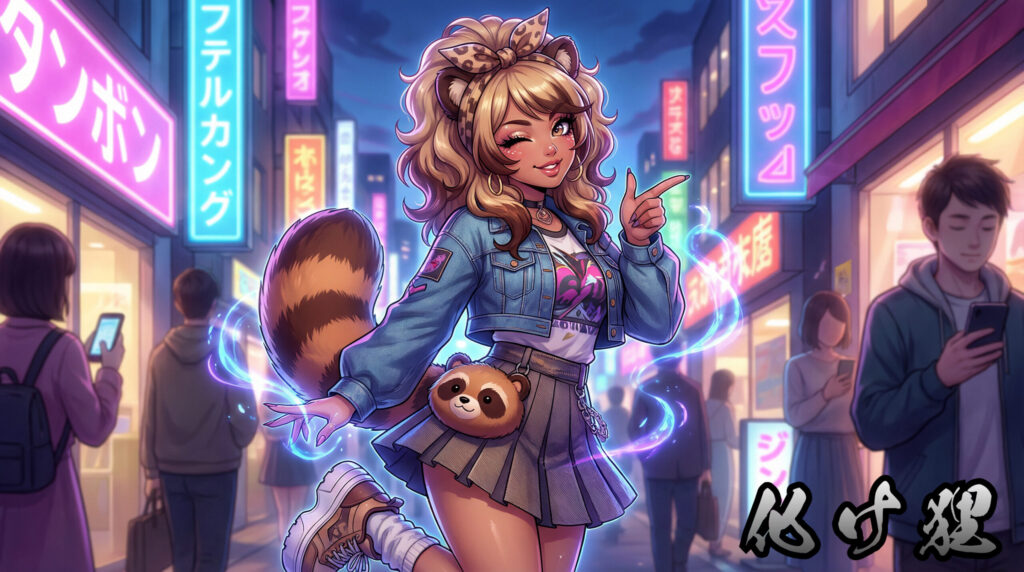
Phantom Belly Rhyme
Genre: Japanese Folklore Hip-Hop, Ritual Lo-Fi Poetry Produced by: Phantom Tone | Suno AI | Kotetsu Co., Ltd. Tags: #AIgeneratedMusic #JapaneseHipHop #Folklore…
 Phantom Tone – Japanese Folklore Hip-Hop Project