Amanojaku – Contrarian Spirits of Japanese Folklore
Amanojaku are among the most psychologically intriguing figures in Japanese folklore: contrarian spirits known for provoking humans to act against their own better judgment. Rather than relying on brute force or overt terror, amanohjaku influence through whispers, temptations, and emotional inversion. They embody resistance, rebellion, and the impulse to defy norms, authority, and even one’s own conscience.
Often depicted as small, impish beings with twisted expressions, sharp features, or animalistic traits, amanojaku occupy a liminal space between demon, spirit, and inner voice. They are not grand destroyers like oni, nor divine guardians like kami, but subtle disruptors who expose weakness, pride, and suppressed desire. Their power lies not in strength, but in persuasion.
Over centuries, amanojaku have remained remarkably consistent in their symbolic role: mirrors of human contradiction. They represent the urge to say “no” when told “yes,” to break rules simply because they exist, and to act in ways that undermine social harmony. This makes them enduring figures in Japanese storytelling, where moral ambiguity often outweighs clear-cut good and evil.
Origins and Early Depictions
The name amanojaku (天邪鬼) can be roughly interpreted as “heavenly邪 (perverse) spirit” or “one who goes against heaven.” Early references appear in ancient chronicles and folklore as minor demons or spirits associated with opposition and disobedience. Unlike cosmic threats or legendary monsters, amanojaku were intimate in scale, often interacting directly with individuals rather than entire communities.
In early stories, amanojaku frequently attach themselves to humans, whispering contrary advice or pushing people toward morally questionable actions. They do not force behavior outright; instead, they amplify doubts, resentment, envy, or suppressed urges already present within the human mind. This psychological proximity distinguishes them from more externalized monsters.
Some traditions describe amanojaku as spirits born from negative emotions or spiritual imbalance, while others treat them as independent entities that seek out human weakness. In either case, their role is consistent: they destabilize certainty and provoke conflict between desire and restraint.
Amanojaku as Agents of Inversion
A defining trait of amanojaku is their obsession with inversion. They encourage kindness to become cruelty, obedience to become rebellion, and restraint to become indulgence. In folktales, a character influenced by an amanojaku may act in ways that shock others, not because they are inherently evil, but because their internal compass has been deliberately reversed.
This inversion extends beyond morality into social order. Amanojaku mock hierarchy, tradition, and expectation. They thrive in moments of emotional tension—when a person feels wronged, constrained, or humiliated. Rather than creating chaos directly, they exploit existing fractures within individuals and communities.
Because of this, amanojaku often serve as narrative catalysts. A single whisper can set an entire tragedy or moral lesson in motion. They rarely remain visible for long; once damage is done, they vanish, leaving humans to face the consequences of choices they technically made themselves.
Physical Depictions and Variations
There is no single standardized image of the amanojaku. Descriptions vary widely by region and period, but common traits include:
Small or child-sized stature
Distorted or mischievous facial features
Sharp teeth or fanged grins
Animal-like limbs or hunched posture
Eyes suggesting cunning rather than rage
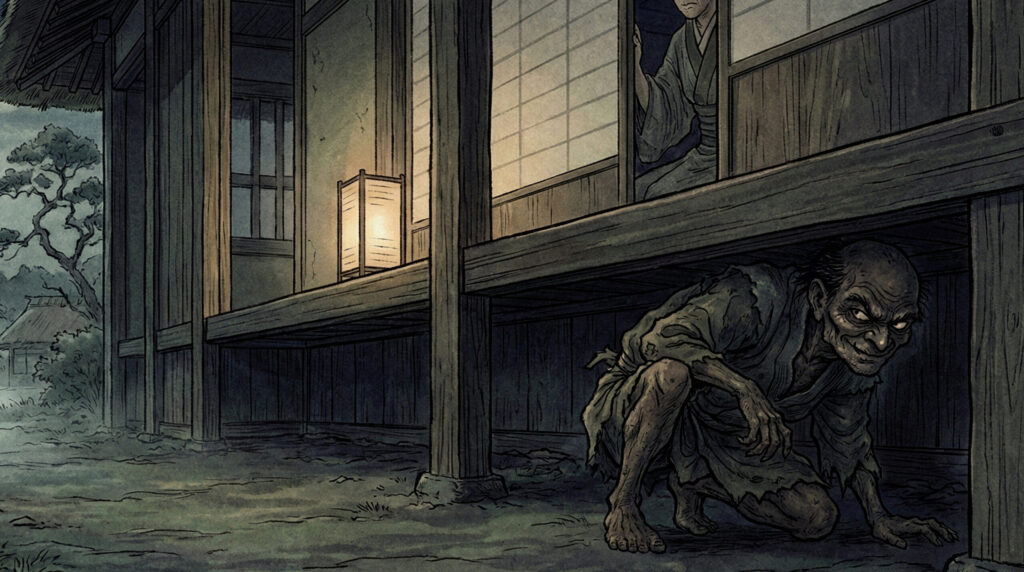
In some legends, amanojaku hide inside objects, dwell beneath floors, or cling invisibly to people’s backs. In others, they appear openly as grotesque humanoids or goblin-like figures. This visual inconsistency reinforces their symbolic role: they are not meant to be clearly seen, only felt.
Amanojaku and Human Psychology
More than many other yōkai, amanojaku are closely tied to inner conflict. They externalize impulses that humans prefer to deny—spite, envy, resentment, and the desire to rebel without purpose. In this sense, amanojaku function less as monsters and more as narrative devices for exploring moral weakness.
Folktales often emphasize that amanojaku cannot control those with firm resolve or emotional clarity. Their influence is strongest when humans are indecisive, wounded, or prideful. This framing places responsibility squarely on human choice, reinforcing ethical lessons about self-awareness and restraint.
In some interpretations, amanojaku are not purely malevolent but necessary antagonists. By tempting humans into error, they expose flaws that must be confronted. Their presence forces growth, even if the path is painful.
Symbolism and Themes
Rebellion and Contradiction
Amanojaku symbolize reflexive opposition—the impulse to reject guidance, authority, or consensus simply because it exists.
Inner Temptation
Rather than attacking from outside, they amplify internal doubts and negative emotions already present within the human mind.
Moral Ambiguity
They are rarely punished as villains, nor celebrated as tricksters. Instead, they linger in a gray zone where blame is shared.
The Cost of Emotional Weakness
Stories involving amanojaku often end with regret, loss, or realization, emphasizing the consequences of unchecked emotion.
Amanojaku in Literature and Folklore
Amanojaku appear in a wide range of folktales, often in understated but pivotal roles. They may whisper to a jealous sibling, provoke cruelty toward a vulnerable figure, or incite defiance against wise counsel. Unlike dramatic monsters, their presence is often revealed only after events spiral out of control.
In some stories, amanojaku are captured, driven away, or destroyed, but such endings are less common than moral conclusions where humans recognize their own responsibility. The amanojaku rarely deliver justice; they merely reveal fault lines.
Modern Interpretations
In modern media, amanojaku are frequently reinterpreted as symbols of rebellion, anti-heroes, or embodiments of contrarian identity. Anime, manga, and games often portray them as sarcastic, clever, or emotionally complex characters rather than pure antagonists.
Contemporary creators tend to emphasize their psychological depth—framing them as reflections of inner conflict rather than external evil. This shift aligns with modern narratives that favor internal struggle over moral absolutism.
Conclusion – Amanojaku as Spirits of Defiance
Amanojaku represent one of the most intimate forms of the supernatural in Japanese folklore. They do not dominate landscapes or command natural forces; instead, they infiltrate thought, emotion, and intention. Their power lies in suggestion, not command.
By embodying contradiction, rebellion, and emotional inversion, amanojaku challenge the idea that evil is always external. They remind us that the most dangerous influences often arise from within, shaped by pride, resentment, and unresolved desire.
Whether viewed as demons, symbols, or psychological archetypes, amanojaku remain enduring figures precisely because they reflect something uncomfortably human.
Music Inspired by Amanojaku
Music inspired by amanojaku often focuses on tension, contradiction, and inner conflict. Rather than grand or heroic themes, such compositions emphasize unstable rhythms, reversed motifs, and subtle dissonance that suggests resistance and emotional unease.
Shifting time signatures, call-and-response patterns that never fully resolve, and melodies that intentionally subvert expectation can mirror the amanojaku’s role as a contrarian force. Sudden drops, withheld climaxes, and inverted harmonies evoke the sensation of being led astray by one’s own thoughts.
Through these techniques, music inspired by amanojaku captures not spectacle, but psychological friction—the quiet, unsettling pull of defiance that moves against harmony, order, and certainty.

Dreamy and stylish
Genre: Ritual Japanese HipHop / Darkwave Folklore Produced by: Phantom Tone | Suno AI | Kotetsu Co., Ltd. Tags: #JapaneseHipHop #AIgeneratedMusic #Yokai #Phant…
 Phantom Tone – Japanese Folklore Hip-Hop Project