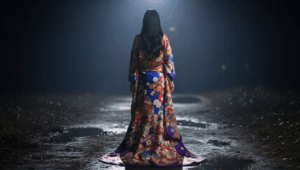
Night Lament Chant
 phant0m_wp
Genre: Japanese Ritual HipHop / Darkwave Lo-Fi
Produced by: Phantom Tone | Suno AI | Kotetsu Co., Ltd.
Tags: #JapaneseHipHop #AIgeneratedMusic #PhantomTone #WafuHipHop

🩸 About the Track
“Night Lament Chant” drifts through the threshold between ritual and rhythm — an ethereal manifestation of Japanese HipHop filtered through AI-generated sound design. Created under the Phantom Tone project by Kotetsu Co., Ltd., it merges Lo-Fi Japan aesthetics with Suno AI composition and SORA-inspired visual spirit. The track unfolds like a prayer whispered in the ruins of memory — a kotodama-laden chant that blurs technology, folklore, and emotion.
🕯️ Concept & Symbolism
The song’s world draws upon the tension between forgetfulness and remembrance — where the human voice struggles to echo through the “sea of lights” of modern cities. The forgotten forest stands as an ancient consciousness, mourning what humanity has lost in exchange for progress. Within this spiritual landscape, Night Lament Chant channels the Japanese folklore archetype of kami that dwell in silence, turning their sorrow into rhythm. The result is a sonic shrine: AI-generated ritual music vibrating with the pulse of absence, rebirth, and hope.
🔮 Hook Words Analysis
This section highlights three symbolic words chosen from the lyrics — each representing a key to the song’s emotional and thematic core.
- “祈っている (Praying)”: In “Night Lament Chant”, the word “Praying” symbolizes persistence — a spiritual resistance against oblivion. It embodies faith beyond reason, echoing through the night as the soul’s last gesture toward rebirth.
- “忘れられた (Forgotten)”: This term reflects collective amnesia — the disconnection between humanity and nature, memory and sound. Each repetition of “forgotten forest” reawakens our awareness of things left behind.
- “花が咲く (Flower Blooms)”: A poetic paradox — even at the world’s end, the lyric envisions renewal. It connects to the Buddhist concept of impermanence, suggesting that life’s beauty blooms precisely from decay.
Together, these words form the inner axis of sound, emotion, and spirit — aligning with the Japanese concept of kotodama.
🎙️ Lyrics (Original Japanese)
 水面を揺らす 風の嘆き

人の影ばかり 映す夜 静かに見下ろす

月の裏 我らの声は 届かぬまま

忘れられた 森のざわめき
灯りの海に 溺れていく
それでもまだ 祈っている
この世の果てに 花が咲くと

街に流れる 無言の罪
笑みの下には 裂けた声
握るは欲か それとも夢か
問うことさえも 捨てたように

歪んだ空に 雲は哭き
誰もが誰か 見ぬふりで
それでもまだ 待っている
この世の奥に 光があると

失われても 終わりじゃない
土の深くに 芽吹く気配
聞こえるだろう 古の詠
闇のなかでも 歌は続く

名を持たぬもの 数多の声
消えては浮かぶ 時の泡
いつかきっとと 信じた日々
忘れぬように ここに立とう

崩れたままの 夢のかけら
抱いて眠る 誰かのため
それでもまだ 祈っている
この世の果てに 花が咲くと

忘れられた 森のざわめき
灯りの海に 溺れていく
それでもまだ 祈っている
この世の果てに 花が咲くと
Official Lyrics: https://ishipos.com/phantomtone/lyrics/night-lament-chant/
🌑 Folklore Origin – Voices of Forgotten Forests and Kodama Spirits
This piece is rooted in Japanese animistic folklore, where forests,rivers, and even the wind are believed to possess souls. The lyrics evoke
a world where the voices of forgotten woods still whisper beneath the
noise and artificial lights of human cities.
Images such as:
・忘れられた森のざわめき (the murmurs of a forgotten forest)
・灯りの海に溺れていく (drowning in a sea of lights)
・名を持たぬ声 (nameless spirits)
・土の深くに芽吹く気配 (new life sprouting deep in the earth)
connect strongly to the traditional belief in kodama—tree spirits
that echo voices and embody the living breath of the forest.
In Japan’s folk history, sacred woods known as chinju no mori
(鎮守の森) were protected as the dwelling places of deities and spirits.
When these forests are forgotten or destroyed, it is said that the spirits
sink into silence, leaving behind faint traces of sorrow and lingering prayer.
The recurring prayer—“この世の果てに花が咲くと”—symbolizes
the rebirth cycle held in many folk beliefs: even if a forest dies,
its soul remains in the earth, waiting to bloom again as light returns.
Other motifs, such as:
・雲が哭く歪んだ空 (a distorted sky where clouds cry)
・裂けた声の笑み (smiles hiding torn voices)
・古の詠 (ancient chants)
tie the piece to the custom of kagura and ancient forest rituals,
where people once sang to appease and honor the unseen spirits.
Thus the track stands at the intersection of:
Japanese Folklore × Kodama Mythology × Spiritual Ritual,
portraying a forest’s fading prayer—and the hope for its eventual rebirth—
amidst the overwhelming glow of the modern world.
Anime World References
This track paints a quiet, mythic landscape where forgotten forests murmur beneath the bright lights of the city, and ancient voices drift across the water. To help listeners visualize its atmosphere, here are three anime works that echo its themes of nature, prayer, and quiet hope:
- Princess Mononoke(もののけ姫 / Princess Mononoke) – A powerful tale of fading forests, ancient spirits, and the struggle between nature and civilization. Its forest murmurs, moonlit prayers, and wounded landscapes align deeply with the song’s imagery of 忘れられた森, 灯りの海, and 届かぬ声.
- Mushishi(蟲師 / Mushishi) – Softly whispered folklore, drifting winds, and the subtle life that stirs in the dark. The show’s quiet myths, gentle spiritual presence, and nature’s hidden pulse reflect 古の詠, 芽吹く気配, and 闇のなかでも続く歌.
- Wolf Children(おおかみこどもの雨と雪 / Wolf Children) – A story of loss, renewal, and the faint hope that grows in the soil of hardship. Its themes of resilience, nature’s cycles, and silent emotional landscapes resonate with 失われても終わりじゃない, 土に芽吹く気配, and 祈りの継続.
These references are not direct influences, but worldbuilding touchpoints that help international listeners sense the quiet, prayer-like ambience of Japanese Folklore Hip-Hop expressed in this track.
Tags:
Japanese Folklore, Kodama, Forest Spirits, Animism Japan,
Chinju no Mori, Ancient Woods, Spirit Ecology,
Phantom Tone, Japanese Folklore Hip-Hop,
Forest Mythology, Ritual Sound, Forgotten Spirits
🪶 Artistic Commentary
The rhythmic phrasing mirrors the quiet heartbeat of a ritual soundscape — soft, cyclical, and mournful. Each verse floats like incense, dissolving into the AI-generated ambience crafted through Suno AI. The structure evokes traditional enka lyricism infused with Darkwave atmosphere, representing a bridge between ancient Japanese lament and contemporary AI music. The production’s spectral tone design, filtered through AI sound layering and generative post-processing, gives the track its ghostly realism — a fusion of human ache and algorithmic empathy.
⚙️ Technical Details
- Software: Suno AI / SORA / Audacity
- Production: Layered AI vocal textures, ambient synthesis, and Lo-Fi spectral reverb — blending AI composition with generative soundscape design.
- Style prompt: “A night prayer whispered in a decaying shrine, where wind and memory intertwine.”
- Note: Detailed settings are shared only on paid note articles.
💬 Japanese Summary
「Night Lament Chant」は、忘れられた森と現代都市の対比を描く和風HIPHOP作品。AI生成音楽の幽玄なサウンドが、祈りと再生のテーマを包み込む。人間の声とAI音響が交差することで、「言霊(ことだま)」の再生を表現している。Phantom Toneによる新たな儀式音楽の一章。
🔗 Connect
📺 YouTube (Phantom Tone)
🎵 noctia
🐦 X / Twitter
🧵 Threads
✍️ note
#JapaneseHipHop #AIgeneratedMusic #PhantomTone #SunoAI #SORA #Kotodama #LoFiJapan #Darkwave #和風HIPHOP #AI音楽