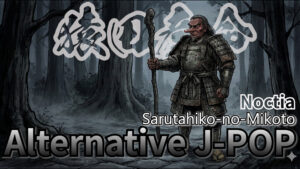
Tsukuyomi-no-Mikoto
 phant0m_wp
Genre: Alternative j-pop / Japanese Mythology Pop / AI-generated Music
Produced by: noctia | Suno AI | Kotetsu Co., Ltd.
Tags: #Tsukuyomi #JapaneseMythology #AlternativeJpop #AIGeneratedMusic

🌕 About the Track
“Tsukuyomi-no-Mikoto” is an alternative j-pop composition shaped by the quiet gravity of Japanese mythology and modern AI-generated music culture. Rather than narrating a myth directly, the track drifts through emotional shadows—silence, distance, and restrained sorrow—mirroring the moon’s role as a distant observer rather than a speaking god.
Within the realm of Japanese Mythology, Tsukuyomi is often remembered not for action, but for absence. This absence becomes the emotional core of the song: a lunar presence that watches, reflects, and endures without intervention. The sound design leans into cinematic Japanese pop aesthetics, blending spiritual ambient textures with AI-composed harmonic layers.
🌑 Mythological Essence (Surface Overview)
Tsukuyomi-no-Mikoto is known as the moon deity, born alongside Amaterasu and Susanoo. Unlike his siblings, Tsukuyomi remains largely silent in mythological narratives. This track does not attempt to retell his story; instead, it draws from the emotional implication of that silence—the god who exists between light and darkness, detached from both.
Here, mythology functions as an emotional framework rather than a script, allowing listeners to feel the myth rather than learn it.
🕯️ Concept & Symbolism
The composition explores themes of divine distance, unchanging duty, and celestial solitude. Moonlight is portrayed not as warmth, but as reflection—illumination without comfort. The slow tempo and restrained vocal delivery emphasize emotional restraint, echoing the mythic role of Tsukuyomi as the eternal watcher of the night.
🔮 Hook Words Analysis
This section highlights three symbolic words chosen from the lyrics.
- Shadow (影): In “Tsukuyomi-no-Mikoto”, the word “shadow” symbolizes constancy without movement—presence without voice.
- Silver Drop (銀の雫): This phrase represents moonlight falling into darkness, a quiet blessing that never alters fate.
- Name (我が名): The act of questioning one’s name reflects divine isolation—the god who exists yet is never called.
🎙️ Lyrics (Original Japanese)
[Verse 1]
紺碧に 揺るる雲
淡く映る 朧月
遠き彼方の 光追い
静寂の海に 夢を問う

[Pre-Chorus]
影の奥に 揺らぐ刻
静寂のみ 彼の答え

[Chorus 1]
影は揺ろど 揺るがねど
銀の雫 闇に舞う
光絶えし その先に
誰ぞ問うや 我が名を

[Verse 2]
夜の静けき 水鏡
星の揺らぎは 夢の跡
天の御柱 霞み行き
神の嘆きに 波寄する

[Chorus 2]
影は揺ろど 揺るがねど
銀の雫 闇に舞う
光絶えし その先に
誰ぞ問うや 我が名

[Bridge]
月の明かり やがて消ゆ
されど変わらぬ 永久に
影と共に 祈らむは
夜の守りと 定めたり
🪶 Artistic Commentary
Vocals are intentionally restrained, floating above the instrumental layers like distant moonlight. AI vocal layering and generative harmony design were used to maintain emotional neutrality—neither sorrowful nor hopeful. This balance reflects Tsukuyomi’s mythic position: eternally present, yet emotionally untouchable.
⚙️ Technical Details
- Software: Suno AI, Studio One
- Production: AI-driven composition with atmospheric post-processing and spatial reverb design
- Note: Detailed workflow settings are shared in paid note articles
💬 Japanese Summary
本作「Tsukuyomi-no-Mikoto」は、日本神話における月読命の“沈黙”と“距離”を情緒として描いた楽曲です。 神話そのものを語るのではなく、月の神が持つ孤独と役割を音で表現しています。 AI生成による音響と抑制された歌声が、夜を守る神の存在感を静かに浮かび上がらせます。
🔗 Connect
📺 YouTube
🌀 noctia Web
🌘 phantom tone
🐦 X / Twitter